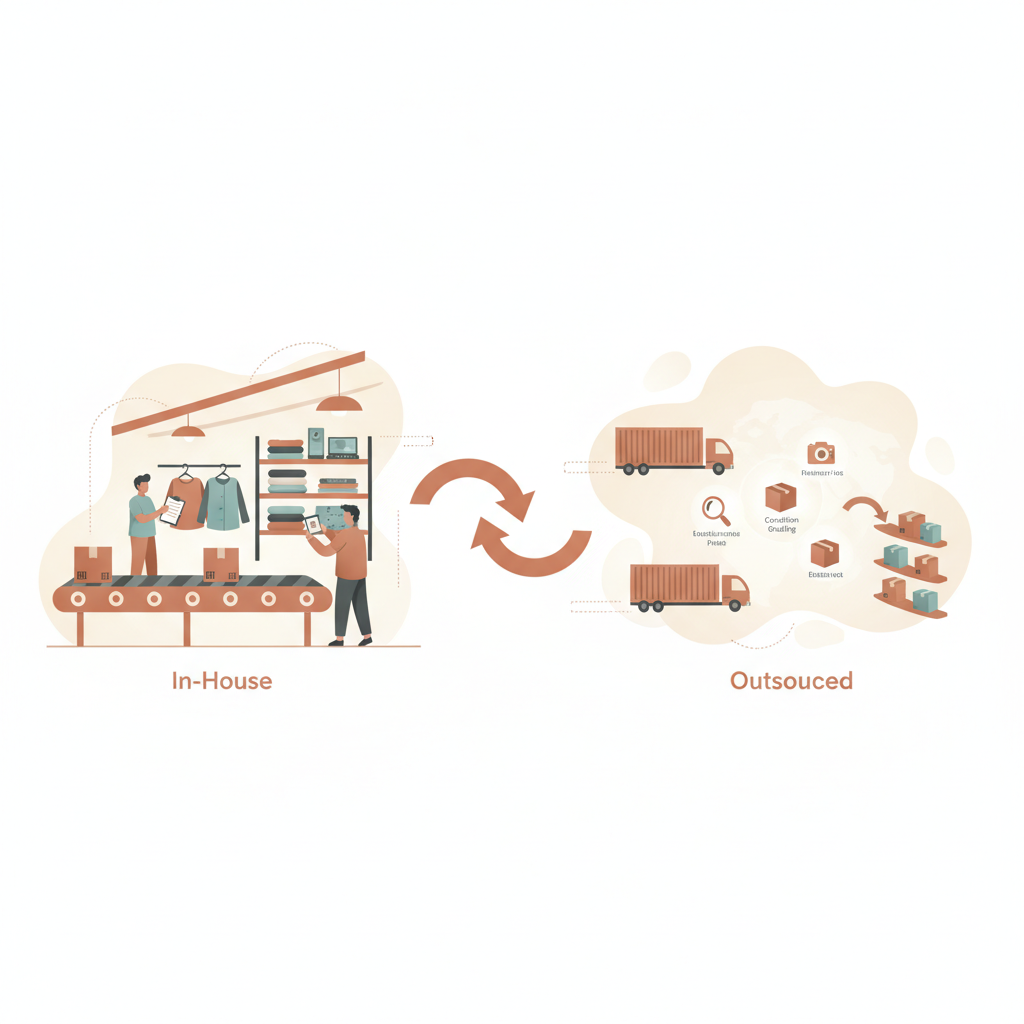
3PL Returns Add-on vs a Dedicated Returns Network: What Actually Changes
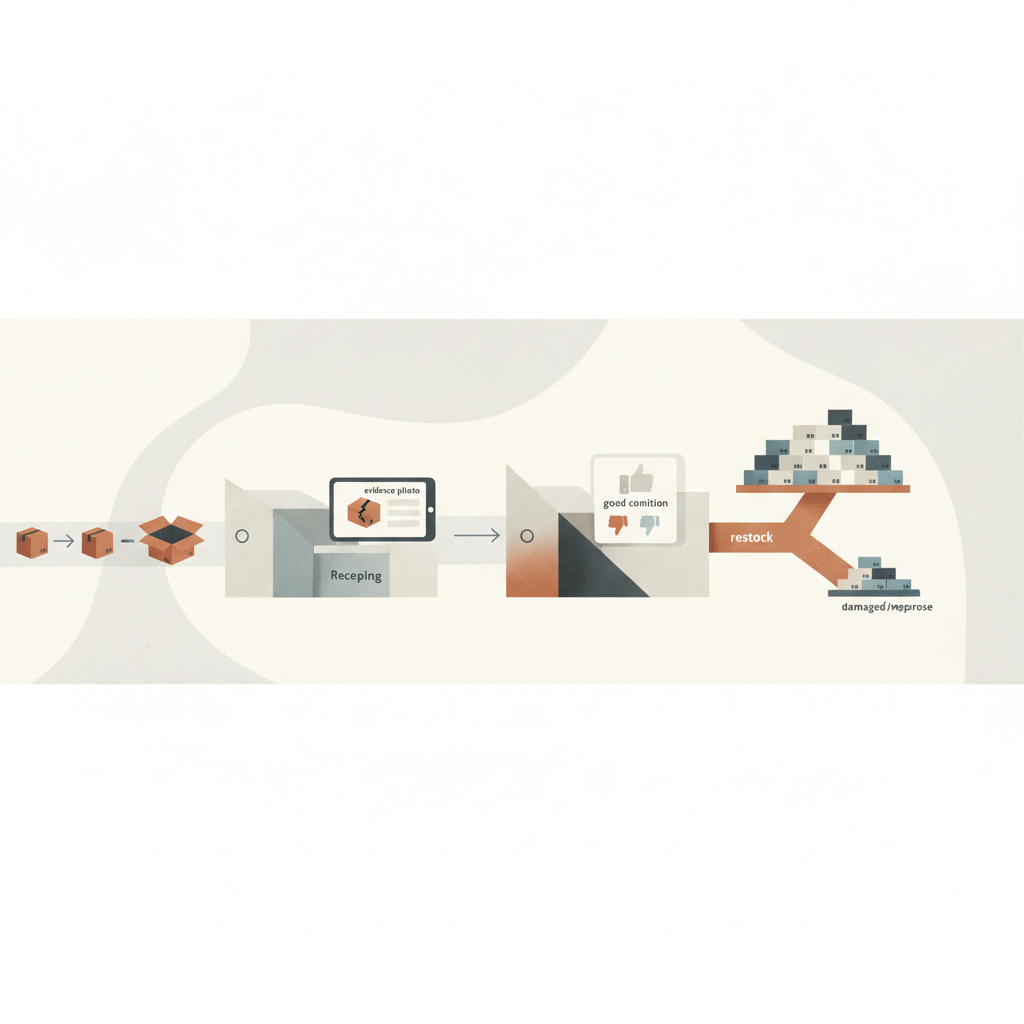
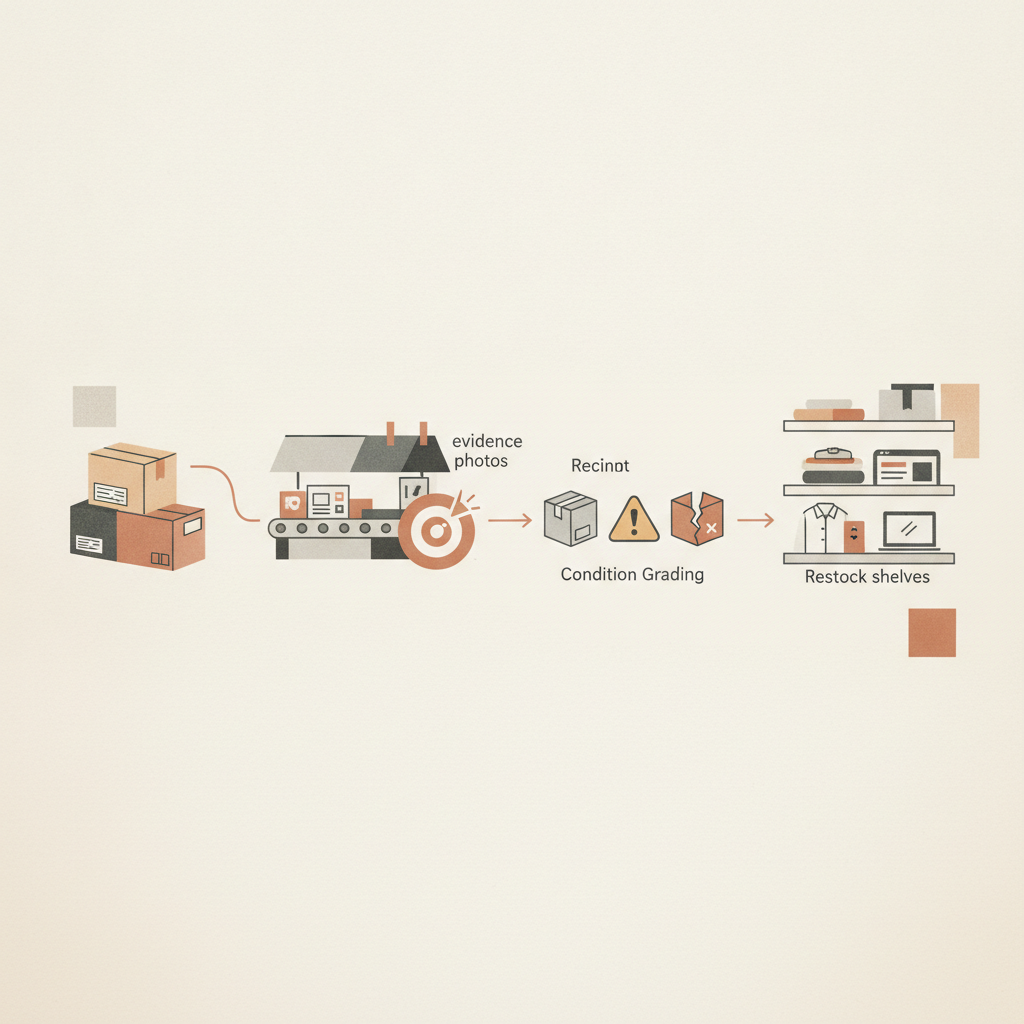
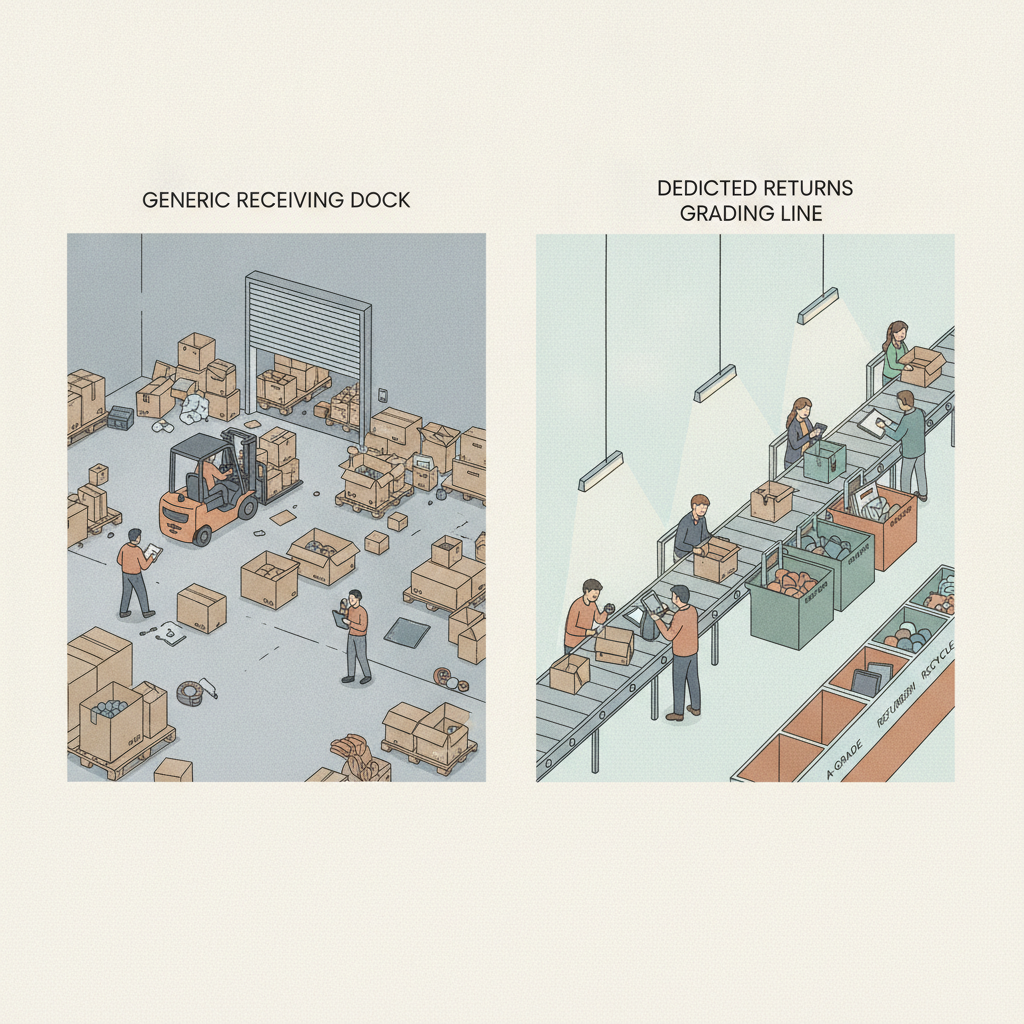
A 3PL returns add-on is inbound receiving and light sorting bolted onto an existing freight or fulfillment contract, usually staffed by the same crew that ships outbound orders and priced as a line item rather than a discipline of its own. A dedicated returns network like areturnz is built only to receive, grade, and disposition returned inventory, with a photo of the outer label, the opened parcel, the item, and any defect captured on every unit, AI condition grading on an A/B/C/R scale, and a median 48 hour cycle from inbound scan to disposition decision. The gap between the two is not headcount or square footage, it's specialization: one treats returns as overflow work squeezed between outbound waves, the other treats returns as the entire product.
Why the 3PL add-on model exists
Most 3PLs got into returns by accident. A client asked for a reverse logistics SKU on the contract, the 3PL repurposed a corner of the warehouse and a few hours of receiving labor, and the add-on was born. It works fine for parcels that just need to go back on a shelf. It struggles the moment a return needs a condition judgment call, a dispute-ready record, or a routing decision beyond restock or trash.
The economics explain why. A 3PL's margin comes from outbound velocity: pick, pack, ship, repeat. Returns interrupt that rhythm, so they get triaged in batches, often days after the parcel physically arrives. There is rarely a dedicated grading step, and evidence capture, if it happens at all, is a phone photo attached to a ticket rather than a structured record tied to a disposition.
What a dedicated returns network does differently
Grading instead of a glance
Every return that hits areturnz's NJ-01 facility in East Hanover, New Jersey gets graded A, B, C, or R by an AI model that also outputs a confidence score and detected tags (stains, missing parts, packaging damage, and so on). Across more than 180,000 returns processed, AI grading matches operator judgment about 99.6% of the time, and low-confidence cases route to a human reviewer automatically rather than getting waved through. A 3PL add-on, by contrast, usually has one or two generalist staff eyeballing condition with no calibrated scale and no confidence signal at all.
Evidence bundles instead of a shrug
Every return ships with an evidence bundle covering the four photo checkpoints, the assigned grade, and the disposition reasoning, available in a dashboard and via a signed-JSON API with webhooks. That bundle is what closes an item-not-as-described dispute or a chargeback fight in minutes instead of weeks. Read more on why every return should ship with proof for the mechanics.
Disposition rules instead of default paths
Disposition (restock, liquidate, donate, destroy) is rule-driven based on grade, category, and client policy, with every operator override logged. A generic 3PL add-on typically has two buckets: sellable and not sellable. There is no structured path for donation credit, liquidation batching, or destruction certificates tied to duty drawback, which matters more than most teams realize once return volume grows past a few thousand units a month.
Side by side: 3PL add-on vs dedicated returns network
| Dimension | 3PL returns add-on | Dedicated returns network (areturnz) |
|---|---|---|
| Core business | Outbound fulfillment; returns are a side service | Returns processing is the entire business |
| Condition grading | Manual, inconsistent, no confidence signal | AI A/B/C/R grading, ~99.6% match to operator judgment |
| Evidence per parcel | Ad hoc photo or none | Structured bundle: label, opened parcel, item, defect |
| Cycle time | Days to weeks, batched around outbound priority | ~48 hour median, inbound scan to disposition |
| Disposition logic | Sellable vs not sellable, manual calls | Rule-driven routing with logged overrides |
| Dispute support | Reactive, ticket based | Signed-JSON API and dashboard evidence bundle |
| Reporting | Generic warehouse KPIs | Returns-specific metrics: grade mix, restock velocity, recovery rate |
| White-label resale | Rare, not built for it | Designed for partners to resell under their own brand |
When a 3PL add-on is still the right call
If your return volume is genuinely low, say a few hundred units a month, and nearly everything is a straightforward restock with no dispute exposure, a bolted-on add-on inside your existing 3PL contract can be cheaper to set up. You already have the relationship and the invoice line. The tradeoff shows up later, usually around peak season, when return volume spikes and the same generalist team that handles it in slow months suddenly can't keep pace, and margin leaks out through slow restocks and unresolved disputes. The mechanics of that leak are broken down in restock velocity: the metric that pays for your returns program.
What switching actually looks like
Moving from a 3PL add-on to a dedicated network is not a full operational overhaul. Inbound routing changes to the new facility, disposition rules get configured against your existing policies, and the evidence API gets wired into whatever dashboard or ERP already tracks inventory. Most brands and 3PLs that want to keep the client relationship but stop absorbing the operational risk end up reselling the network under their own name instead of replacing it outright; that path is covered in the white-label returns platform partner playbook. For a concrete look at what the evidence bundle actually contains before you commit, the evidence sample page walks through a real bundle.
Frequently asked questions
Is a 3PL returns add-on ever more cost effective than a dedicated network?
At very low volume with simple, undisputed restocks, yes, it can look cheaper on paper because there's no new vendor setup. The cost shows up later in slower cycle times, inconsistent grading, and weak dispute evidence once volume or complexity grows.
Can a dedicated returns network plug into an existing 3PL relationship?
Yes. Returns routing is typically separated from outbound fulfillment at the carrier label level, so a 3PL can keep handling outbound orders while a dedicated network like areturnz handles receiving, grading, and disposition for returns specifically. See how partners use the network for common setups.
How fast is disposition compared to a typical 3PL add-on?
areturnz runs a median 48 hour cycle from inbound scan to disposition decision. A generic 3PL add-on rarely publishes a returns-specific SLA at all, since returns get processed in the gaps between outbound priorities.
Does a dedicated network handle donation and destruction, not just restock and liquidation?
Yes, disposition rules route each unit to restock, liquidate, donate, or destroy based on grade and policy, with destruction certificates available for compliance and duty drawback purposes. Most 3PL add-ons only support restock or scrap.
What does pricing look like compared to a 3PL add-on line item?
Pricing is typically per unit processed rather than a blended warehouse rate, which makes cost easier to forecast against return volume. Full detail is on the pricing page.
If your returns are still riding on the back of an outbound fulfillment contract, it's worth comparing what a dedicated network actually recovers in restock speed and dispute wins. Talk to areturnz about moving your returns onto a network built for exactly this.
Proof on every return
Photos, an AI condition grade, and a full custody chain, attached to every parcel and available via the API.