Grading Multi-SKU and Bundled Returns: How ABCR Handles Compound Items
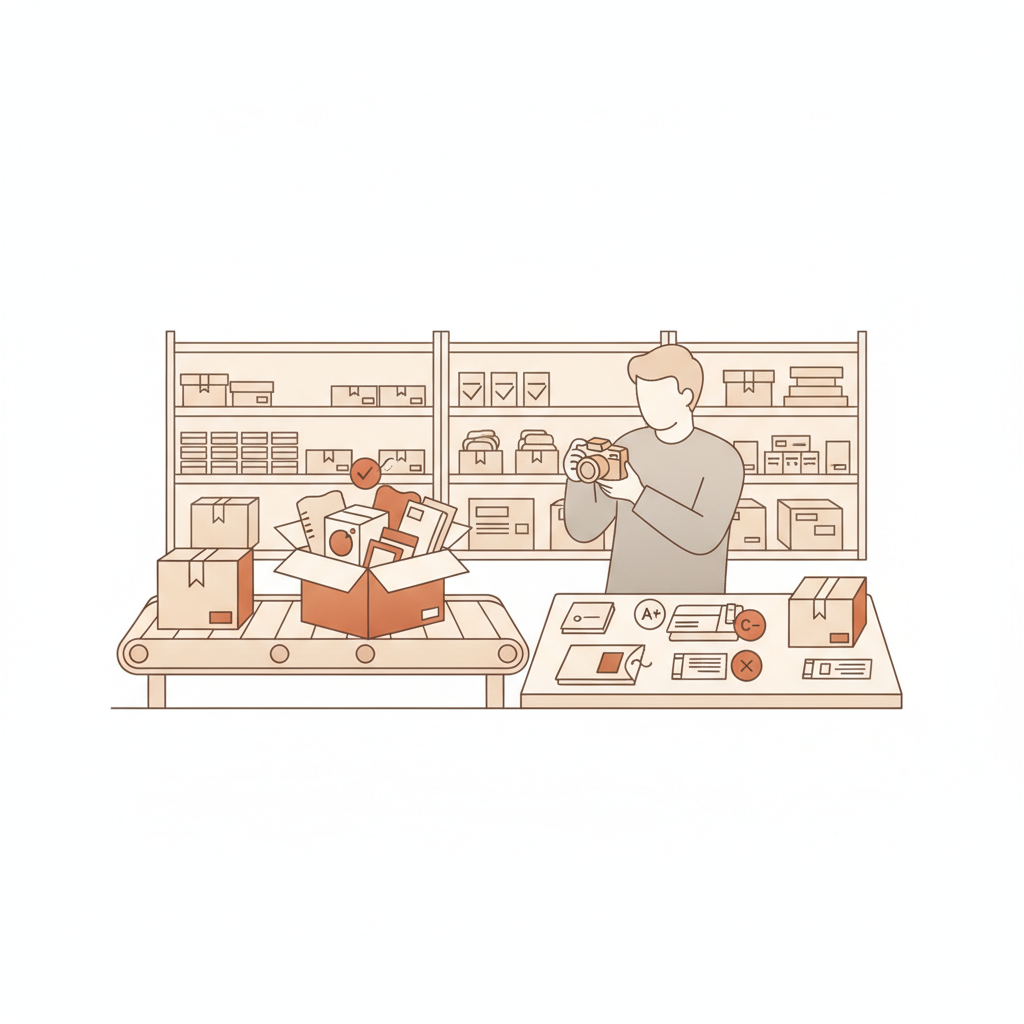
Grading multi-SKU and bundled returns means scoring every component of a set, kit, or multi-pack separately and then rolling those individual grades into one disposition for the whole parcel. areturnz handles this by running the same A/B/C/R condition grading on each detected item inside a compound return, then applying disposition logic that accounts for missing pieces, mismatched conditions, and incomplete sets before a single routing decision gets made.
Why bundles break single-item grading logic
Most condition grading models, including the early version of ours, were built around one return equals one item. A sneaker comes back, gets photographed, gets graded, gets routed. That works fine until a customer returns a three-piece cookware set with one scratched pan and two pieces still in shrink wrap, or a skincare gift set missing the serum but with the moisturizer and cleanser intact.
A single grade cannot describe that parcel honestly. If you force a whole bundle into one A/B/C/R label, you either undergrade good components and lose restock value, or overgrade damaged ones and create a return-of-the-return problem once it reaches a customer again. We covered how grading shifts by product type in grading apparel vs electronics vs beauty, but that post assumes a single item per parcel. Bundles are a different axis of complexity entirely: not what the item is, but how many interdependent items sit in the box.
How ABCR scores compound items
When a parcel is flagged as multi-SKU during receiving, either from the original order data or from quantity verification at scan, the grading pipeline switches into component mode instead of single-item mode.
Component-level grading
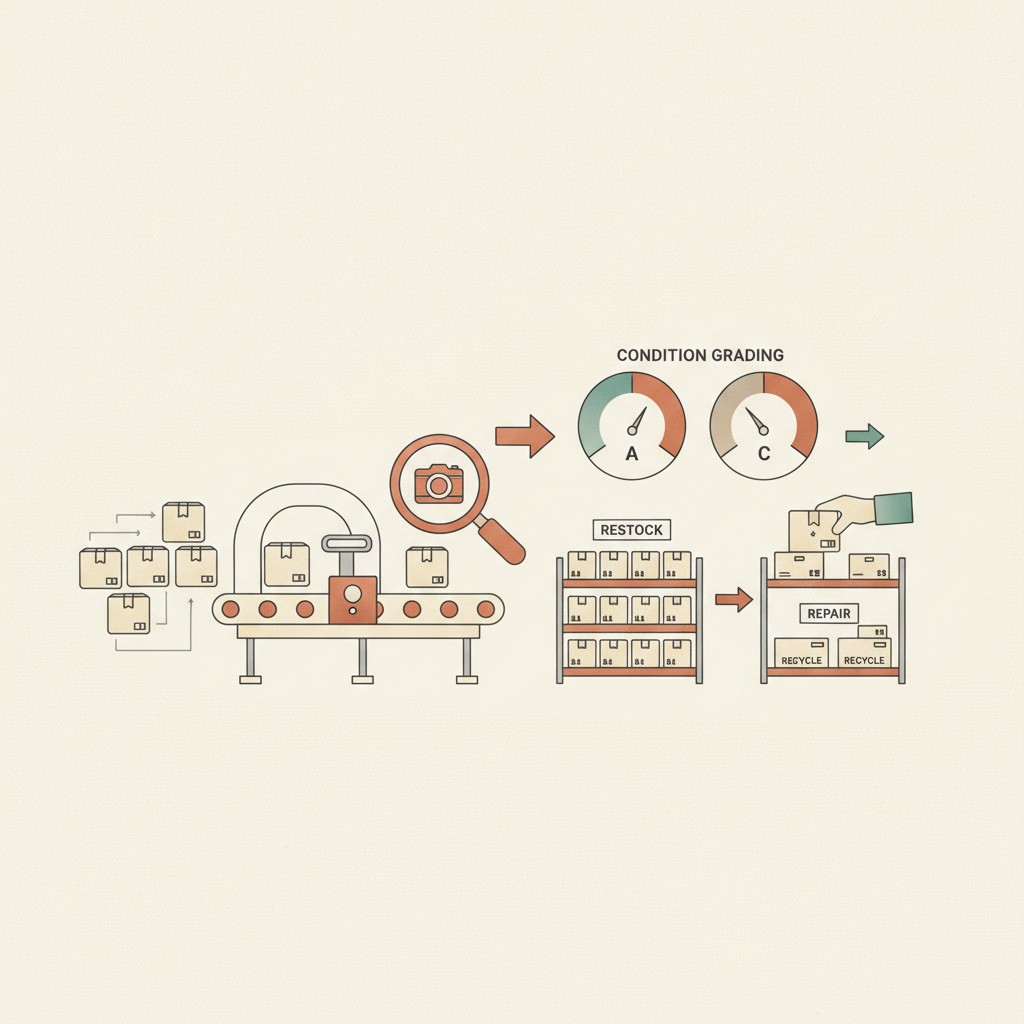
Each detected item inside the parcel gets its own full grading pass: outer label photo, opened parcel photo, item photo, defect photo where relevant, and its own A/B/C/R score with a confidence value. A six-piece glassware set does not get one grade, it gets six, each tied back to its SKU and position in the original order. This is the same photographic evidence standard used across every single return we process, just applied per component instead of per parcel.

Roll-up logic to a single disposition
Once every component has a grade, the system applies roll-up rules to decide what happens to the parcel as a whole. A complete set where every component grades A rolls up to restock as a full set. A set with one C-grade component and the rest at A or B can split: good components restock individually or get re-kitted, the damaged piece routes to liquidation, and the parcel record keeps all of it linked under the original order ID. A set missing a component entirely, graded R for absence rather than damage, triggers a separate exception path, because a missing item is a different problem than a damaged one and should never get folded silently into a single confidence number.
Confidence scoring across multiple components
Our published AI-versus-operator match rate sits at about 99.6% across 180K+ processed returns, but that number is measured per graded unit, not per parcel. A bundle with four components each individually graded at high confidence still needs a parcel-level confidence check, because the roll-up decision itself, restock whole, split, or liquidate the remainder, is a judgment call layered on top of the individual grades.
When any single component in a bundle grades below the confidence threshold, the whole parcel gets flagged for operator review rather than letting one shaky grade quietly drag down an otherwise clean set. That threshold behavior is the same escalation logic described in our piece on false-positive handling in AI grading, just triggered at the component level instead of the parcel level.
Disposition rules for partial-complete bundles
Disposition rules, the logic that turns a grade into a restock, liquidate, donate, or destroy action, get more branches once bundles enter the picture. A single-item return has four possible outcomes. A three-component bundle with independent grading has dozens of realistic combinations once you account for partial completeness.
| Bundle scenario | Component grades | Typical disposition | Notes |
|---|---|---|---|
| Complete set, all undamaged | A, A, A | Restock as full set | Fastest path, usually clears within the 48 hour median cycle |
| Complete set, one cosmetic flaw | A, A, B | Restock as open-box set or split components | Operator rule decides whether to keep set intact or re-kit |
| Complete set, one damaged piece | A, A, C | Split: restock good pieces, liquidate damaged piece | Requires component-level SKU tracking to re-kit correctly |
| Missing component, rest undamaged | A, A, R (absent) | Exception queue, partial restock | Flagged separately from damage, often a fulfillment error upstream |
| Set unusable without missing piece | A, R (absent), dependent item | Liquidate or donate remainder | Applies to kits where components have no standalone resale value |
| Multiple components all damaged | C, C, C | Liquidate or destroy | Full set treated as single disposition when value is already low |
Evidence bundle for multi-SKU returns
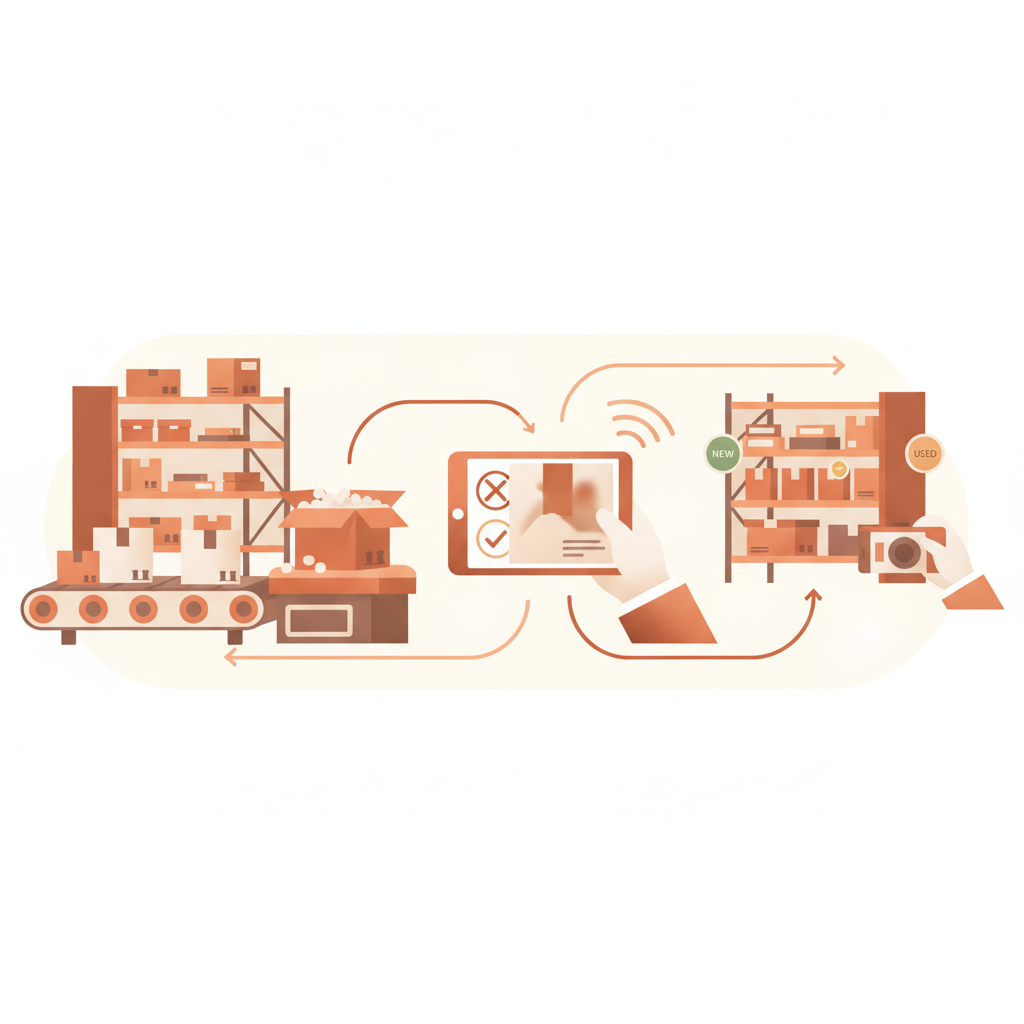
Every component inside a bundle return still ships with its own photo evidence, grade, confidence score, and any operator override, all linked under the parent parcel record in the evidence bundle. That matters most when a dispute or chargeback involves a bundle, since a seller or brand needs to show exactly which piece of a set was missing or damaged, not just that something about the order was off. You can see what a full evidence record looks like at the evidence sample page, and the same signed-JSON API and webhook structure used for single-item returns applies here, just with a nested components array instead of a flat item object.
What this means for operators and partners
If you sell kits, gift sets, multi-packs, or bundled SKUs, bundle-aware grading changes two things for your margin. First, you stop losing full-set resale value because one damaged component dragged the whole return into liquidation. Second, you get cleaner reason data, since a missing-component return and a damaged-component return are fundamentally different root causes, fulfillment accuracy versus product quality, and should never be collapsed into one return reason code. For partners running returns across multiple brands with different bundle structures, this logic sits inside the same grading engine covered in our AI and grading pillar guide, with no separate integration required. Teams evaluating us against other options can also see how this fits a broader network in our partner use cases.
Frequently asked questions
Does a bundled return take longer to process than a single item?
Usually not by much. Component-level grading runs in parallel across the photos captured at receiving, so a typical bundle still clears within or close to the 48 hour median cycle, though parcels with missing components or low-confidence components can take longer because they route to manual review.
How does areturnz know a parcel should be treated as multi-SKU?
Quantity and content verification at receiving flags parcels expected to contain more than one SKU, either from original order data passed through the API or from image detection during the scan. That flag routes the parcel into component-mode grading instead of single-item grading.
What happens if a bundle is missing a component but the rest is undamaged?
It gets graded as a partial return with an absence flag rather than a damage flag, and routes to an exception queue so an operator can decide whether to restock the present components, request the missing piece, or apply a different rule entirely. The disposition logic for these cases is covered in our guide to disposition rules turning grades into decisions.
Does the 99.6% match accuracy figure apply to bundles too?
Yes, it is measured at the component level across all graded units, bundled or single-item, within the 180K+ returns we have processed. Parcel-level roll-up decisions for bundles get an added confidence check since they combine multiple component grades into one outcome.
Can partners see component-level grades through the API?
Yes. The signed-JSON API and webhooks return a components array for multi-SKU parcels, with each component carrying its own grade, confidence score, and photo evidence links alongside the parent parcel record. Current pricing and plan details live on our pricing page.
If you process kits, sets, or multi-packs and want to see how component-level grading would run against your actual return volume, talk to our team and we will walk through it with real parcel examples.
Related reading: Grading model drift: how areturnz keeps the 99.6 percent match rate from decaying
Related reading: Open Box vs Refurbished vs Used: What the Condition Labels Actually Mean
Proof on every return
Photos, an AI condition grade, and a full custody chain, attached to every parcel and available via the API.