Peak season returns planning: budgeting for Q4 volume before it hits

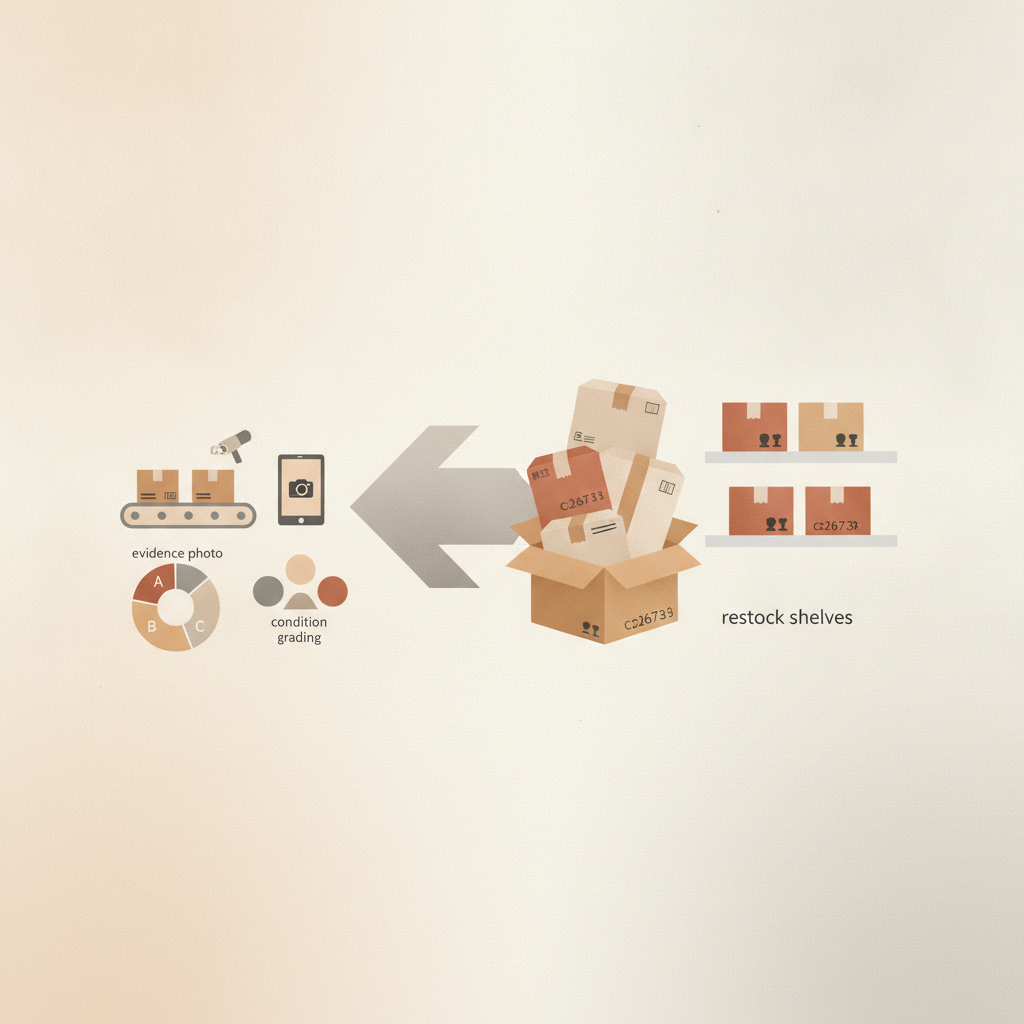
Peak season returns planning is the practice of budgeting labor, grading capacity, and disposition costs for the surge of returns that follows Q4 order volume, rather than reacting to it after inbound scans spike. areturnz treats this as a forecasting problem with real levers: a facility that already processes 180K+ returns with a 48 hour median cycle from inbound scan to disposition can model what happens when volume triples for six weeks, and can price that capacity ahead of the surge instead of during it.
Most retailers budget for Q4 sales growth. Far fewer budget for the return wave that follows it. That gap shows up as a January cash crunch: inventory sitting ungraded, chargebacks piling up because no one photographed the parcels fast enough, and a liquidation channel that gets flooded all at once instead of fed steadily.
Why peak season breaks normal returns math
A returns operation sized for an average month usually assumes a fairly flat arrival rate. Q4 does not work that way. Order volume climbs through November, and then returns volume climbs on a lag, usually peaking in the first three weeks of January as gift returns, size exchanges, and post-holiday remorse all land in the same narrow window.
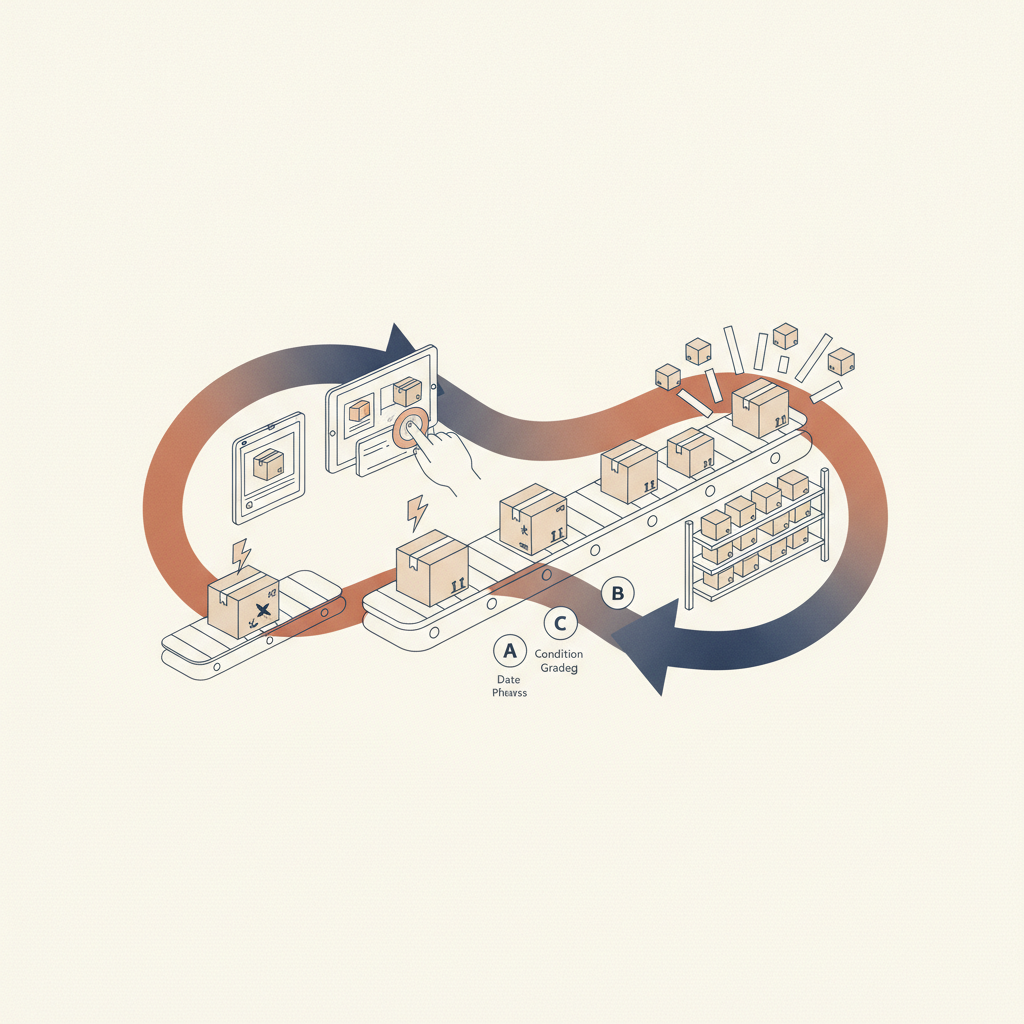
The problem is not just more parcels. It is more parcels arriving faster than grading, restocking, and liquidation channels can absorb them at the normal pace. When cycle time stretches from a 48 hour median to a week or more, three things happen at once: markdown decay eats into resale value on anything headed back to shelf, chargeback windows tighten because evidence gets photographed late, and warehouse space fills with product that has not been graded or dispositioned yet.
This is the same economics covered in markdown decay versus restock speed, except peak season compresses the timeline. A garment that loses 1 to 2 percent of resale value per week of delay under normal conditions can lose considerably more when the delay stretches from days to weeks during the exact window when resale demand for that category is also dropping post-holiday.
Building the Q4 returns budget
A peak season returns budget has three components: forecasted volume, cycle time under load, and disposition capacity. Skipping any one of them means the other two get discovered the hard way in January.
Volume forecasting
Start with the historical return rate against Q4 order volume, then adjust for category mix. Gift-heavy categories like apparel, toys, and electronics carry higher return rates than staples, and gift purchases specifically skew toward exchanges and no-fault returns rather than defect claims. A retailer expecting a 25 percent lift in Q4 orders should model returns lift separately, not proportionally, because gift-driven returns concentrate hard in the first three weeks of January rather than spreading across the quarter.
Cycle time under load
Ask what your median cycle time does when volume triples. A facility running a steady 48 hour median from inbound scan to disposition needs to know whether that number holds, or whether it degrades to five or seven days once receiving queues back up. This is the single biggest lever in the whole budget, because every day of added cycle time is a day of carrying cost, markdown decay, and delayed liquidation revenue.
Disposition capacity
Grading capacity and liquidation channel capacity both need headroom. AI grading against the A, B, C, R scale does not slow down proportionally with volume the way manual grading does, but downstream channels (restock, liquidation buyers, donation partners, destruction vendors) each have their own throughput limits. A budget that assumes disposition scales infinitely is a budget that is wrong by January.

Peak versus baseline: what changes in the model
| Budget line | Baseline month | Peak Q4/January window |
|---|---|---|
| Return rate vs orders | Historical average | Higher, concentrated in gift categories |
| Cycle time (inbound to disposition) | ~48 hour median | Depends on reserved capacity; can double or triple without planning |
| Grading throughput | Steady state, AI-vs-operator match ~99.6% | Same accuracy target, but queue depth risk without added capacity |
| Markdown decay exposure | Low, restock keeps pace | High if cycle time slips, compounded by post-holiday demand drop |
| Chargeback and INAD risk | Manageable with standard evidence capture | Higher risk if photo evidence and grading lag behind arrival volume |
| Liquidation channel load | Steady feed | Risk of flooding one channel; needs multiple buyers lined up in advance |
The January spike is a different problem than the November lift
Retailers often plan staffing for the Q4 sales lift and assume returns handling can absorb whatever comes back with the same team. The January spike arrives after seasonal staff have already rolled off, budgets have reset, and internal attention has shifted to next quarter's planning. That timing mismatch is exactly why peak season returns need their own line item, budgeted in Q3, not treated as an extension of holiday sales staffing.
The fix is reserving capacity ahead of time rather than scrambling for it once parcels start arriving. That is the same logic behind returns reserve accounting: you budget for the liability before it lands, using historical patterns rather than waiting for the invoice.
What a peak-ready returns SLA looks like
Partners and retailers evaluating a returns processing network for Q4 should ask for specifics, not general assurances. A peak season SLA worth signing should state a target cycle time for the surge window specifically, not just the annual average, and it should name the grading confidence threshold that triggers automatic disposition versus operator review, since that ratio shifts capacity math directly. It should also spell out how many liquidation and donation channels are available so no single buyer absorbs an unplanned flood, and it should commit to evidence capture (photos, condition tags, disposition logs) on every unit regardless of volume, since evidence is exactly what degrades first under pressure at facilities without dedicated capacity.
This is the same conversation covered in SLA design for white-label returns partners, applied specifically to the seasonal window rather than steady-state operations.
A four-week countdown checklist
Four weeks before your expected peak, confirm reserved processing capacity with your returns partner and get the peak-window cycle time commitment in writing. Three weeks out, line up secondary liquidation and donation channels so no single buyer becomes a bottleneck. Two weeks out, review chargeback and INAD dispute history from last year's spike and confirm evidence capture will not lag under volume. One week out, confirm reporting cadence so you can see queue depth and disposition rates in near real time rather than finding out about a backlog after it has already cost you a week of markdown decay.
Frequently asked questions
When does peak season returns volume actually peak?
Order volume peaks in November and early December, but returns volume typically peaks in the first three weeks of January as gift returns, exchanges, and post-holiday remorse concentrate in a narrow window. Budgeting for the January spike separately from the Q4 sales lift is the single most common gap in retailer planning.
How much does cycle time actually matter during peak season?
It is the biggest lever in the whole budget. A facility holding close to its normal 48 hour median cycle during peak avoids the markdown decay and chargeback risk that comes with a cycle time stretching to a week or more under unplanned volume.
Does AI grading accuracy hold up during volume spikes?
Grading accuracy should not depend on volume. areturnz reports about 99.6% AI-vs-operator match accuracy across 180K+ processed returns, and that consistency is exactly what makes AI grading useful during a surge: it does not slow down or degrade the way manual grading queues do under pressure.
What is the biggest budgeting mistake retailers make for Q4 returns?
Treating returns capacity as an extension of holiday sales staffing rather than its own line item. Seasonal staff often roll off before the January return spike lands, and budgets reset before the returns liability actually shows up on the books.
How far in advance should peak season returns capacity be reserved?
At minimum four weeks ahead of your expected peak, though larger volume increases warrant locking in reserved capacity, liquidation channel commitments, and reporting visibility even earlier, ideally as part of Q3 planning rather than a Q4 scramble.
Want to see what a peak-ready returns budget actually looks like against your own Q4 order volume? Talk to areturnz about reserving capacity before the spike hits, and compare notes against the broader returns economics playbook.
Related reading: The January Returns Spike: What Changes After the Holidays End
Proof on every return
Photos, an AI condition grade, and a full custody chain, attached to every parcel and available via the API.