Returns Capacity Planning for Partners: Scaling Nodes Before the Surge

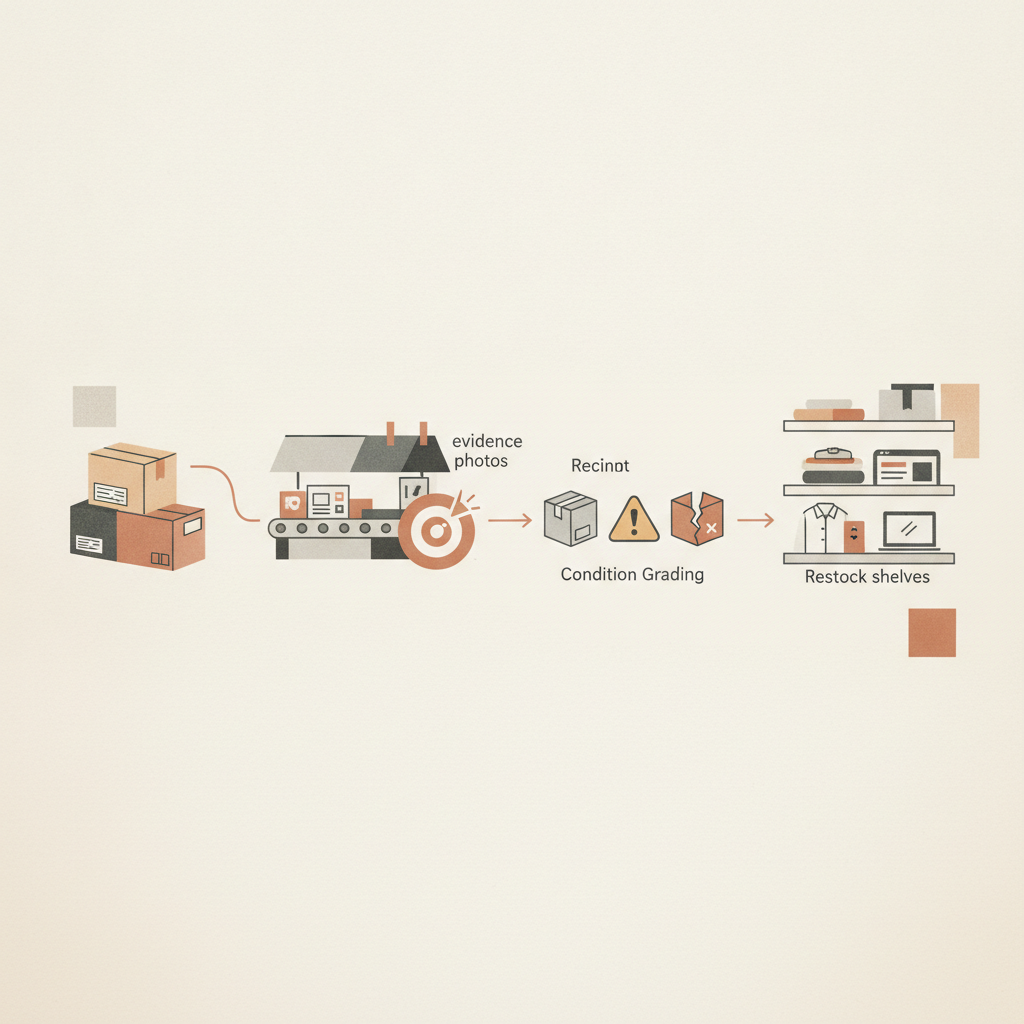
Returns capacity planning is the process of forecasting inbound return volume by week, mapping it against labor, grading, and storage capacity at a processing node, and pre-committing resources before the surge hits rather than reacting to it. At areturnz, every partner node runs against this discipline because the network processes 180K+ returns with a 48 hour median cycle from inbound scan to disposition, a number that only holds if capacity is sized ahead of demand instead of chased after it.
Why peak season breaks static capacity models
Most returns operations size their team and floor space around an average week. That works fine in March. It falls apart in the six weeks after the winter holidays, when return rates for apparel and electronics can run two to three times the annual average and everything arrives at once instead of trickling in. A node that is comfortable at 400 units a day in October can see 1,100 units a day by the second week of January. If staffing, grading throughput, and disposition routing were all sized for 400, the backlog does not clear, it compounds.
The Q4-to-January whiplash
The pattern is consistent enough to plan against. Gift returns spike hardest in the first two weeks after Christmas, ecommerce apparel returns lag holiday shipping by roughly ten to fourteen days, and electronics returns cluster around warranty and buyer's remorse windows that peak in mid-January. A node that only starts hiring or renting overflow space when the surge is visible on the receiving dock is already behind by two to three weeks of volume.
The four levers node operators pull before a surge
Capacity planning is not one number. It is four separate constraints that all have to move together, because fixing one without the others just shifts the bottleneck.
Labor and shift scheduling
Receiving, photo capture, and quality checks are still human-paced at the front door even in an AI-assisted node. Partners typically need a 30 to 45 day runway to recruit and train seasonal receiving staff, so the hiring decision has to be made off a forecast, not off actual arrival volume.
Grading throughput and AI assist
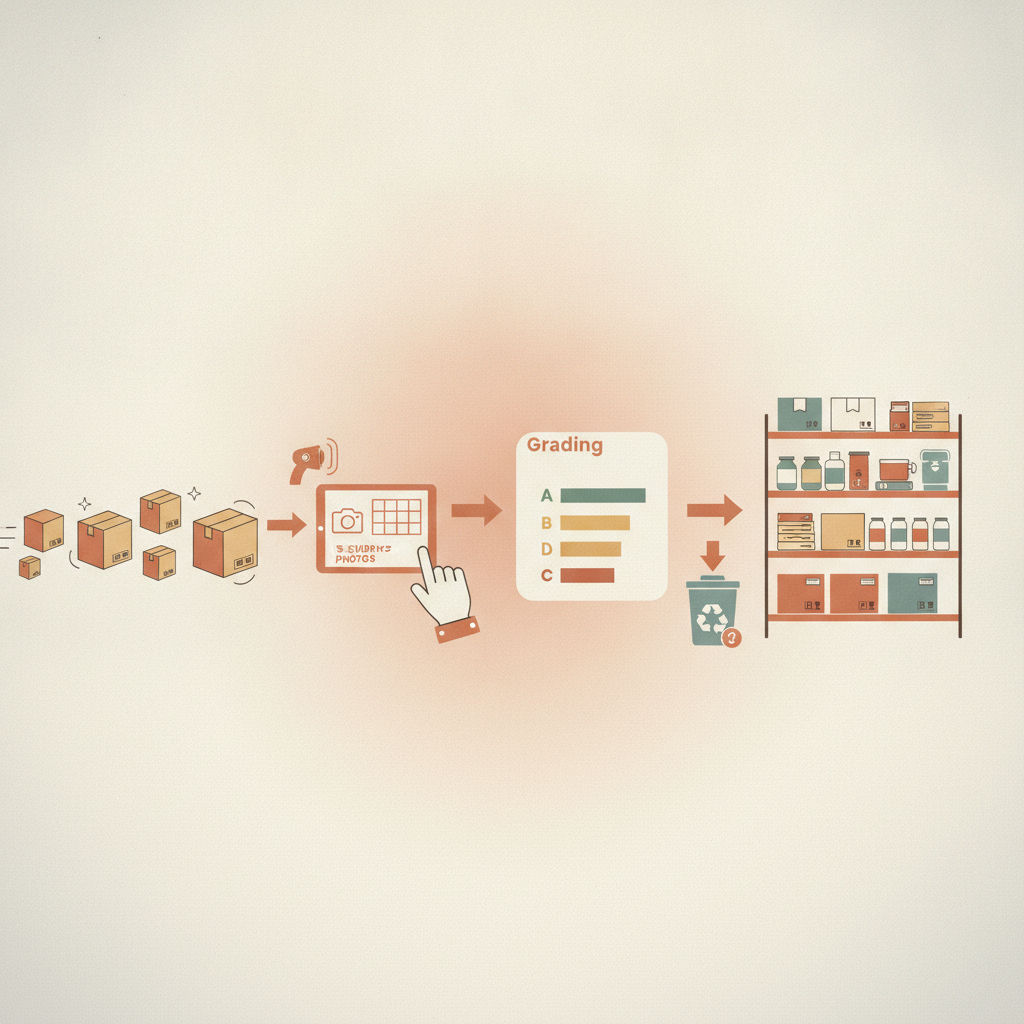
AI condition grading absorbs most of the surge pressure that used to fall on human graders. Because the model runs A/B/C/R grading with a confidence score on every unit, a node can add inbound volume without adding graders one-for-one, as long as camera stations and network throughput are provisioned for the higher scan rate. This is the lever that scales fastest and cheapest, which is why partners lean on it hardest during peak weeks.
Storage and staging space
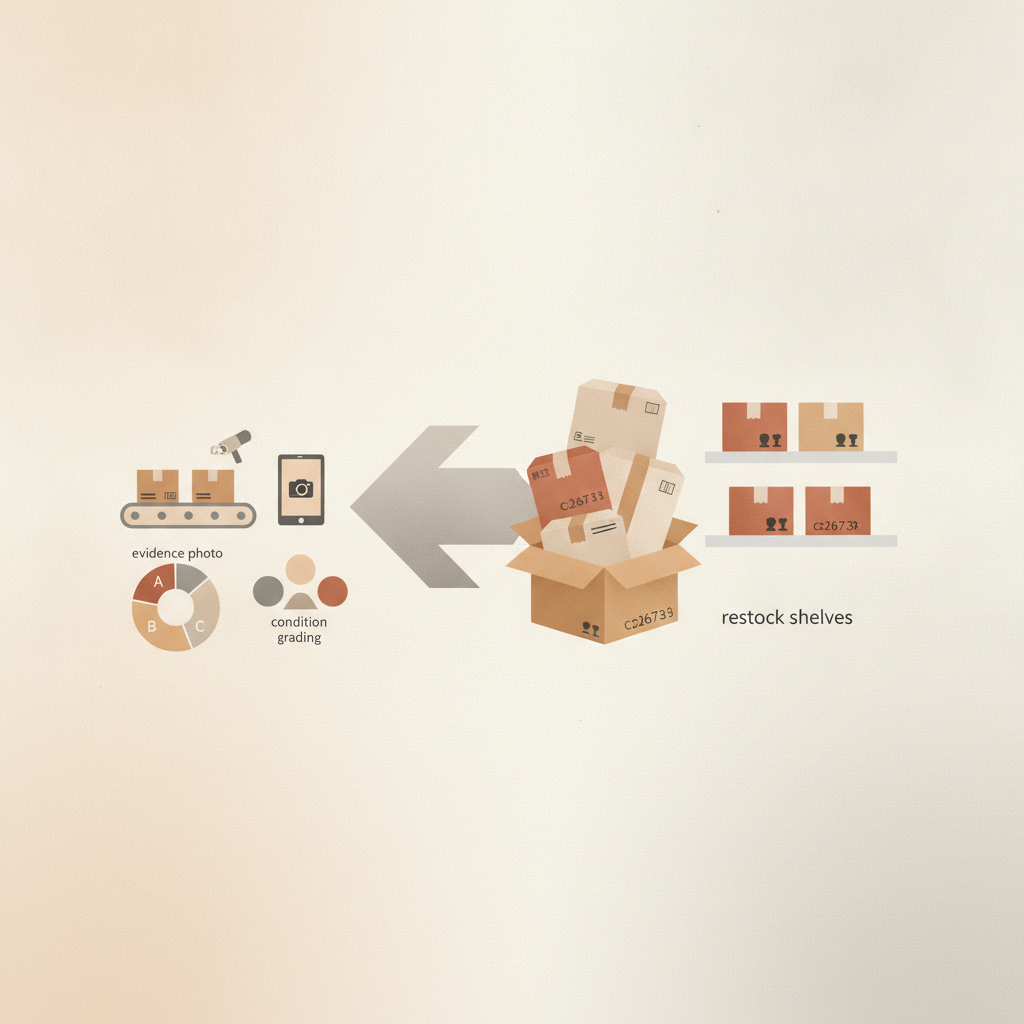
Restock-bound units, liquidation pallets, and donation holds all need separate staging areas, and during a surge those areas fill faster than disposition can clear them. Nodes that plan capacity well pre-lease overflow racking or floor space for a defined eight to ten week window rather than scrambling for it mid-surge.
Disposition routing capacity
Grading a unit and deciding what happens to it are two different steps. If liquidation partners, donation pickups, or destruction vendors cannot absorb a higher weekly volume, graded inventory piles up waiting for its next move. Disposition capacity has to be contracted ahead of the surge, with volume commitments confirmed, not assumed.
Sizing capacity: a reference table
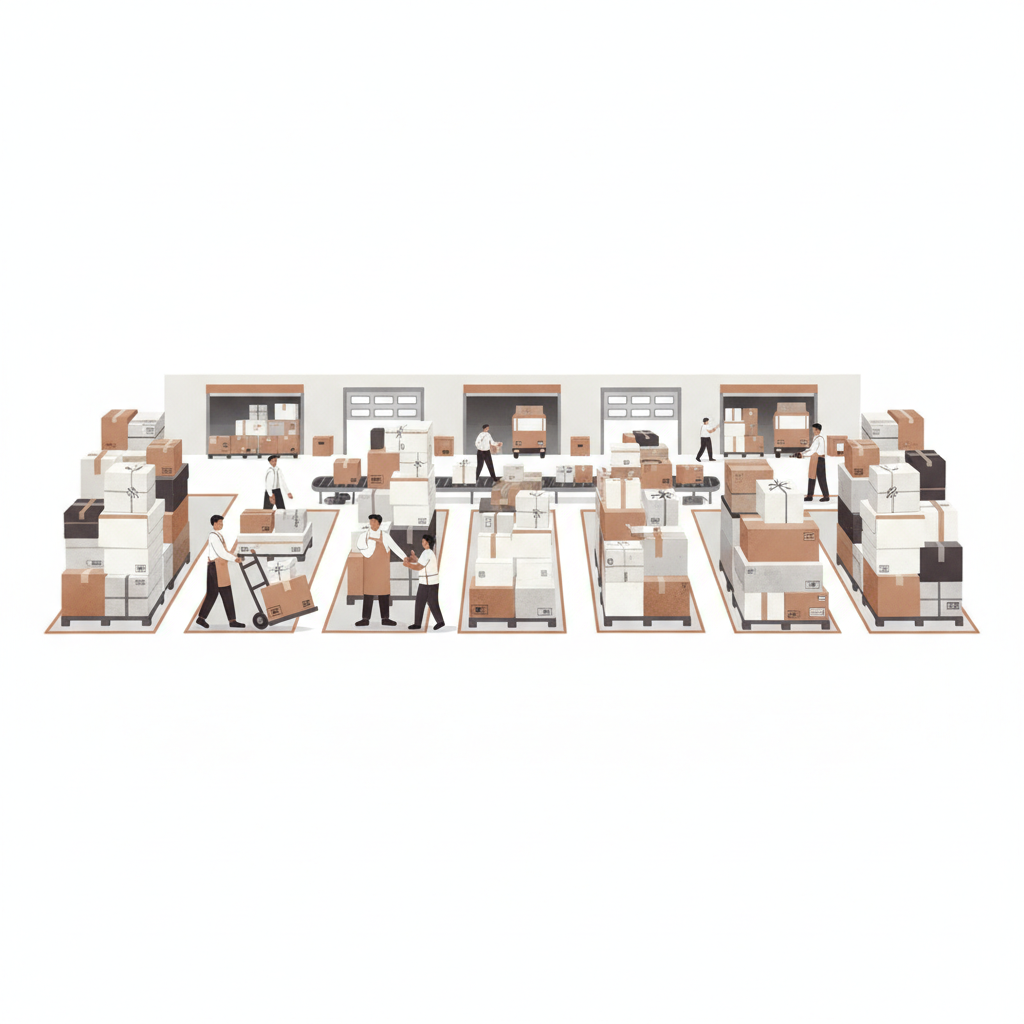
The table below is a simplified planning matrix partners use to translate forecast volume into the four levers above. It is a starting point, not a substitute for a node-specific model, but it shows how the numbers scale together.
| Daily inbound volume | Receiving staff needed | Grading stations | Staging space (sq ft) | Lead time to scale |
|---|---|---|---|---|
| Up to 400 units/day | 4 to 6 | 2 | 1,500 | Baseline, no scaling needed |
| 400 to 700 units/day | 8 to 10 | 3 to 4 | 2,800 | 3 to 4 weeks |
| 700 to 1,100 units/day | 12 to 16 | 5 to 6 | 4,500 | 5 to 6 weeks |
| 1,100+ units/day | 18+ | 7+ | 6,500+ | 8+ weeks, overflow node required |
Building the surge model 90 days out
Partners who hold their SLA through peak season start the forecast around late September for the Q4-to-January window. The model pulls three inputs: last year's actual daily volume by week, this year's projected order growth from the retailer or brand, and any known catalog or promotion changes that shift the return mix toward higher-touch categories like electronics. From there, capacity commitments (labor, grading, staging, disposition) get locked in tiers, with a trigger point at each volume band in the table above where the next tier of resources activates automatically instead of waiting on a manager's judgment call.
This is the same logic covered in more detail in our guide to SLA design for white-label returns partners, where service level commitments are built to hold even when volume moves. Capacity planning is the operational half of that promise: the SLA sets the target, capacity planning is what actually delivers it in week two of January.
How areturnz nodes scale without breaking SLA
Facility NJ-01 in East Hanover, New Jersey runs the same tiered model described above, and it is the reference node new partner facilities are benchmarked against during onboarding, a process covered in the node operator onboarding guide. Two things make the surge manageable rather than chaotic. First, AI grading holds its 99.6% match accuracy against operator review regardless of volume, so a surge does not force a tradeoff between speed and accuracy. Second, every unit still ships with a full evidence bundle (outer label, opened parcel, item, defect photos) even at peak throughput, which matters because disputes and INAD claims tend to spike right alongside return volume in January. You can see what that evidence bundle looks like at the evidence sample page.
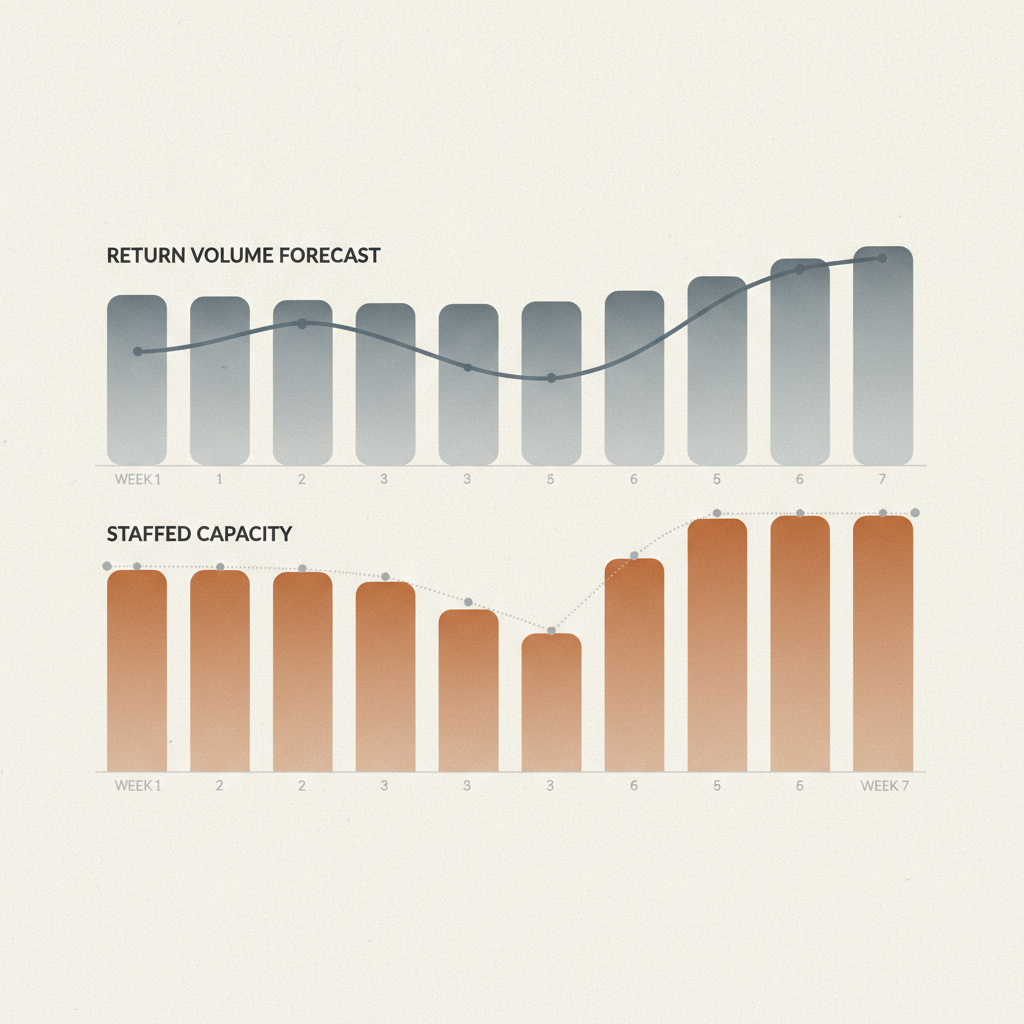
For partners evaluating whether to build seasonal capacity in-house or route peak overflow through an existing network, the tradeoffs are covered in our broader partner playbook, and current volume tiers and pricing are listed on the pricing page. Partner-specific use cases, including how brands and marketplaces route surge volume, are outlined at use cases for partners.
Frequently asked questions
How far ahead should a node start peak season capacity planning?
Most partners start locking labor and space commitments 60 to 90 days before the expected surge. Grading capacity can flex faster since AI assist absorbs much of the added volume, but staffing and staging space both carry multi-week lead times that have to be planned around, not reacted to.
Does AI grading actually reduce the staffing need during peak season?
Yes, within limits. Grading throughput scales without adding headcount one-for-one because the AI handles condition assessment and confidence scoring on every unit. Receiving, unboxing, and photo capture stay human-paced, so labor planning still has to account for those steps at the higher volume.
What happens if a node underestimates peak volume?
The cycle time from inbound scan to disposition stretches past the 48 hour median, disposition backlogs build in staging, and dispute response times slow right when return-related disputes are also spiking. That is why disposition routing capacity, not just receiving capacity, needs its own volume commitment ahead of the surge.
Should capacity planning differ by product category?
Yes. Apparel surges are driven mostly by gift returns and size exchanges, and clear fast. Electronics surges run longer because warranty windows and troubleshooting delay the return decision. Category mix should shift the staffing and grading station allocation in the surge model, not just the total volume number.
Can a partner add temporary overflow capacity mid-surge if the forecast was wrong?
It is possible but costly and usually slower than planned capacity, since overflow racking, temp staffing, and last-minute disposition contracts all carry a premium during the same weeks every other retailer is also scrambling. This is the core reason the 90-day forecast model exists.
If you are sizing a node or evaluating partner capacity for the next peak season, talk to areturnz about current volume tiers and onboarding timelines.
Related reading: Peak Season Returns SLA: What to Promise Partners During Q4 and January
Proof on every return
Photos, an AI condition grade, and a full custody chain, attached to every parcel and available via the API.