What Is Returns Processing? A Plain-Language Definition
Returns processing is the set of operational steps a retailer, brand, or logistics partner follows after a customer sends an item back, covering receiving the parcel, inspecting and grading the item's condition, and deciding what happens to it next (restock, liquidate, donate, or destroy). areturnz runs this as a dedicated network: every parcel is photographed on arrival, graded by AI on an A/B/C/R scale, and routed by disposition rules, with the full event captured in an evidence bundle rather than left to a spreadsheet or a warehouse worker's memory.
The term gets used loosely. Some people mean the whole reverse supply chain. Others mean just the refund transaction. This article sticks to a plain definition and walks through the actual steps, because the steps are where cost and recovery get decided.
What happens during returns processing, step by step
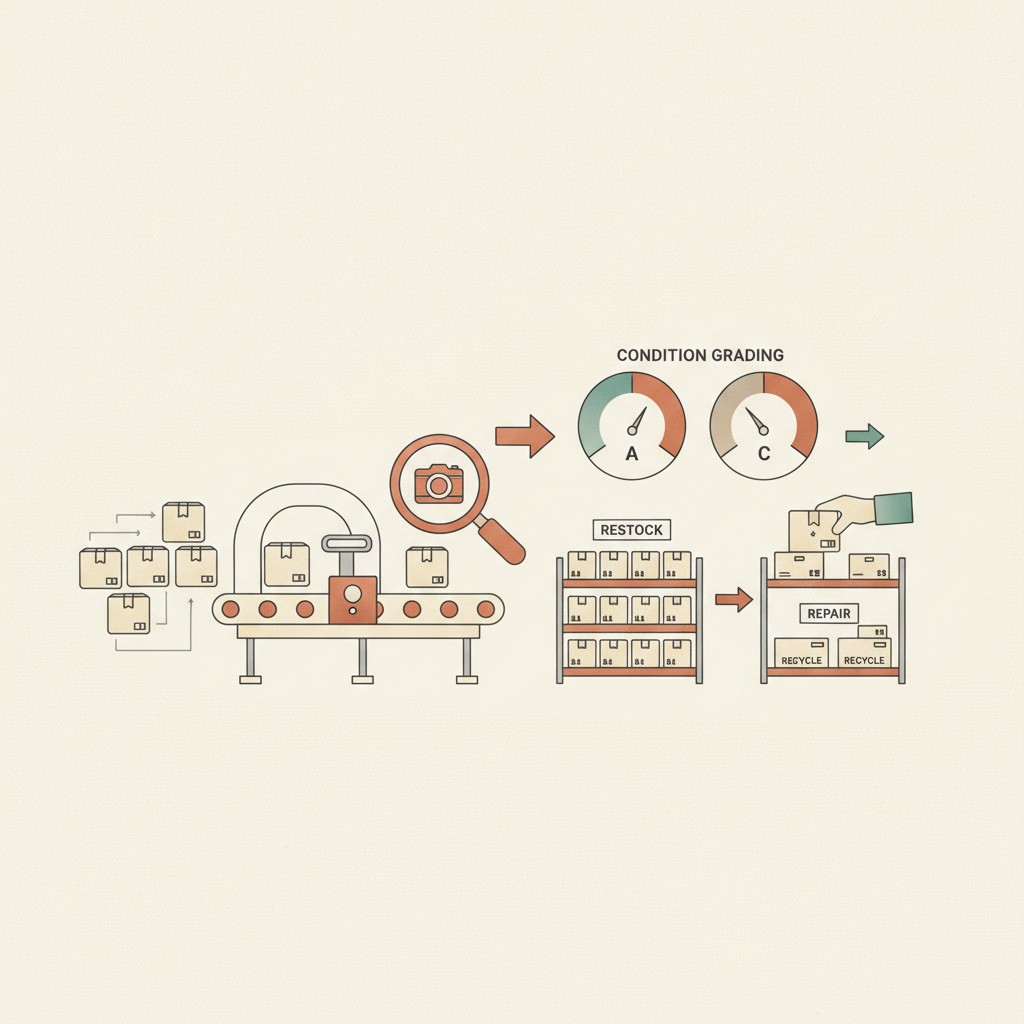
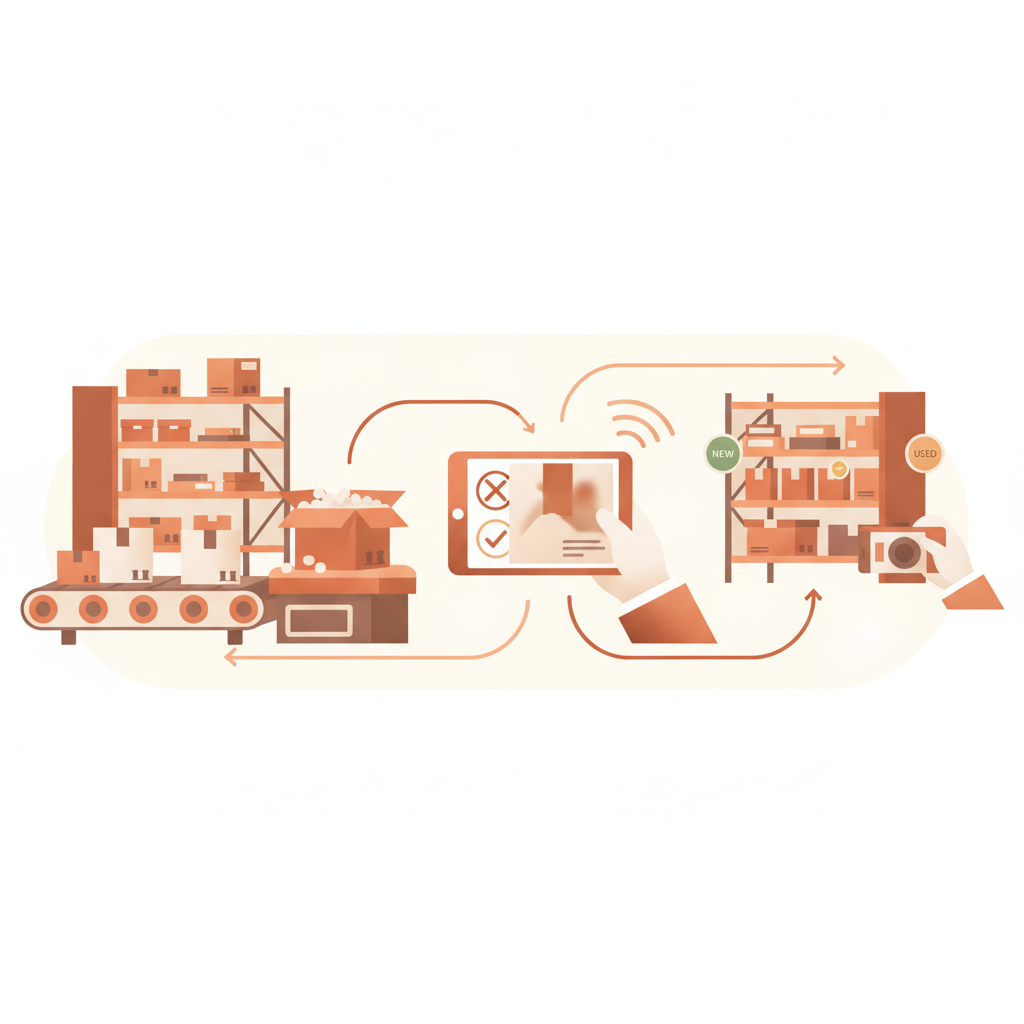
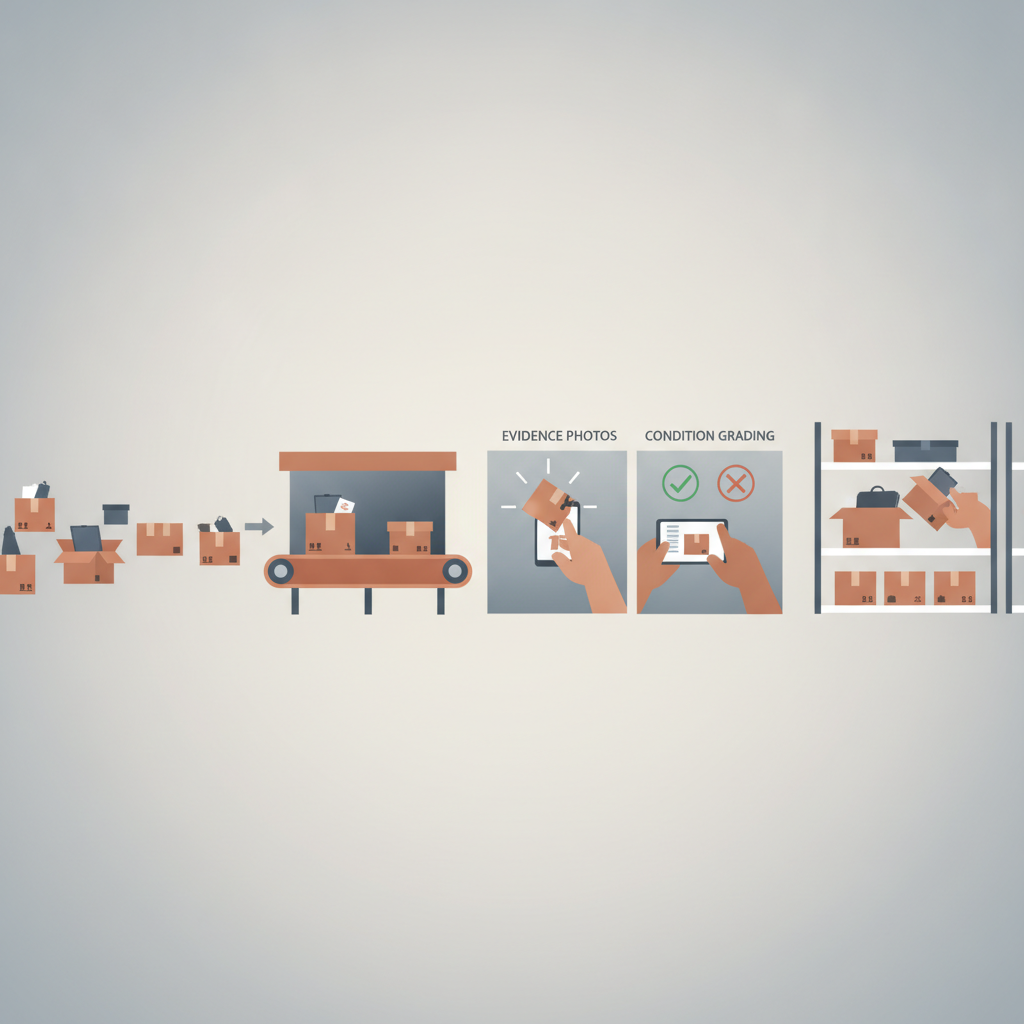
Strip away the jargon and returns processing is five things happening in sequence, usually within a day or two of the parcel arriving at a facility.
1. Inbound receiving
The parcel is scanned in, matched to an order or RMA, and opened. At areturnz this is also when the first photos get taken: the outer label, the opened box, and the item itself. That photo record becomes the starting point of the evidence trail, which matters later if a dispute comes up (see how photo evidence kills item-not-as-described disputes).
2. Inspection and condition grading
Someone, or something, decides what shape the item is in. Manual inspection is slow and inconsistent between shifts. areturnz uses an AI model that assigns a grade of A, B, C, or R (new/like-new, light wear, heavy wear, or return-to-vendor/scrap) along with a confidence score and a set of detected tags like "missing tag" or "scuff on sole." The system runs at about 99.6% agreement with human operator review, which is what lets most returns skip a manual bottleneck entirely.
3. Disposition decision
Every grade maps to a rule: restock as new, resell as open-box, send to liquidation, donate, or destroy. Good disposition rules are written in advance and only overridden by a human when something doesn't fit the pattern, with that override logged. A full breakdown of how this works lives in disposition rules: turning grades into decisions.
4. Routing and execution
The item physically moves: back onto a shelf, into a liquidation pallet, to a donation partner, or to destruction with a certificate issued. This is the step most returns programs get wrong by letting items sit, because every day an item spends undecided is a day of markdown decay eating into recovery value.
5. Evidence and reconciliation
The paper trail closes the loop: photos, grade, confidence score, disposition, and timestamps bundled together and made available via dashboard or signed-JSON API with webhooks. This is what a finance team pulls for chargeback defense, what a brand pulls for a warranty claim, and what an auditor pulls for a compliance check.
Why returns processing matters for margin, not just logistics
Returns processing gets filed under operations, but it behaves like a margin lever. A returned sweater that sits ungraded for two weeks loses resale value every day it waits, while the same sweater graded and restocked within 48 hours can go back on the shelf at close to full price. areturnz's median cycle from inbound scan to disposition runs about 48 hours across 180,000-plus returns processed, which is the difference between an item that re-enters commerce at value and one that quietly becomes a write-off. The deeper economics, including restock velocity and liquidation recovery math, are covered in the returns economics guide.
Returns processing vs related terms
These terms get mixed up constantly, so a side-by-side helps more than another paragraph of definitions.
| Term | What it actually covers | Where it falls short alone |
|---|---|---|
| Returns processing | Receiving, inspecting, grading, deciding disposition, and recording evidence for a returned item | None by itself; this is the full operational scope |
| Returns portal | The customer-facing form or page that issues a label and starts a return | Stops at the label; has no view into what happens to the physical item |
| Reverse logistics | The broader movement of goods backward through the supply chain, including transportation | Describes the flow, not the inspection or grading decisions inside it |
| RMA (Return Merchandise Authorization) | The approval and tracking number that lets a return happen | A paperwork step, not the physical handling of the item |
| Disposition | The final decision made for a graded item (restock, liquidate, donate, destroy) | Just one stage inside returns processing, not the whole thing |
For a closer look at two of these terms specifically, see what is an RMA and reverse logistics companies and how provider types differ.
How AI changes returns processing
Manual grading used to mean a warehouse worker making a judgment call on condition, usually under time pressure, with no consistent record of why a decision was made. AI grading changes two things: speed and consistency. A model can assess a photo in seconds and attach a confidence score, so low-confidence items route to a human while high-confidence items move straight to disposition. areturnz's model holds roughly 99.6% match accuracy against operator review, and that number is published, not estimated, because it is the figure that determines how much human review a given volume actually needs. The grading scale itself, A/B/C/R, is explained in full in the A/B/C/R grading scale breakdown.
What to look for in a returns processing partner
Not every provider that touches a return actually processes it. A label generator stops at the RMA. A general 3PL might receive the box but has no grading model and no evidence bundle. When evaluating a partner, ask for three things specifically: a documented cycle time (areturnz runs a 48 hour median from scan to disposition), a stated grading accuracy figure with a confidence score attached, and a sample evidence bundle you can inspect before signing anything. areturnz publishes a live example at the evidence sample page, and pricing details are available on the pricing page.
Frequently asked questions
Is returns processing the same as a returns policy?
No. A returns policy is the set of rules a retailer publishes (return window, restocking fee, who pays shipping). Returns processing is what physically happens to the item once it comes back, regardless of what the policy said.
Who typically handles returns processing?
It can be done in-house by a retailer's own warehouse team, bundled into a general 3PL's services, or run by a dedicated returns processing network like areturnz that specializes only in this function and operates its own facilities, including NJ-01 in East Hanover, New Jersey.
How long should returns processing take?
Industry practice varies widely, with some operations taking a week or more per item. areturnz targets and reports a median of about 48 hours from inbound scan to final disposition, because every extra day tends to cost resale value through markdown decay.
What is the A/B/C/R grading scale mentioned in returns processing?
It's a four-tier condition grade: A for new or like-new, B for light wear, C for heavy wear or cosmetic damage, and R for return-to-vendor or scrap. Each grade carries an AI confidence score and feeds directly into the disposition decision.
Does returns processing include fraud and dispute handling?
It should. Photo evidence captured during processing, like outer label, opened parcel, and item condition, is what retailers and marketplaces use to contest item-not-as-described claims and chargebacks after the fact.
Want to see how a real returns processing cycle looks end to end, evidence and all? Get in touch with areturnz and we'll walk you through a sample run.
Proof on every return
Photos, an AI condition grade, and a full custody chain, attached to every parcel and available via the API.