areturnz vs returns portal software: an honest comparison
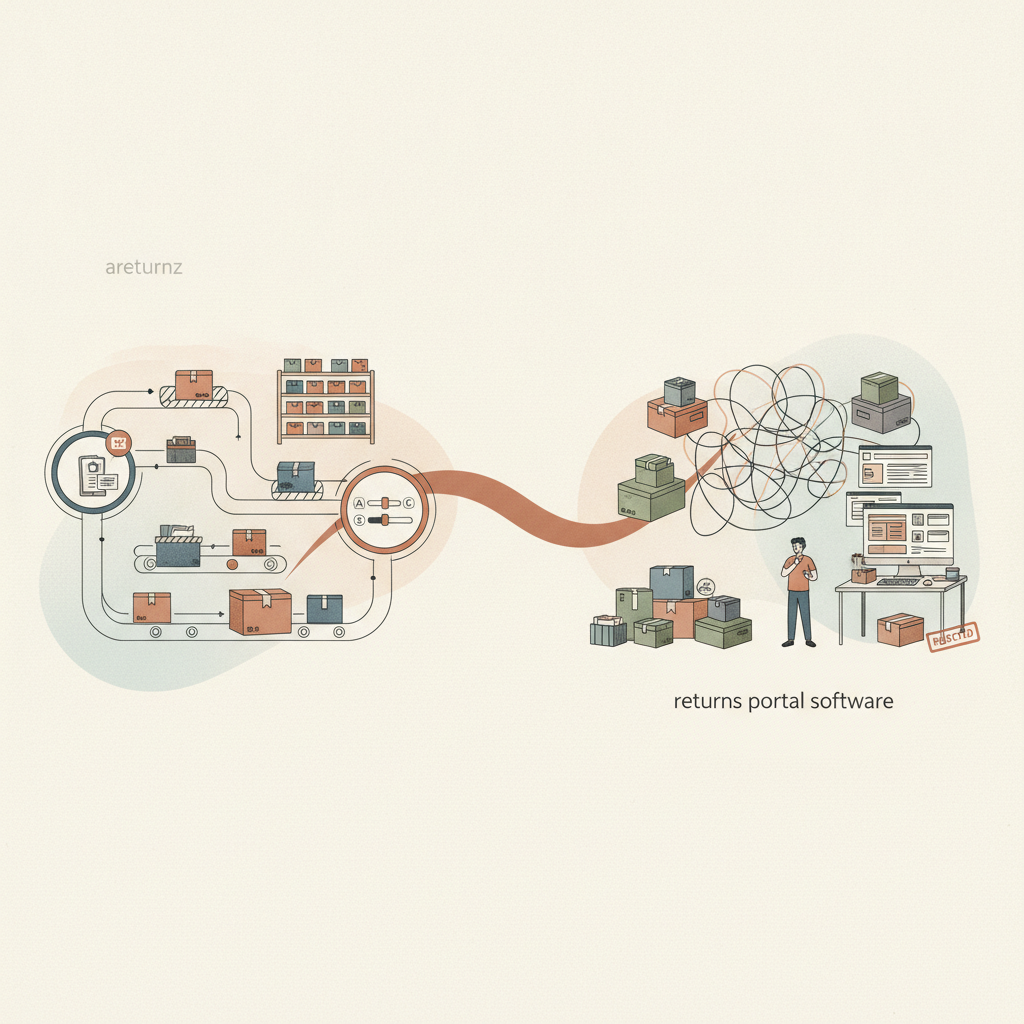
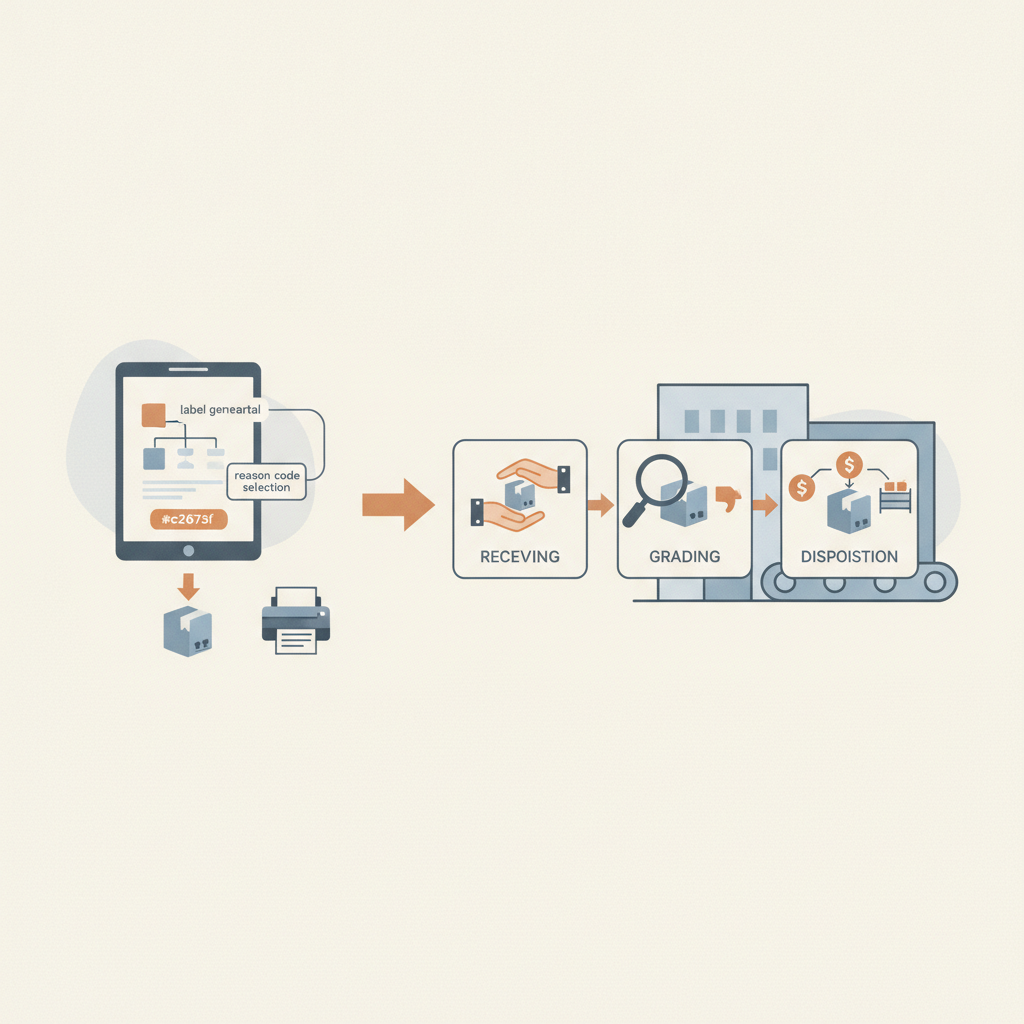
areturnz is not a competitor to returns portal software, it is a different layer of the returns stack: a returns portal generates labels and captures a customer's reason code, while areturnz physically receives, photographs, AI-grades on an A/B/C/R scale, and dispositions the parcel once it arrives, with a full evidence bundle attached to every unit. Comparing the two only makes sense if you are honest about what each one actually does, so this article breaks it down category by category instead of pretending they compete head to head.
What a returns portal actually does
Most returns portal software, think a hosted page a shopper clicks from an order confirmation email, handles the front half of a return: reason code capture, label generation, sometimes a size-exchange upsell, and a status page the customer can check. It is a UI layer. It does not touch the box once it ships back to a warehouse. Whoever receives that box still has to open it, decide what condition it is in, decide whether it is sellable, and decide what happens to it next. That work either falls on internal staff or gets handed to a processor.
What areturnz actually does
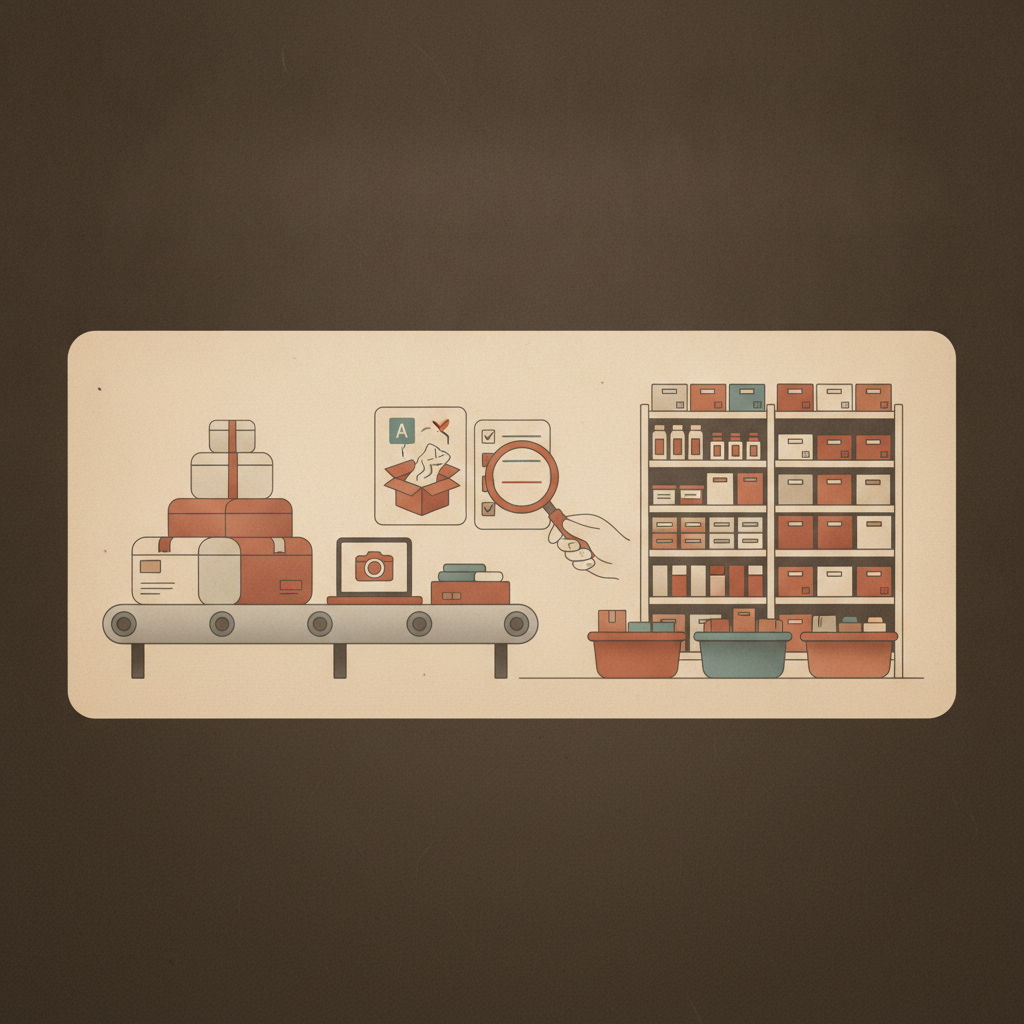
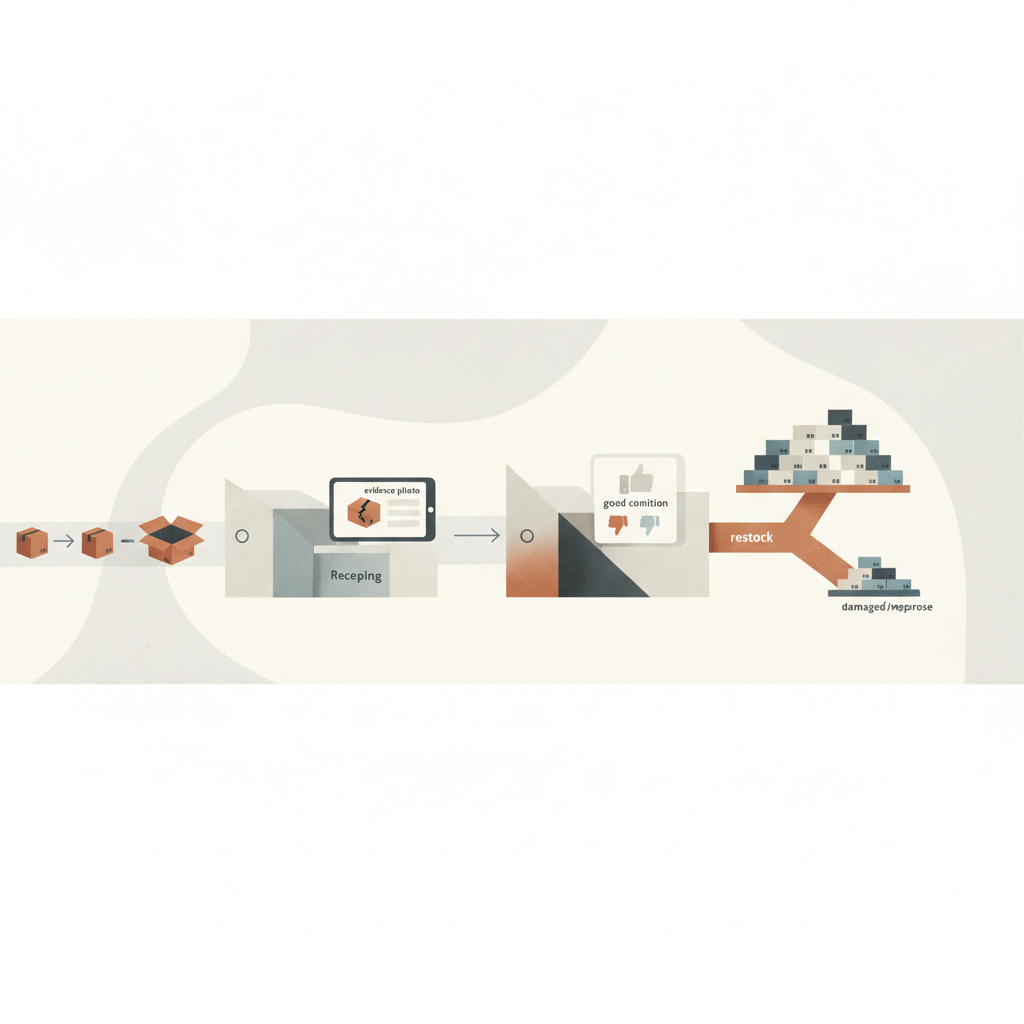
areturnz sits downstream of that portal, or replaces the need for one entirely for partners who resell processing under their own brand. Every parcel that reaches facility NJ-01 in East Hanover, New Jersey gets photographed at four points: the outer label, the opened parcel, the item itself, and any visible defect. An AI model grades condition A through R, with R meaning not resalable, and attaches a confidence score. Disposition rules then route the item to restock, liquidate, donate, or destroy, with any operator override logged against the AI's original call. The median cycle from inbound scan to disposition runs about 48 hours, and AI-vs-operator match accuracy sits around 99.6% across more than 180,000 returns processed. None of that happens inside a portal, because a portal never sees the physical item.
Where the two actually overlap and where they do not
Front-end initiation vs back-end processing
A portal answers how a customer starts a return. areturnz answers what happens to the return once it lands somewhere physical. A brand or retailer can run a portal and still have no answer to the second question, which is usually the more expensive one, since the real cost of a return lives in restock speed and disposition accuracy, not in the label.
Evidence: the part portals were never built to hold
Portals capture what the customer says. They do not capture what the item actually looked like on arrival. That gap is exactly where item-not-as-described disputes and marketplace INAD fraud live. Every areturnz return ships with a signed-JSON evidence bundle (photos, grade, confidence score, disposition, timestamps) available in the dashboard and via webhook, viewable firsthand at the evidence sample page. A portal has no equivalent artifact to hand a payment processor or a marketplace arbitration team.
Disposition and margin recovery
Grading and routing decisions determine whether a returned item gets restocked at near-full value, liquidated at a fraction of it, or written off entirely. Portal software has no visibility into condition, so it cannot influence this decision at all. This is the single biggest reason the two are not substitutes: one manages a form, the other manages margin recovery.
Estimated comparison table
The figures below are directional estimates based on typical vendor positioning in the category, not audited claims from any specific competitor, since public pricing and cycle-time data for most portal vendors is not disclosed. areturnz figures are the operating numbers stated above.
| Capability | Typical returns portal software (estimated) | areturnz |
|---|---|---|
| Physical receiving and photo documentation | Not included | Included on every parcel (label, opened parcel, item, defect) |
| Condition grading | Not applicable | AI A/B/C/R grading with confidence score |
| Disposition (restock, liquidate, donate, destroy) | Not applicable, left to receiving warehouse | Rules-based, with logged operator overrides |
| Median cycle time to a disposed outcome | Depends entirely on receiving warehouse, often untracked | About 48 hours, inbound scan to disposition |
| AI-vs-human accuracy reporting | Not published, no grading function exists | About 99.6% match accuracy across 180K+ returns |
| Dispute or INAD evidence bundle | Reason code and label history only | Signed-JSON evidence bundle, photos and grade attached |
| White-label resale to partners | Varies by vendor, usually front-end branding only | Full network resale, per-tenant reporting and webhook isolation |
When you actually need both
Most operations that scale past a few thousand returns a month end up running a portal for initiation and a processor like areturnz for everything after the box ships. That is not redundant, it is the two halves of a working system. Brands and 3PLs who resell processing under their own name typically keep their existing portal or checkout flow untouched and plug areturnz in behind it, which is how partners structure their onboarding without disrupting the customer-facing experience. For the mechanics of running that as a resold service, see the white-label returns platform partner playbook.
Pricing conversations tend to go smoother once this distinction is clear, since portal subscription fees and per-return processing fees are answering different questions. Details on how processing is priced live on the pricing page.
Frequently asked questions
Is areturnz a replacement for my returns portal?
No. areturnz handles what happens after a parcel physically arrives, receiving, grading, disposition, evidence, while a portal handles label generation and reason code capture on the front end. Most operations run both.
Can areturnz work with the portal I already have?
Yes. areturnz plugs in downstream of whatever initiation flow you use today. Nothing about the customer-facing return start experience needs to change.
Why does the evidence bundle matter if my portal already logs reason codes?
A reason code is the customer's claim. An evidence bundle is what the item actually looked like on arrival, timestamped and graded. That distinction is what closes item-not-as-described disputes and marketplace INAD claims, which reason codes alone cannot do.
Do the numbers in the comparison table apply to every returns portal vendor?
No, they are directional estimates for the category since portal vendors generally do not disclose condition-grading or disposition metrics, most do not offer that function at all. The areturnz figures, 48 hour median cycle, 99.6% match accuracy, 180K+ returns processed, are our own operating numbers.
How do I know if I need portal software, processing, or both?
If you already have a way for customers to start a return but no consistent answer for what happens to the item once it arrives, you need processing. If you have neither, you likely need both, run in sequence.
To see how areturnz would slot in behind your existing return flow, or as a full white-label solution for your customers, talk to us.
Her iade için kanıt
Fotoğraflar, yapay zekâ durum derecesi ve tam bir zimmet zinciri, her koliye ekli ve API üzerinden erişilebilir.