Grading Apparel vs Electronics vs Beauty: How ABCR Adapts by Category

Grading apparel, electronics, and beauty returns under one A/B/C/R scale means using the same four grades everywhere but changing what evidence counts as proof for each category. areturnz runs every returned parcel through the same photo capture and AI grading pipeline (outer label, opened parcel, item, defect shot), but the model weighs different signals depending on what it is looking at: a snag on a sweater is not scored the way a dead pixel on a screen is, and a broken seal on a serum bottle carries a different disposition consequence than a loose thread. The scale stays constant. The logic underneath it does not.
This matters because a single grading threshold applied blindly across product types either wastes resale value (grading a lightly worn coat as damaged) or creates liability (restocking an opened cosmetic as new). The A, B, C, R grading model areturnz uses was built around exactly that problem, and this piece goes one layer deeper into how the same four grades get applied across three very different categories.
Why category changes what grade B means
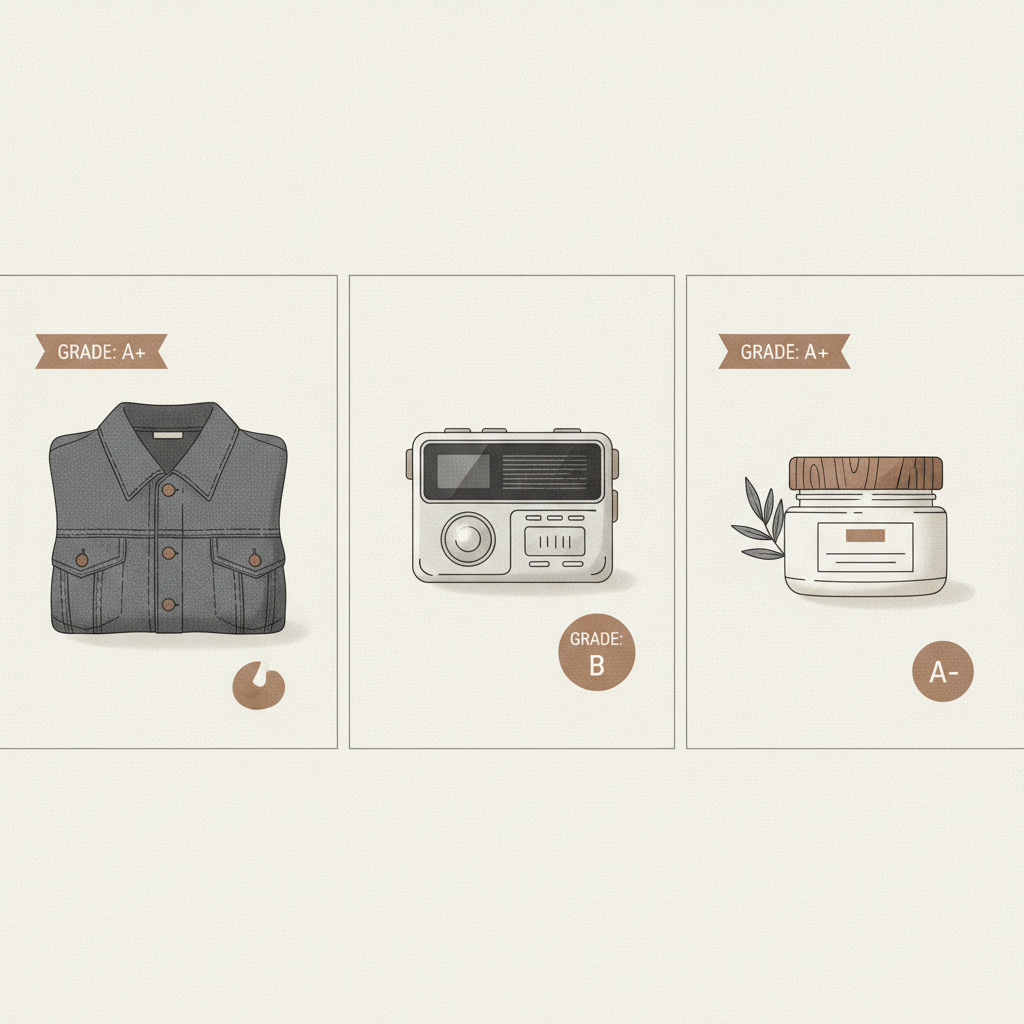
A grade in isolation is not useful. Grade B on an electronics item might mean cosmetic wear with full function, verified by a power-on test and a diagnostic log. Grade B on a garment might mean a missing hang tag but no visible wear. Grade B on a beauty product might mean the outer box is creased but the seal is intact. Same letter, three different evidence chains behind it.
areturnz's AI grading engine is trained on category-specific tag libraries. Detected tags for apparel include things like pilling, stretched seams, stains, and missing tags. Electronics tags include screen defects, port damage, battery swell, and missing accessories. Beauty tags include seal status, fill level, expiration proximity, and packaging damage. The grade letter is the output; the tag set and confidence score are what an operator or a partner actually reviews when they want to know why.
Apparel: fit, fabric, and wear over function
Apparel has no does it turn on test. Grading leans on visual wear signals and completeness: are tags attached, is the garment unwashed and unworn, are there stains, snags, or odor flags that a photo alone can partially catch. Size and SKU verification matter more here than in other categories because mis-picks and wrong-size returns are common, and a garment that is otherwise pristine but is the wrong size still needs a clear disposition path.
Grade A apparel typically means unworn, tags attached, no detectable wear. Grade B covers light handling wear, missing tags, or minor packaging issues that do not affect resale as open-box. Grade C flags visible wear, stains, or damage that push the item toward liquidation. Grade R is reserved for items that fail brand safety or authenticity checks, or that arrive as the wrong item entirely.
Electronics: function first, cosmetics second
Electronics grading inverts the priority. A device with a scratched case but full function grades differently than a pristine-looking device that fails a power-on check. Where possible, receiving workflows pair the photo evidence with functional verification: power-on confirmation, port and button checks, and accessory completeness (cables, chargers, manuals). The AI model flags cosmetic damage tags (screen cracks, casing dents, corrosion) separately from functional flags, so a partner can see at a glance whether an item failed on looks or failed on performance.
This separation matters for disposition. A device that is functionally sound but cosmetically worn is a strong candidate for open-box resale at a markdown. A device that is functionally impaired is routed toward liquidation or, if the fault is safety related (battery swelling, exposed wiring), toward destruction with a certificate attached to the evidence bundle.
Beauty: hygiene, seal integrity, and shelf life
Beauty returns carry a hygiene and regulatory dimension the other two categories do not. A grade is only as good as the seal status and fill level behind it. The AI model checks for intact induction seals, shrink wrap, and pump mechanisms, and cross-references fill level against expected volume where the image allows it. Expiration proximity is also captured, since a technically undamaged product close to its expiry date is a different disposition decision than the same product with a year of shelf life left.
Grade A in beauty essentially requires an unopened, sealed unit with no visible tampering. Anything with a broken seal, regardless of how cosmetically clean it looks, drops to grade C or R by default rules, because most retailers and platforms will not restock an opened cosmetic as new. This is one of the clearest examples of category-specific rules overriding a purely visual read: the photo might look fine, but the seal status forces a lower grade and a different disposition path.
How the ABCR scale adapts by category: a comparison
| Category | Primary grading signals | Grade A means | Grade R triggers | Typical disposition path |
|---|---|---|---|---|
| Apparel | Wear, tags, stains, size and SKU match | Unworn, tags attached, correct SKU | Wrong item, safety recall, counterfeit flag | Restock (A/B), liquidate (C), destroy or return-to-vendor (R) |
| Electronics | Function test, cosmetic condition, accessory completeness | Full function, no cosmetic damage, complete accessories | Safety fault (battery swell, exposed wiring) | Restock as open-box (A/B), liquidate (C), destroy with certificate (R) |
| Beauty | Seal integrity, fill level, expiration proximity | Sealed, full fill, ample shelf life remaining | Broken seal, tampering signs, contamination flag | Restock (A only), liquidate or donate (B/C), destroy (R) |
Confidence scores work the same way, just tuned differently
Across all three categories, every grade ships with a confidence score, and areturnz holds a 99.6% AI-versus-operator match accuracy rate across more than 180K returns processed to date. But the confidence threshold that triggers a manual review differs by category. Beauty items near an expiration boundary or with ambiguous seal photos get flagged for review more aggressively than apparel items with a slightly ambiguous wear call, because the downstream risk of a wrong call is different: a mis-graded cosmetic can become a health and compliance issue, while a mis-graded sweater is mostly a margin issue. The confidence math is explained in more detail in our post on confidence scores versus gut calls, but the short version is that categories with regulatory or safety exposure get lower auto-approval thresholds by design.
From grade to decision: disposition rules by category
The grade itself is not the end state. It feeds into disposition rules that route the item to restock, liquidation, donation, or destruction, and those rules are category-aware too. A grade B garment might restock as open-box, while a grade B beauty item almost never does. Operators can override any automated disposition, and every override is logged as part of the evidence bundle, which keeps the whole system auditable rather than a black box. Our disposition rules breakdown covers how grades convert into routing decisions in more depth.
The full cycle, from inbound scan to a logged disposition decision, runs on a 48 hour median across the network, out of the NJ-01 facility in East Hanover, New Jersey and other network nodes. Category-specific grading logic does not slow that cycle down; it runs inside the same automated pass, with manual review reserved for the flagged, lower-confidence cases.
Why this matters for partners and brands
If you run a program across multiple product categories, a single blended grading model will underperform on all of them. Apparel needs wear-focused tagging, electronics need functional verification baked into the workflow, and beauty needs seal and shelf-life logic that most generic grading tools were never built for. Partners reselling returns under their own brand, or brands running multi-category return programs, get more consistent margin recovery when the grading logic actually reflects what matters in each category rather than applying one visual standard everywhere. You can see what the underlying evidence bundle looks like for a graded item at our evidence sample page, and pricing details for running this across a full catalog are on the pricing page.
Frequently asked questions
Does the A/B/C/R scale change between categories?
No, the four grades stay the same across every category. What changes is the evidence and rules behind each grade: apparel weighs wear and completeness, electronics weighs function and cosmetics separately, and beauty weighs seal integrity and shelf life above visual condition.
Can a cosmetically perfect item still grade low?
Yes. A beauty product with a broken seal or an electronics item that fails a function test can look fine in a photo and still grade C or R, because the rules are built around the risk that matters most for that category, not just visual appearance.
How does areturnz handle low-confidence grading calls?
Every grade carries a confidence score. Calls below the category-specific threshold route to manual operator review rather than auto-disposition. Across the network, AI and operator grades match 99.6% of the time on more than 180K returns processed.
Does category-specific grading slow down processing?
No. The category logic runs inside the same automated pass at receiving. The network still holds a roughly 48 hour median cycle from inbound scan to disposition, including the returns that get flagged for manual review.
Can operators override an AI grade for a specific category?
Yes. Any grade or disposition can be overridden by an operator, and the override is logged in the evidence bundle alongside the original AI call, so the reasoning stays auditable.
If you are running returns across apparel, electronics, or beauty and want to see how category-aware grading would apply to your catalog, get in touch with areturnz.
Related reading: False-positive handling: what happens when AI grading gets it wrong
Related reading: Autonomous Disposition: When AI Grading Skips the Human Review Queue
Her iade için kanıt
Fotoğraflar, yapay zekâ durum derecesi ve tam bir zimmet zinciri, her koliye ekli ve API üzerinden erişilebilir.


