Peak Season Returns SLA: What to Promise Partners During Q4 and January
A peak season returns SLA is a separate, time-boxed service commitment covering roughly November through January that widens cycle time targets, adds volume-based triggers, and states plainly what happens if inbound returns exceed forecast. areturnz runs its network under a standard 48 hour median cycle from inbound scan to disposition, but peak season is when that number gets tested hardest, and partners deserve a written answer for what changes and what does not.
Why the standard SLA breaks in Q4 and January
Most returns SLAs are written against average daily volume. That works fine in March. It falls apart in the six weeks after Black Friday and the four weeks after the holidays, when return rates for apparel, electronics, and gifted items can run two to four times a normal month. A facility sized for average throughput either misses its cycle time commitment or quietly reclassifies the backlog as "in progress" until it clears. Neither is honest, and both cost a partner money: slower restock means more markdown decay, and a missed SLA means a harder renewal conversation.
The fix is not a vague promise to "try harder in December." It is a published, dated SLA addendum with different numbers for different weeks, tied to the same grading and disposition system that runs the rest of the year.
What actually changes during peak season
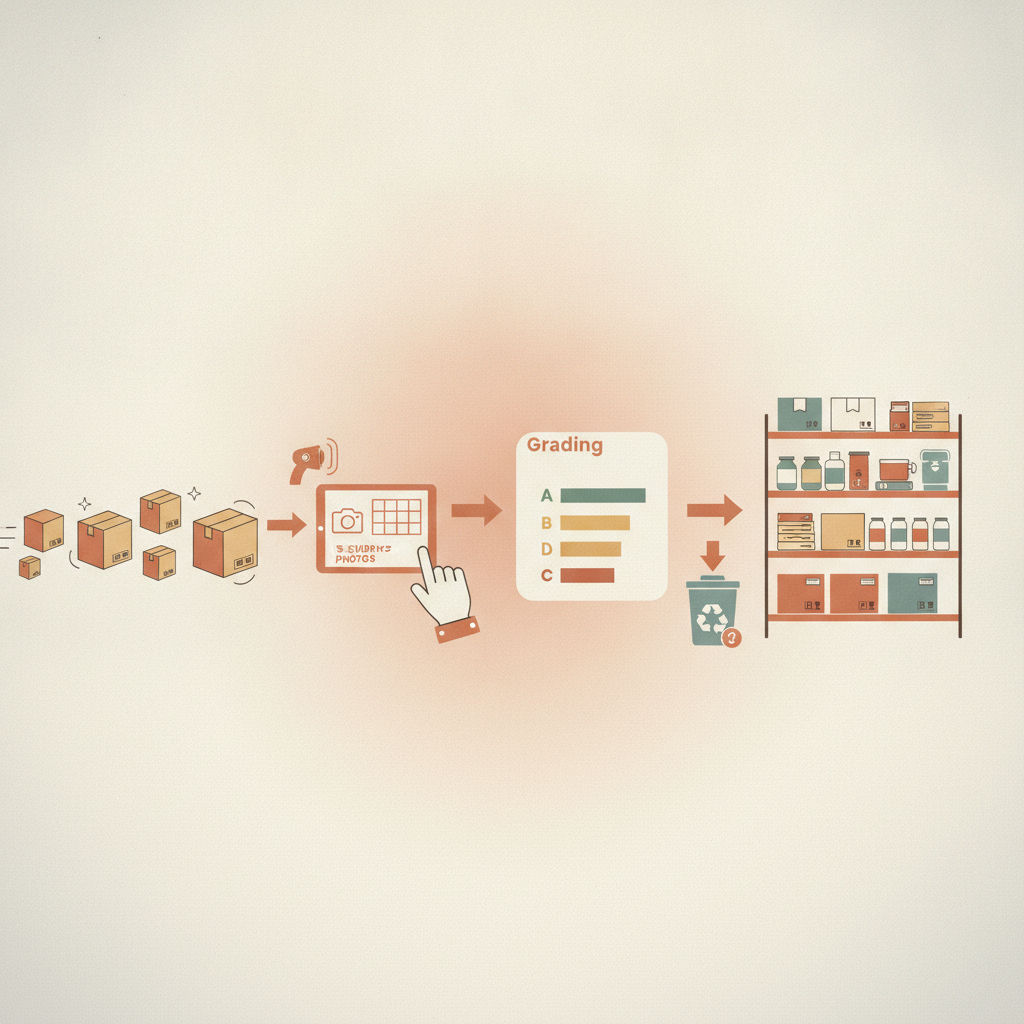
Three things move during Q4 and January: intake volume, the mix of grades coming back, and the urgency of restock decisions. Gift returns in January skew toward unopened or lightly used items (grade A and B), which is good news for restock velocity if the SLA is built to prioritize them. Q4 itself brings more damaged and mis-shipped units from rushed fulfillment, which pushes more volume toward grade C and R and toward liquidation or donation queues.
A peak season SLA should say, in writing, how each of these shifts is handled: what the cycle time target is, what triggers a volume-based extension, and what evidence a partner gets regardless of how busy the floor is.
The peak season SLA structure we use
| Commitment | Standard SLA (Feb to Oct) | Peak SLA (late Nov to Jan) |
|---|---|---|
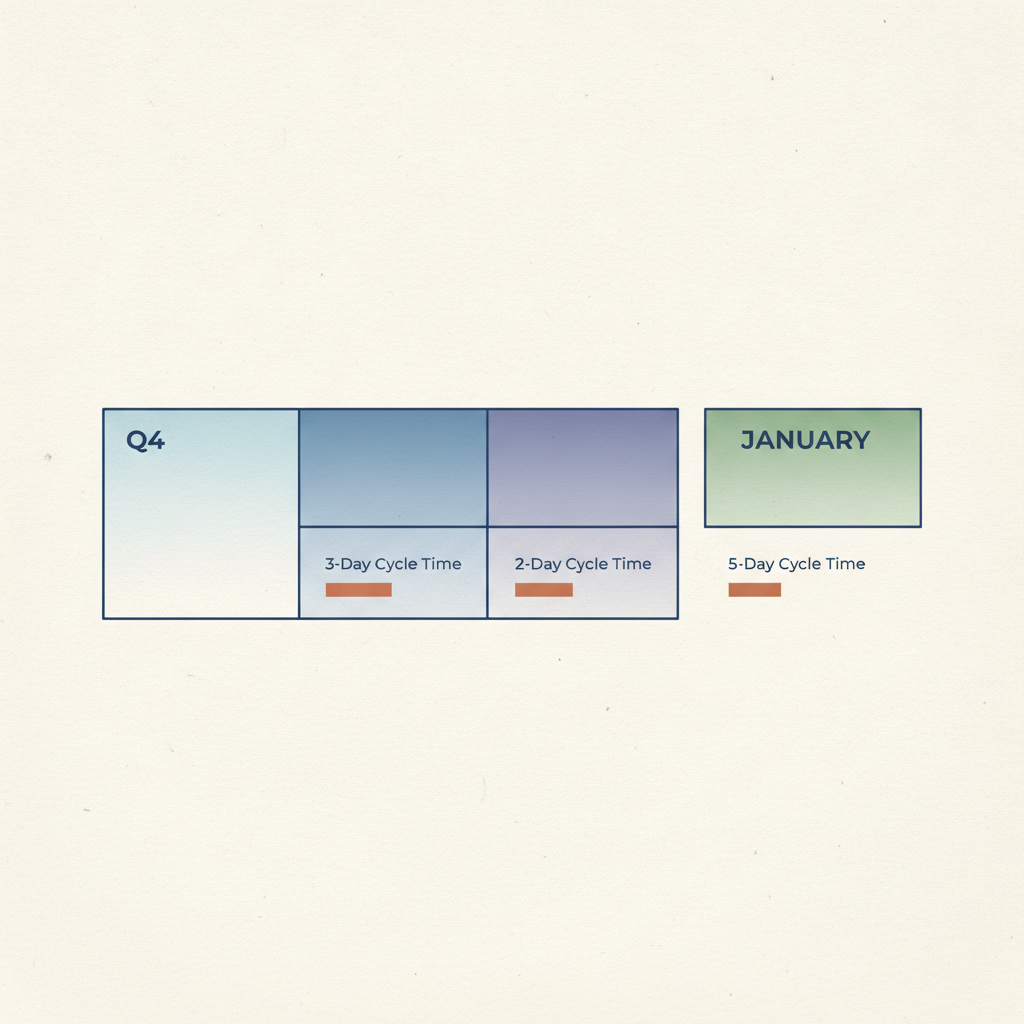
| Median cycle time, inbound scan to disposition | 48 hours | 72 hours, with grade A/B fast lane held at 48 hours |
| AI-vs-operator grading match accuracy | 99.6% | 99.6% (unchanged, no accuracy tradeoff for speed) |
| Evidence bundle delivery | Same day as disposition | Same day as disposition, no exceptions |
| Volume surge trigger | N/A | Auto-notify partner at 150% of forecast; capacity plan reviewed at 200% |
| Reporting cadence | Weekly | Twice weekly during the two peak surge windows |
| Disposition overrides | Standard operator review | Standard operator review, logged and unchanged |
What to promise for Q4
During November and December, the honest commitment is a wider cycle time window with a protected fast lane for high-confidence grades. Grade A and B items with high confidence scores can usually still clear in 48 hours because the grading step is automated and does not slow down under volume. What slows down is anything that needs a human review queue: ambiguous condition calls, disputed contents, or R-grade items headed to destruction with a compliance record attached. Widening the overall median to 72 hours during Q4 while holding the fast lane at 48 hours is a promise a network can actually keep, and it is more useful to a partner than a single number that quietly slips in practice.
Partners should also get a volume trigger, not just a target. At areturnz, crossing 150% of forecast volume in a given week fires an automatic notification, and crossing 200% triggers a capacity review call within 24 hours. That is different from a portal-and-label vendor's approach, which typically has no visibility into physical throughput at all because they never touch the parcel.
What to promise for January
January is a different problem: fewer damaged items, far more volume, and intense pressure to restock quickly before markdown windows close on holiday inventory still holding value. The SLA should commit to keeping grade A and B items on the 48 hour fast lane specifically because that is where the margin recovery is. A partner who gets a 72 hour blended average but sees their resellable inventory clear in 48 hours anyway is getting the outcome that matters, even if the average number looks wider on paper.
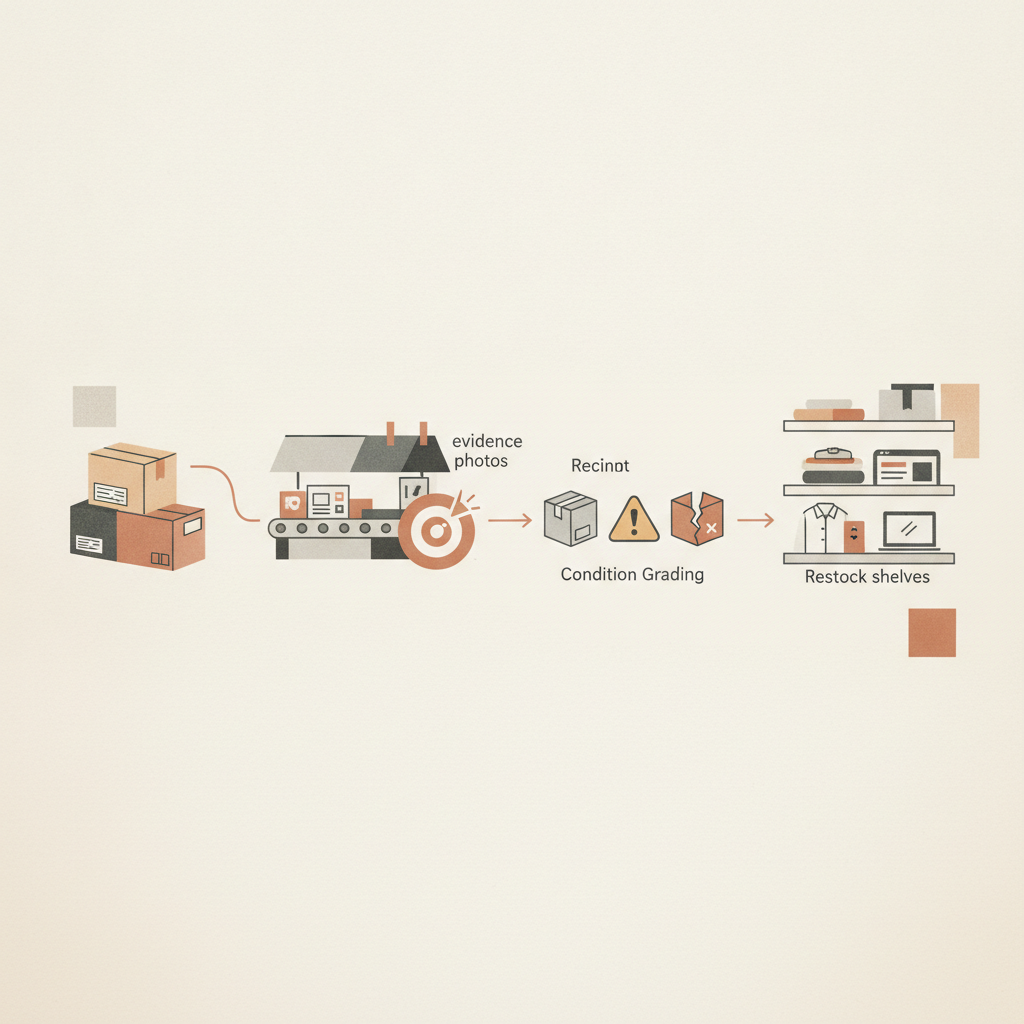
January is also the month partners most often ask for proof, since chargebacks and "item not as described" disputes spike right along with return volume. The evidence bundle commitment should not move at all during peak season. Every parcel still gets photographed at receiving (outer label, opened parcel, item, defect), still gets an A/B/C/R grade with a confidence score, and still ships with the same signed-JSON record available via API and webhook. That consistency is what lets a partner close a dispute in January using the same evidence sample format they saw in a March demo.
Building slack into the commitment instead of hiding it
The reason a peak season SLA needs its own document rather than a footnote on the standard one is that slack has to be visible to be trusted. A partner who sees a written surge trigger and a fast-lane carve-out can plan their own markdown and restock decisions around it. A partner who just gets told "we'll do our best in December" has no basis for planning at all, and finds out the SLA slipped only when the backlog shows up in a monthly report. This is the same principle covered in more general terms in SLA design for white-label returns partners, applied specifically to the two windows where volume is least predictable.
Capacity planning conversations should happen before October, not during it. NJ-01, the East Hanover facility that has processed 180K+ returns to date, plans staffing and floor space for peak volume months ahead, and partners who share forecast numbers early get SLA terms that reflect their actual expected mix rather than a generic peak multiplier.
What not to promise
Do not promise a flat 48 hour cycle time across all grades during Q4 and January unless capacity has genuinely been sized for peak, because a broken promise costs more trust than a wider but honest one. Do not promise reduced evidence standards to hit speed targets. A grading confidence score and photo bundle that gets skipped under volume pressure is exactly the scenario that turns into an unwinnable dispute three weeks later. And do not promise a single blended SLA number without breaking out the fast lane, since averages hide the outcome that partners actually care about: how fast their good inventory gets back on shelf.
Frequently asked questions
Does the AI grading accuracy rate drop during peak season?
No. The 99.6% AI-vs-operator match accuracy is a property of the grading model and confidence scoring system, not a function of floor volume. Speed can flex during peak weeks; grading accuracy does not.
What counts as a volume surge trigger?
At areturnz, a partner is notified automatically when weekly inbound volume hits 150% of the forecast baseline, with a formal capacity review scheduled if it reaches 200%. This is written into the peak SLA addendum, not left as an informal escalation.
Do evidence bundles slow down or get abbreviated during Q4?
No. Every parcel still gets the full photo set at receiving and an A/B/C/R grade with confidence score, and the signed-JSON evidence bundle still ships same day as disposition. This is one of the few commitments that does not widen during peak season.
How is this different from the general SLA design guide?
The general guide in the partner playbook covers year-round SLA structure: tiers, penalties, reporting cadence. This article covers the specific commercial commitments that need to change for the six-week Q4 surge and the January return spike, including volume triggers and fast-lane carve-outs.
Should peak season SLA terms be priced differently?
Often yes, since surge capacity has a cost. That tradeoff is covered in detail in pricing a resold returns service, and current rate cards are on the pricing page.
If you are building a Q4 and January SLA for your own partners or need one from us before peak season starts, contact areturnz to review capacity and lock in terms before the volume arrives.
Her iade için kanıt
Fotoğraflar, yapay zekâ durum derecesi ve tam bir zimmet zinciri, her koliye ekli ve API üzerinden erişilebilir.