Pricing a resold returns service: margin math for partners
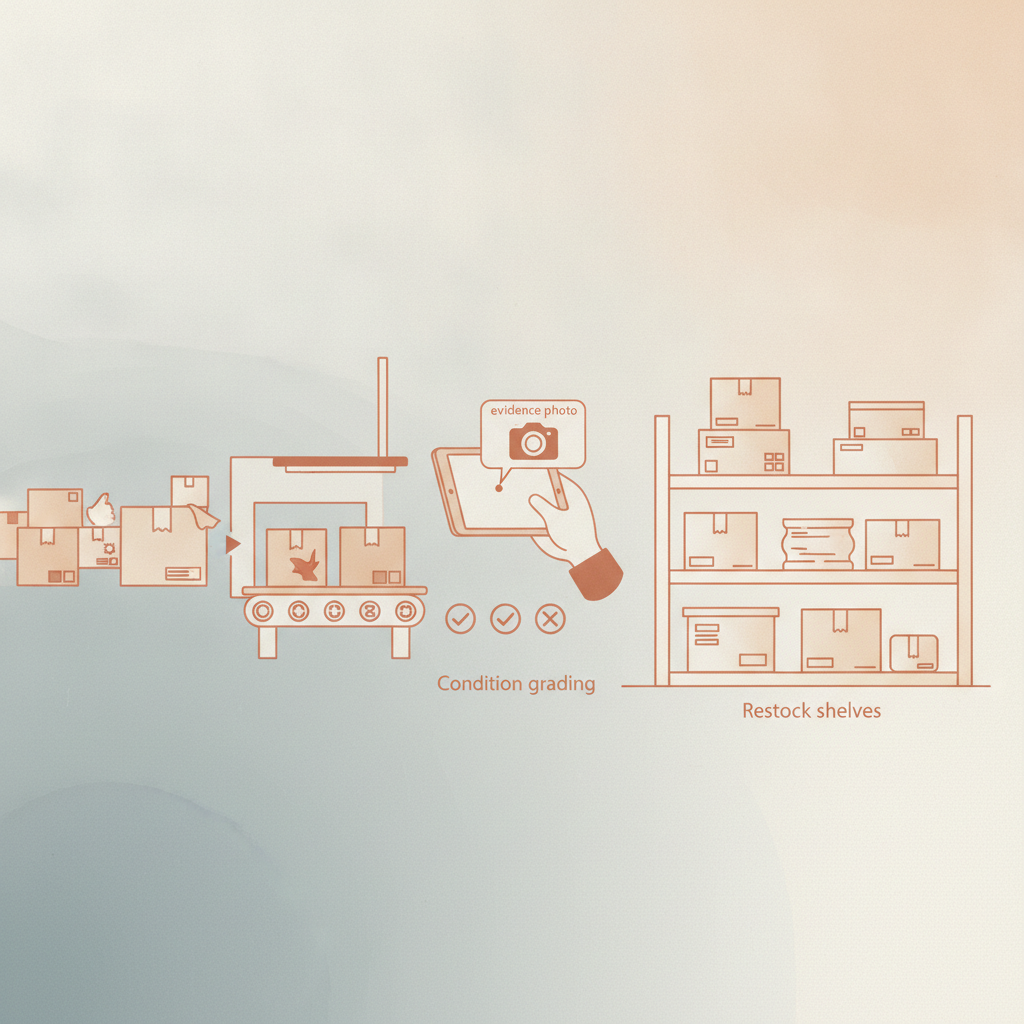
Pricing a resold returns service means setting a per-parcel or per-unit fee that covers receiving, AI grading, disposition, and evidence generation, while leaving enough margin for the partner reselling the service under their own brand. areturnz supports this model directly: partners build pricing on top of a network that runs a 48 hour median cycle from inbound scan to disposition, with 99.6% AI-vs-operator match accuracy across more than 180,000 returns processed, so the underlying cost and risk assumptions are documented rather than guessed at.
Most partners get this wrong in one of two directions. They price it like forward logistics (pick, pack, ship) and lose money on the grading and evidence work that returns actually require. Or they price it like a full-service liquidation program and quote themselves out of the deal. The math sits in between, and it depends on knowing what you're actually paying for at each stage of the parcel's life.
Why a resold returns service prices differently than forward logistics
Forward logistics has one dominant cost driver: moving a known SKU from point A to point B. Returns processing has three or four cost drivers stacked on top of each other, and they don't scale the same way. A parcel might take ninety seconds to receive and four minutes to grade, or it might take fifteen minutes if the condition is ambiguous and a human has to review the AI's confidence score. That variance is exactly why flat per-parcel pricing without tiers tends to erode margin over a large volume base.
The four cost centers hiding inside every returned parcel
Receiving and photo capture, AI grading against the A/B/C/R scale, disposition routing (restock, liquidate, donate, destroy), and evidence bundle generation each carry their own labor and infrastructure cost. A partner pricing a white-label service needs to know roughly how much of the fee goes to each bucket, because category mix (apparel versus electronics versus beauty) shifts the ratio significantly. For more on how that grading step actually works, see A, B, C, R: how AI condition grading actually works.
The cost stack you're actually pricing
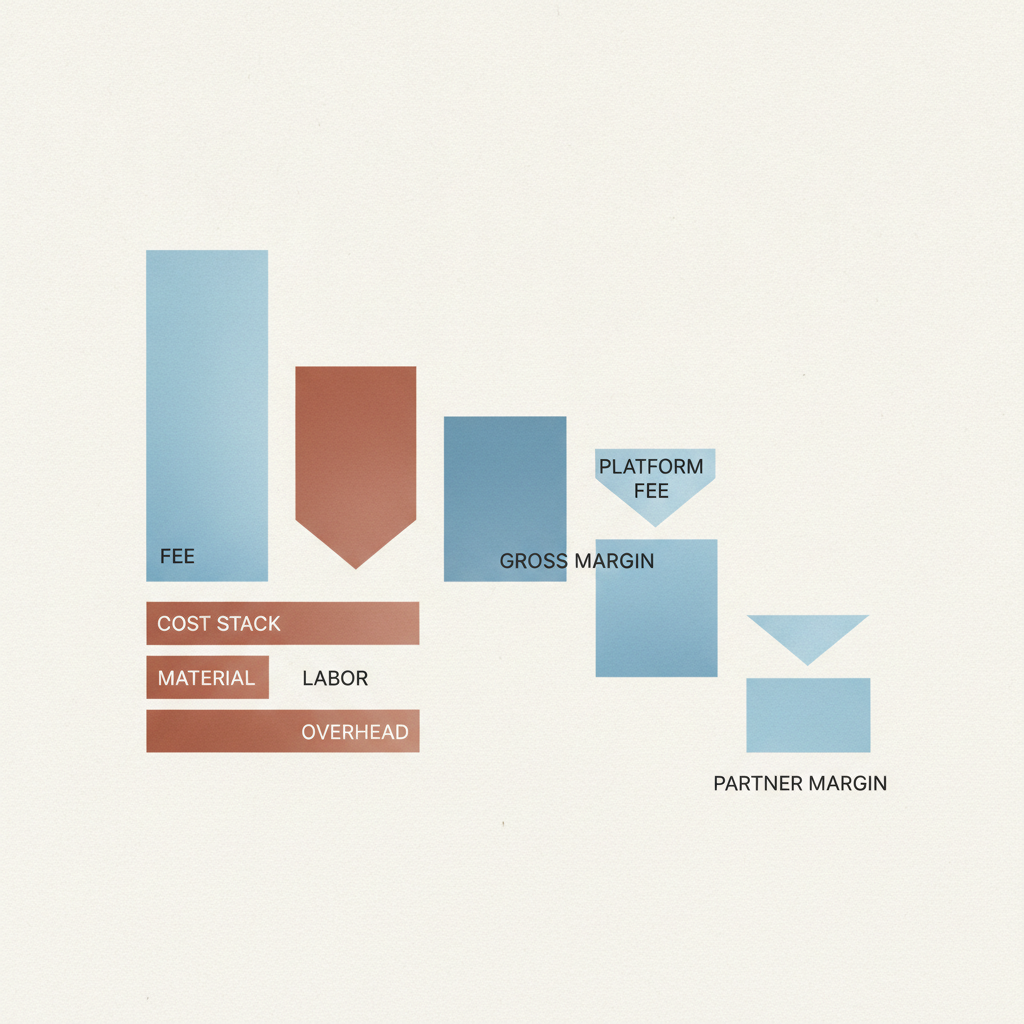
Before setting a sell price, map the cost stack. The table below breaks out the components partners commonly miss when they price a resold returns service off gut feel instead of unit economics.
| Cost component | What drives it | Typical pricing mistake |
|---|---|---|
| Receiving and photo capture | Parcel volume, packaging complexity | Treated as a flat per-unit cost when damaged or oversized parcels take longer |
| AI grading and confidence review | Category mix, ambiguous condition rate | Ignoring the human-review tail on low-confidence grades |
| Disposition routing | Restock vs liquidate vs donate vs destroy mix | Assuming most returns restock when the real split skews toward liquidation |
| Evidence bundle generation | Dispute volume, API/webhook delivery | Bundling this in as \"free\" when it's actually a dispute-avoidance cost saver |
| SLA buffer | Committed cycle time to the end client | Quoting a tight SLA without pricing in the operational buffer to hold it |
Partners who skip this exercise tend to price everything against the receiving cost alone, which is usually the smallest line item. The bigger swing factor is disposition mix, since liquidation recovery rates vary a lot by category and grade. That's covered in more depth in Liquidation recovery rates: what you actually get back.
Margin math: a worked example
Say a partner is quoting a retail client at $4.25 per returned unit, all-in. Internal cost to process that unit through the areturnz network runs roughly $2.60 when volume is steady and category mix is normal (mostly apparel and general merchandise, low ambiguous-grade rate). That leaves $1.65 in gross margin per unit, or about 39%. Now push the mix toward electronics, where grading takes longer and disposition more often routes to liquidation instead of restock. Internal cost climbs to $3.10 for the same unit, cutting margin to $1.15, or 27%.
Where the margin actually leaks
The leak isn't usually the base processing fee. It's SLA penalties, uncompensated re-grades when a client disputes an AI grade, and evidence requests that weren't priced into the original quote. A partner who bakes a small SLA buffer and a per-dispute evidence fee into the rate card protects margin without needing to renegotiate the whole contract every time volume shifts.
Where areturnz's published numbers change the pricing conversation
Partners reselling under their own brand can quote SLAs with more confidence because the underlying network already runs on documented numbers rather than internal estimates. A 48 hour median cycle from inbound scan to disposition gives a defensible baseline for SLA tiers. A 99.6% AI-vs-operator match accuracy rate means fewer re-grades eating into margin after the fact. And a base of 180,000-plus returns processed means the cost assumptions in the table above are drawn from real throughput, not a pilot batch. Every evidence bundle backing these numbers is available in the dashboard and via a signed-JSON API with webhooks, which matters when a client wants proof before renewing at a higher volume tier. You can see what that evidence actually looks like at the evidence sample page.
SLA tiers and how they affect price
Not every client needs a 48 hour cycle. Some are fine with a 5 day standard tier if the fee is lower. Structuring tiers around cycle time and grading review depth lets a partner serve both budget-sensitive and speed-sensitive clients off the same operational base.
| SLA tier | Target cycle time | Typical price position | Best fit client |
|---|---|---|---|
| Standard | 4 to 5 business days | Lowest per-unit fee | Lower-value SKUs, slower-moving categories |
| Priority | 48 hour median | Mid-tier fee, matches the network baseline | Most brand and retailer clients |
| Expedited | 24 to 30 hours for high-priority SKUs | Premium fee, capped volume | High-velocity apparel, seasonal electronics |
The mechanics of running multiple clients on isolated pricing and reporting without cross-contamination are covered in Multi-tenant returns: webhook isolation done right, which matters once a partner is running more than one SLA tier at once.
Common pricing mistakes partners make
The most frequent mistake is quoting a single flat rate across all categories, which either overprices simple apparel returns or underprices ambiguous electronics grading. The second is failing to price the evidence bundle as a value line rather than a cost, when it's actually what closes disputes and justifies premium pricing. The third is ignoring disposition mix entirely, assuming most units restock when the real split, especially in categories with high defect rates, leans toward liquidation or donation. Reviewing actual cost baselines helps here; see The real cost of a return is not the refund for the underlying economics.
For partners building out a full resale program rather than a single client deal, the broader operating model is laid out in Reselling returns under your own brand, and the complete rate card structure is available at areturnz pricing.
Frequently asked questions
What margin should a partner target on a resold returns service?
Most partners land between 25% and 40% gross margin per unit depending on category mix and SLA tier. Categories with higher ambiguous-grade rates, like electronics, compress margin unless the rate card accounts for the added grading review time.
Should evidence bundles be priced separately?
Treat evidence generation as a value line, not a free add-on. It directly reduces dispute and chargeback costs downstream, so pricing it in, even modestly, protects margin while still being cheaper than the cost of an unresolved dispute.
How does disposition mix affect the price I should charge?
If a category skews toward liquidation or destruction rather than restock, the effective recovery value per unit drops, which should be reflected in a higher processing fee or a different tier, since the partner is doing more routing and documentation work per unit.
How do I structure SLA tiers without overcomplicating the contract?
Three tiers is usually enough: a standard cycle, a priority tier matched to the network's 48 hour median, and an expedited tier for high-priority SKUs. More than three tiers tends to create billing and reporting overhead that outweighs the pricing flexibility gained.
Where can I see the underlying accuracy and cycle time data before setting prices?
The dashboard and signed-JSON API expose per-parcel evidence and the AI-vs-operator match rate directly, so partners can model pricing against real throughput data rather than estimates. Reviewing the partner playbook is a good starting point for the full onboarding and pricing sequence.
Ready to model pricing against real cost and cycle-time data instead of guesswork? Contact areturnz to walk through a rate card for your volume and category mix.
Related reading: Onboarding a Brand Tenant: The Node Operator Guide
Related reading: SLA design for white-label returns partners
Her iade için kanıt
Fotoğraflar, yapay zekâ durum derecesi ve tam bir zimmet zinciri, her koliye ekli ve API üzerinden erişilebilir.


