Returns Evidence Data Retention and Privacy: How Long Should You Keep Return Photos
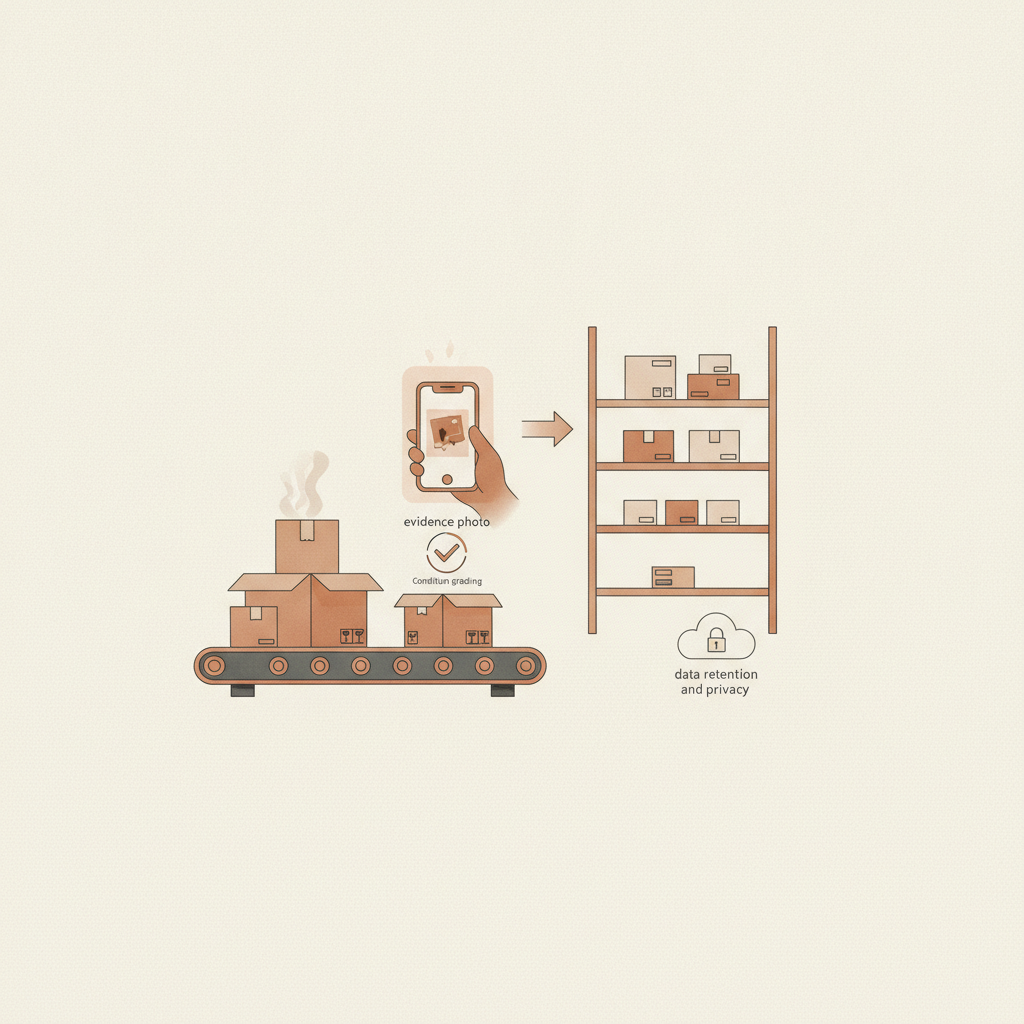
Returns evidence data retention and privacy means setting clear rules for how long return photos and condition records are stored, who can view them, and when they get deleted or anonymized. At areturnz, every returned parcel generates a photo evidence bundle (outer label, opened parcel, item, and any defect) plus an AI grade and confidence score, and that bundle is retained on a defined schedule, access-logged, and governed by the same privacy controls that cover any other customer data in the network.
Retailers ask about this more than you would expect. A brand runs a chargeback dispute and wants six months of photo history on demand. A platform's trust and safety team wants to know whether a shopper's face or home address ever shows up in a defect photo. A compliance officer wants a straight answer on whether evidence counts as personal data under GDPR or CCPA. None of these are edge cases anymore, they are standard diligence questions, and they deserve standard answers instead of a shrug.
Why return photos are not just operational exhaust
It is tempting to treat evidence photos as a byproduct of receiving, something you generate to settle a dispute and then forget. That view misses two things. First, photos of a returned item frequently include incidental personal data: a name on a packing slip, a gift note, a monogram, sometimes a reflection in packaging. Second, once you keep that data, you inherit obligations to secure it, limit who sees it, and eventually get rid of it. A photo evidence program that only thinks about proof and never about retention is a privacy program waiting to be audited.
areturnz treats the evidence bundle as a governed asset from the moment of intake, not an afterthought. That is part of what the evidence and trust pillar is built around: proof has to be durable enough to win a dispute and disciplined enough to pass a privacy review.
What actually needs to be retained, and for how long
Retention should be driven by the reason you are keeping the data, not by habit. There are four common drivers, and they rarely call for the same window.
Dispute and chargeback windows
Card network chargeback timelines and marketplace INAD windows typically run 60 to 180 days from the transaction, with some reopened cases stretching further. Evidence tied to an active or recently closed dispute should be retained through that window plus a buffer, generally 30 to 90 days, to cover re-openings and appeals.
Tax, customs, and destruction compliance
Destruction certificates and the photo evidence behind them often need to survive longer, sometimes 3 to 7 years, to satisfy duty drawback claims or statutory recordkeeping. This is a different retention track than disputes and should not be auto-purged on the same schedule. See destruction certificates and duty drawback for how that compliance loop closes.
Quality and grading model improvement
Some photos are kept longer, in de-identified form, to retrain and calibrate the grading model. areturnz's AI grading runs at about 99.6% match accuracy against operator review across 180K+ processed returns, and that accuracy is maintained partly by continuing to learn from a representative, privacy-stripped sample rather than hoarding every raw image indefinitely.
Routine operational proof
The bulk of returns never go to dispute. For these, a shorter default window (often 90 to 180 days) is enough to cover restock verification and internal QA, after which the bundle can be archived in reduced form or deleted.
| Evidence category | Typical retention window | Primary driver | Access scope |
|---|---|---|---|
| Active dispute or chargeback | Duration of case plus 30 to 90 days | Chargeback and INAD timelines | Dispute team, platform or brand on request |
| Destruction and compliance records | 3 to 7 years | Duty drawback, statutory recordkeeping | Compliance, finance, auditors |
| Model training sample (de-identified) | Indefinite, stripped of identifiers | Grading accuracy and calibration | AI and ops engineering only |
| Routine restock evidence | 90 to 180 days | QA, internal audit, short-tail disputes | Operator and retailer dashboard |
Who should be able to see an evidence bundle
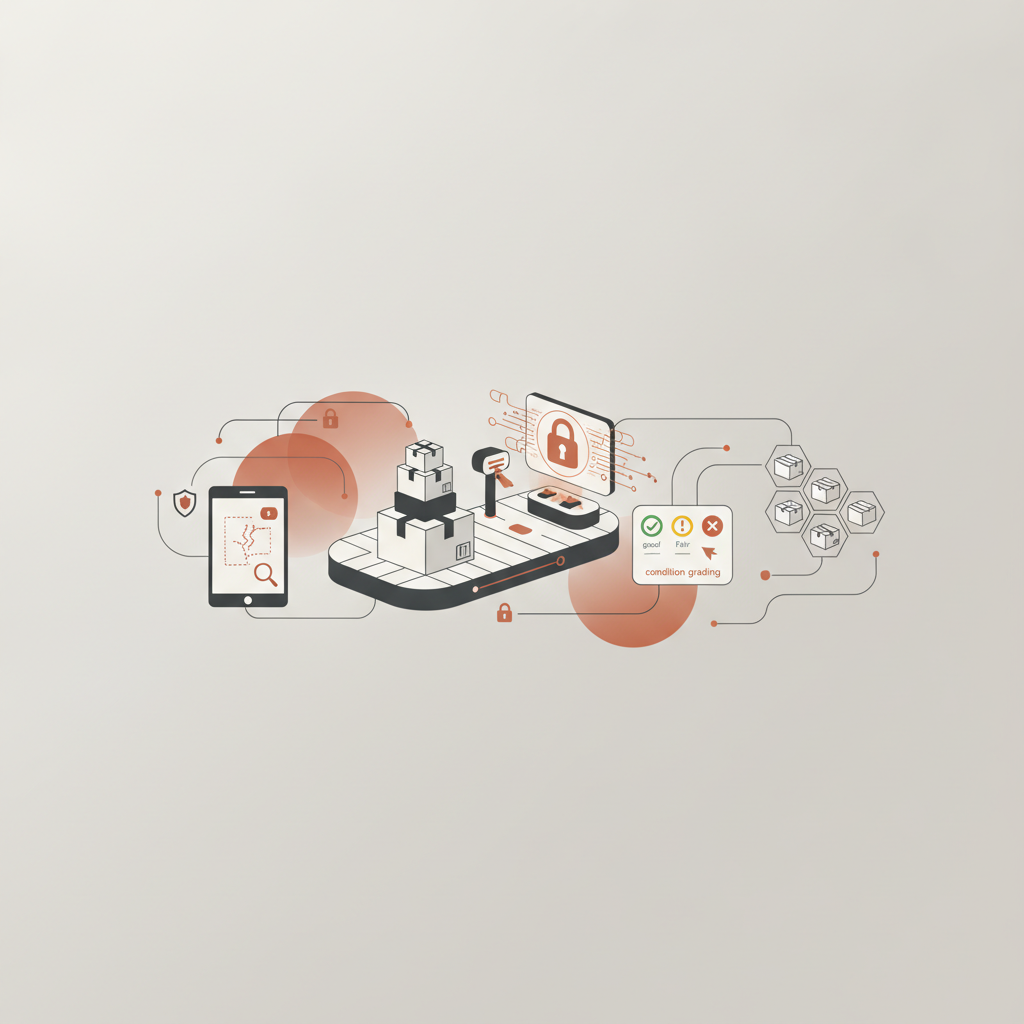
Access control matters as much as the retention clock. A photo that proves condition at receiving does not need to be visible to everyone with a dashboard login. areturnz scopes access by role and by tenant: a brand sees its own returns, a 3PL partner sees what its SLA requires, and raw images are never exposed outside the signed-JSON API and webhook channel without an explicit grant. That mirrors the isolation model described in multi-tenant webhook isolation, extended from events to the evidence itself.
Every access to an evidence bundle, whether through the dashboard or the API, is logged as part of the chain of custody. That log is what turns we have photos somewhere into here is exactly who viewed this evidence and when, which is the detail that actually satisfies an auditor or a platform trust team.
Handling personal data inside a return photo
Defect and condition photos are framed to capture the item, not the person who returned it. Even so, incidental personal data shows up: handwriting, gift receipts, or a reflection. A sound privacy practice applies three controls to this.
Minimize at capture
Receiving photography is composed to keep the frame on the product and packaging. Operators are trained to avoid capturing extraneous paperwork beyond what disposition requires.
Redact or crop before wide distribution
Where a photo must be shared outside the core team (a liquidation partner, an insurer, a platform dispute reviewer), identifying elements are cropped or redacted first, so the evidence that travels is the item condition, not the customer's details.
Delete on schedule, not on request only
Relying on customers to ask for deletion is not a retention policy, it is a loophole. Automated purge jobs should run against the retention table above so that data disappears on schedule whether or not anyone files a request. DSAR-style requests (data subject access or deletion requests) are handled against the same system of record, which is faster when the retention windows are already defined and enforced by rule rather than by memory.

Where this intersects with disposition and the 48 hour cycle
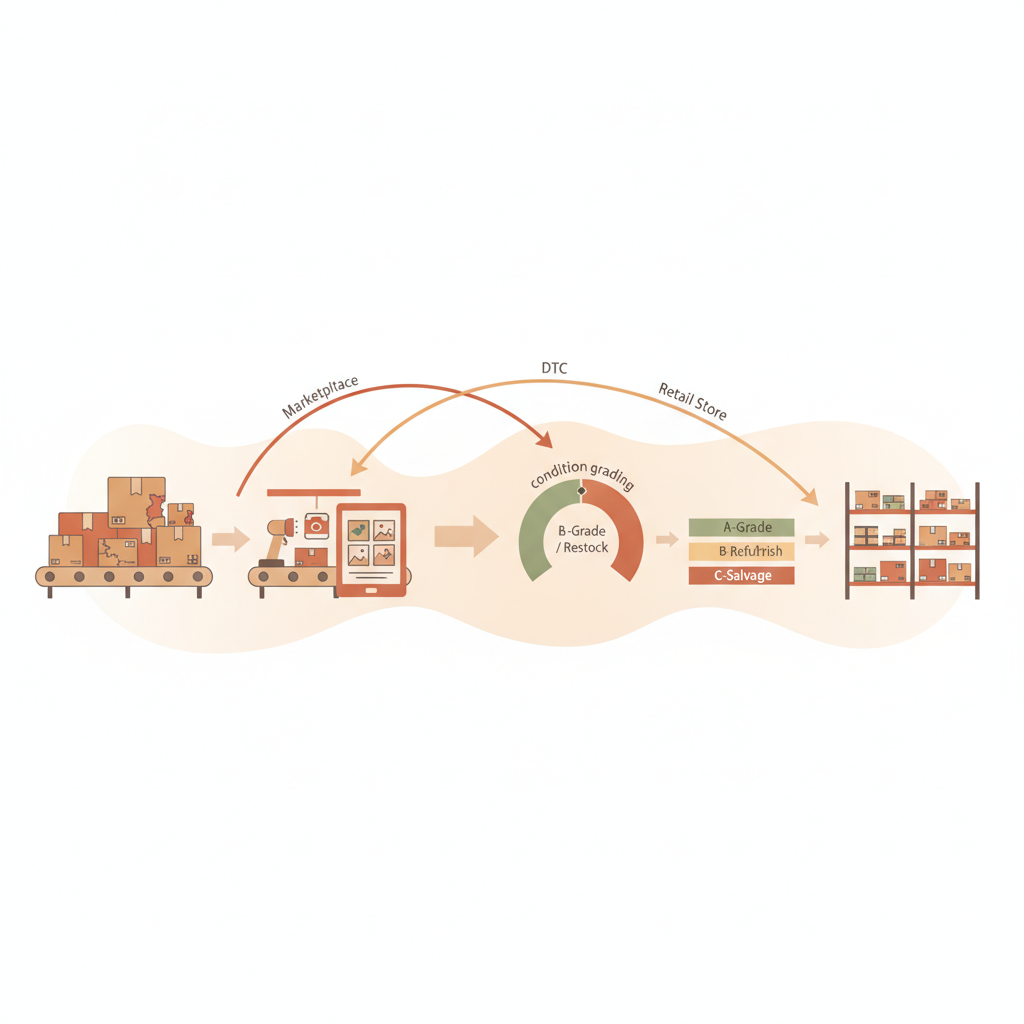
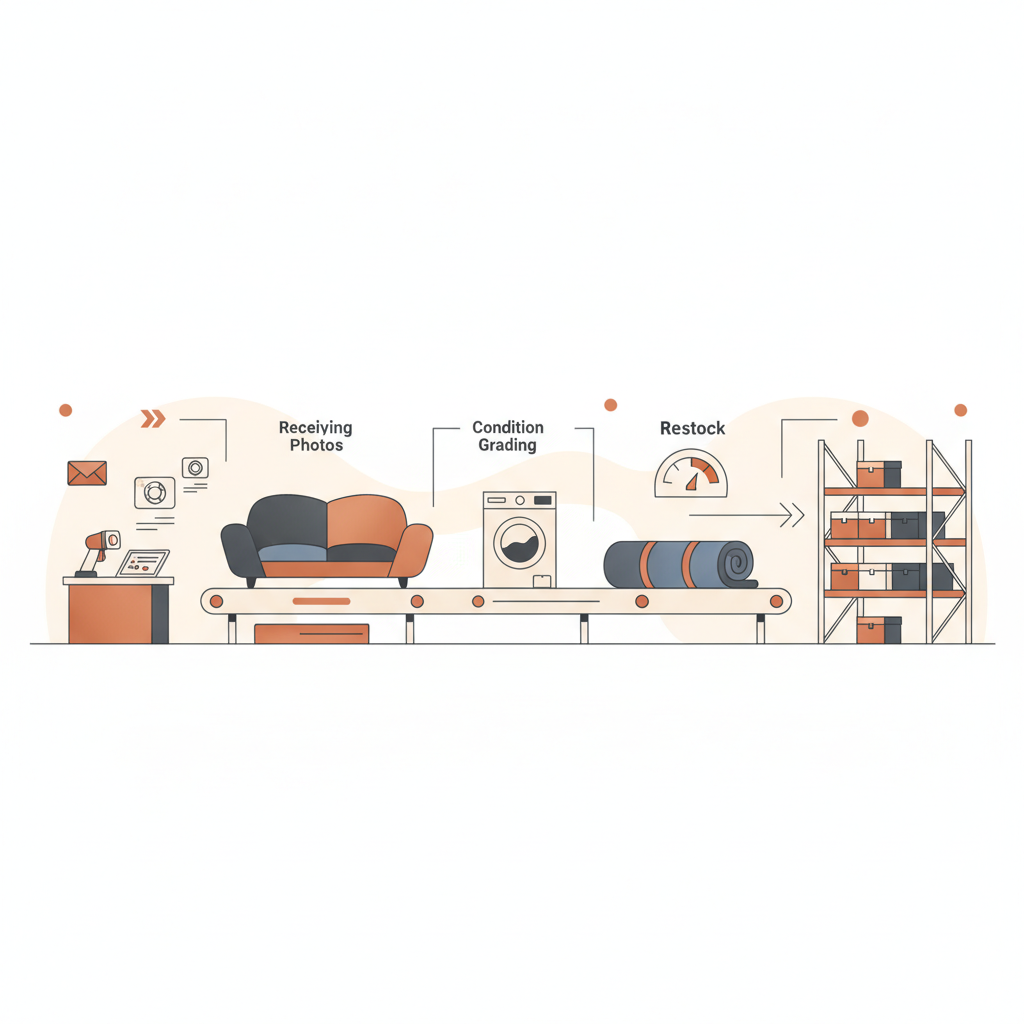
The median cycle from inbound scan to disposition on areturnz is about 48 hours. The photo evidence that drives each A/B/C/R grade and routing decision is captured during that window, which means retention policy has to be in place before the data exists, not retrofitted after a dispute arrives six months later. Disposition rules, covered in disposition rules: turning grades into decisions, and retention policy are two halves of the same governance question: one decides what happens to the item, the other decides what happens to the proof.
Building a retention and privacy policy that holds up
A workable policy answers five questions in writing: what triggers retention, how long each category is kept, who can access it, how it gets deleted or anonymized, and how exceptions (legal holds, open disputes) override the default clock. Retailers and brands evaluating a returns partner should ask to see this policy directly rather than assume photo storage is handled responsibly by default. It is a fair question to raise alongside SLA and accuracy numbers during vendor evaluation, similar to how buyers already compare evidence practices in how to evaluate a returns processing service.
You can see what a real evidence bundle looks like, including the structure of the photos and grading data, at the evidence sample page, and review how retention and data handling fit into commercial terms on the pricing page.
Frequently asked questions
Are return photos considered personal data under privacy law?
They can be, if they contain identifying details like a name, address, or face. Even when the item itself is the subject, incidental personal data in the frame can bring the photo into scope for regulations like GDPR or CCPA, which is why minimization and redaction matter as much as the retention schedule.
How long does areturnz keep evidence photos?
Retention depends on purpose: routine restock evidence is typically kept 90 to 180 days, active dispute evidence is held through the case plus a buffer, and compliance records tied to destruction certificates can be retained 3 to 7 years. De-identified samples may be retained longer for grading model calibration.
Can a brand or platform request deletion of specific evidence?
Yes, deletion and access requests are handled against the retention system of record, with legal holds (active disputes or audits) taking precedence over a standard deletion request until the hold is lifted.
Does longer retention hurt dispute outcomes?
No, the opposite is usually true. areturnz's evidence approach supports about 99.6% AI-vs-operator match accuracy across 180K+ processed returns, and that track record depends on having enough well-governed historical evidence to calibrate against, not on keeping every photo forever without structure.
Where do I find the legal terms covering data handling?
Data processing terms, security practices, and privacy commitments are published separately from operational policy; ask your account team for the current data processing agreement and privacy documentation during onboarding.
If you need a retention and privacy policy that satisfies your legal and dispute teams without slowing down receiving, talk to areturnz about how evidence governance works on your account.
Related reading: Wardrobing and serial returner fraud: how evidence patterns catch repeat abuse
Related reading: Evidence for Insurance Claims: Using Returns Proof Beyond Disputes
Her iade için kanıt
Fotoğraflar, yapay zekâ durum derecesi ve tam bir zimmet zinciri, her koliye ekli ve API üzerinden erişilebilir.