SLA design for white-label returns partners
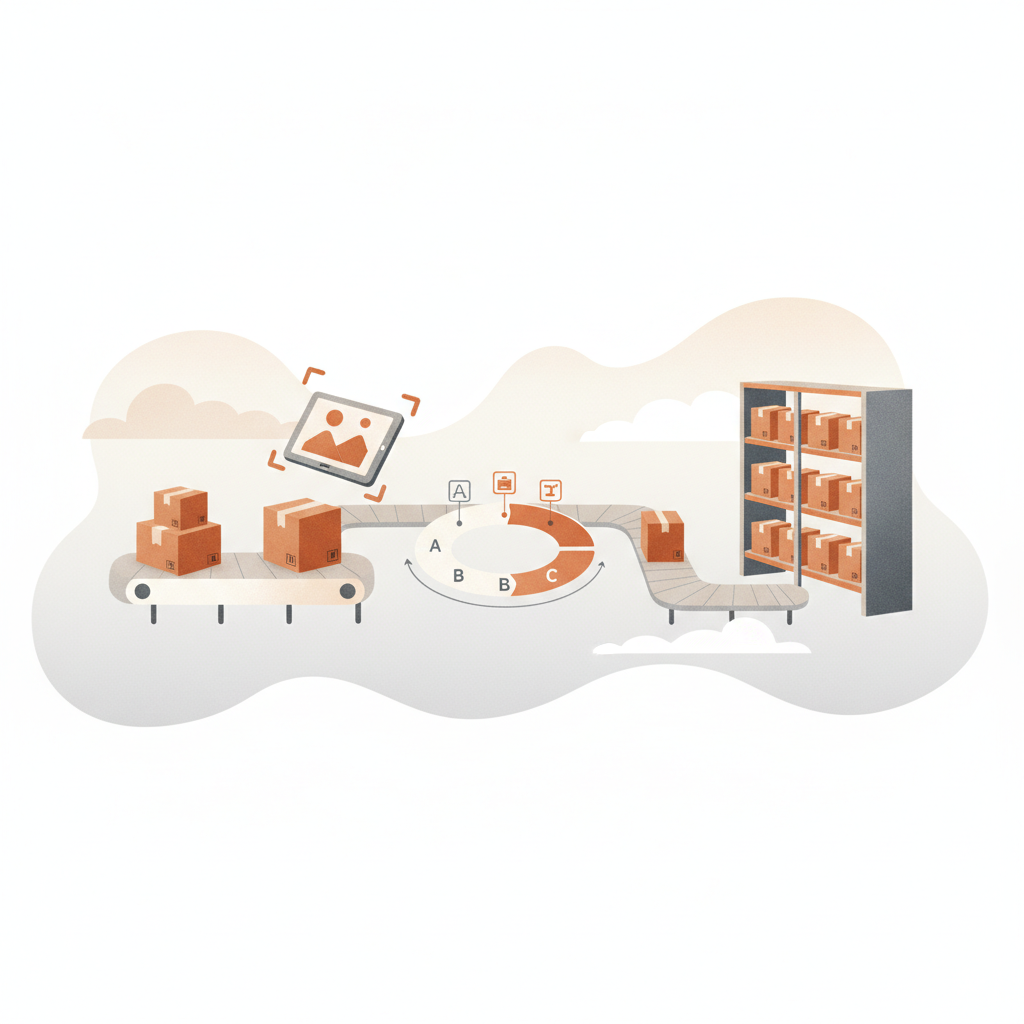
SLA design for returns partners means writing enforceable, measurable service commitments across four dimensions: cycle time from inbound scan to disposition, grading accuracy versus human review, evidence delivery timing, and escalation response. areturnz builds its partner SLAs around a 48 hour median cycle, a 99.6% AI-versus-operator match rate, and a signed evidence bundle on every one of the 180K+ returns it has processed, so partners reselling the service under their own brand can point to numbers rather than promises.
Most brands and 3PLs that white-label a returns network skip this step. They sign a vendor agreement that mentions 'reasonable timeframes' and 'industry standard accuracy,' then find out three months in that neither term means anything when a retail partner asks for proof. A returns SLA needs the same rigor as an uptime SLA: specific metrics, specific measurement windows, and specific remedies.
Why returns SLAs get written badly
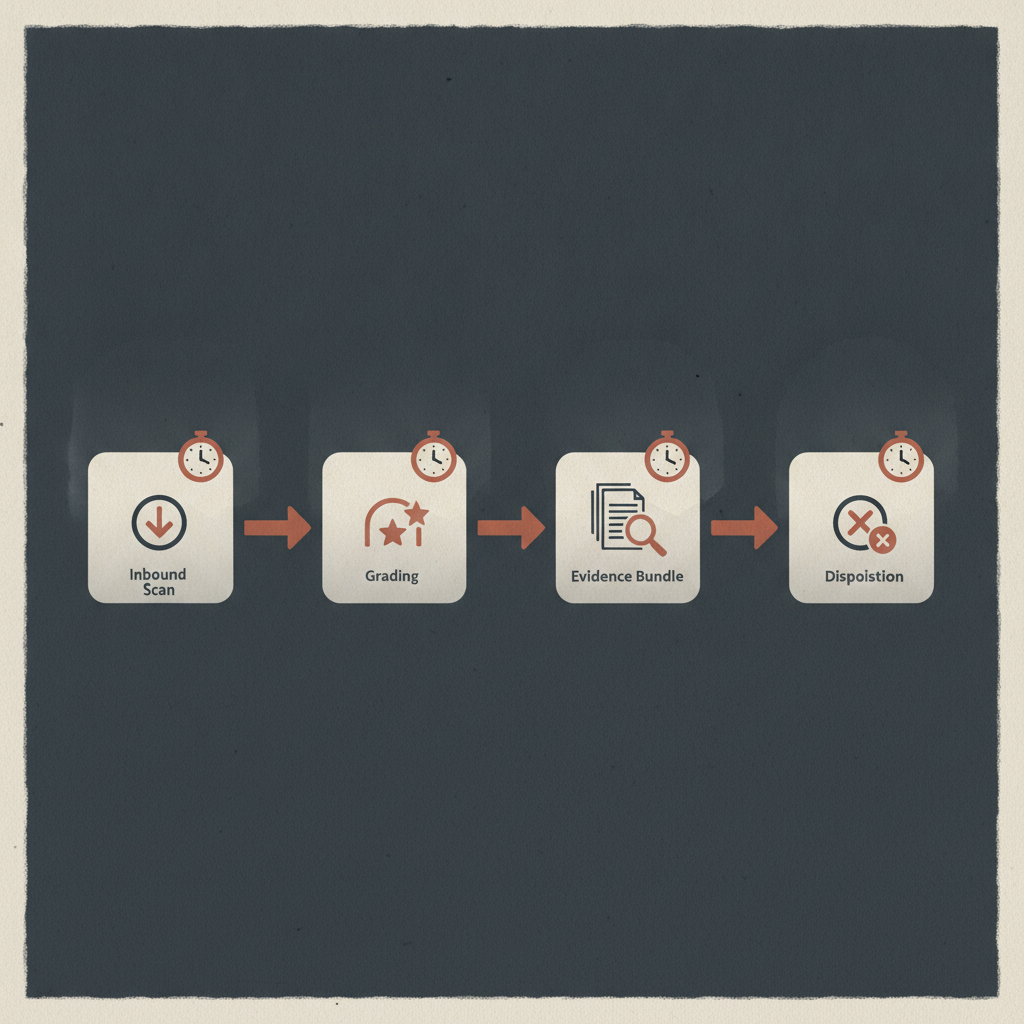
Forward logistics SLAs are simple to write because the outcome is binary: the package arrived on time or it did not. Returns processing has more moving parts. A parcel gets scanned, opened, photographed, graded, and routed to one of four dispositions. Each step can slip, and each slip has a different cost. A grading delay is not the same problem as a missing photo, and a missing photo is not the same problem as a wrong disposition.
Because of that complexity, a lot of partner contracts default to vague language: timely processing, accurate grading, available reporting. None of that holds up when a retail partner disputes a chargeback or asks why open-box inventory sat in a warehouse for three weeks. If you are structuring a white-label deal, as covered in reselling returns under your own brand, the SLA is the document that actually protects your margin.
The four SLA pillars that matter
1. Cycle time from inbound scan to disposition
This is the metric that determines how fast inventory reenters sellable channels or gets liquidated before markdown decay eats the recovery value. areturnz runs a 48 hour median from inbound scan to disposition decision. A partner SLA should specify median and a percentile ceiling (for example, 95% of parcels dispositioned within 96 hours), not just an average, because averages hide the tail that actually causes customer complaints.
2. Grading accuracy and confidence thresholds
AI condition grading assigns an A, B, C, or R grade with a confidence score. The SLA should state the match rate between AI grade and operator review, the confidence threshold that triggers manual review, and what happens when confidence falls below that line. areturnz publishes a 99.6% AI-versus-operator match accuracy figure, and every override is logged, which matters when a partner's own QA team wants to audit the process.
3. Evidence delivery timing and completeness
Every return should ship with a photo record (outer label, opened parcel, item, defect if applicable) and a chain-of-custody trail. The SLA needs to specify how fast that evidence bundle becomes available in the dashboard and via API, and what fields are guaranteed in the signed JSON payload. See a sample evidence bundle for what a complete record actually contains.
4. Escalation and dispute response windows
When a grade gets challenged, or a retailer disputes a disposition, the SLA should define a response window (for example, 24 hours to acknowledge, 72 hours to resolve) and a named escalation path. This ties directly into how disputes get closed, which is covered in killing the item not as described dispute.
A sample SLA metrics table
| Metric | What to measure | Benchmark to negotiate against | Remedy if missed |
|---|---|---|---|
| Cycle time (median) | Inbound scan to disposition decision | 48 hour median | Credit or rate adjustment for the affected batch |
| Cycle time (tail) | 95th percentile of dispositioned parcels | 96 hours or less | Escalation review and root-cause report within 5 business days |
| Grading accuracy | AI grade vs operator review match rate | 99.6% match accuracy | Manual re-grade of the affected lot at no charge |
| Evidence availability | Time from grading to dashboard/API availability | Real time to under 1 hour | Service credit tied to monthly SLA report |
| Dispute response | Time to acknowledge and resolve a challenged grade | 24 hour acknowledge, 72 hour resolve | Escalation to named account owner |
| Reporting cadence | Per-tenant reporting delivery | Daily automated, weekly summary | Manual report delivery until fixed |
Multi-tenant considerations that change the SLA
If you are reselling returns processing across multiple retail or brand clients under one white-label agreement, the SLA has to account for tenant isolation. That means webhook events, evidence bundles, and per-tenant reporting need to be scoped so one client's data never leaks into another's dashboard. This is a separate engineering and contractual concern from cycle time or grading, and it deserves its own clause. For the technical detail behind this, see multi-tenant webhook isolation done right.
Per-tenant SLA reporting should be a contractual line item, not an afterthought. Partners reselling the service need to hand their own clients a clean report: cycle time by tenant, grading accuracy by tenant, dispute rate by tenant. If the underlying network cannot segment that data cleanly, the SLA is unenforceable at the sub-tenant level even if the aggregate numbers look fine.
Building the SLA into the contract, not just the pitch deck
A common mistake is presenting these numbers in a sales conversation and then writing a contract that does not actually reference them. The SLA exhibit should cite the specific metrics (median cycle time, match accuracy percentage, evidence delivery window) with measurement methodology and reporting frequency spelled out. It should also state what counts as a qualifying miss, how remedies get calculated, and how disputes over SLA performance itself get resolved. Vague SLAs are worse than no SLA, because they create a false sense of protection.
Facility-level detail matters too. Knowing that processing runs through a specific node, for areturnz that is NJ-01 in East Hanover, New Jersey, gives partners a concrete point of accountability rather than an abstract network. For broader context on the partner model itself, the partner playbook covers onboarding, pricing, and multi-tenant setup alongside SLA structure.
Frequently asked questions
What is a reasonable cycle time SLA for a white-label returns partner?
A median of 48 hours from inbound scan to disposition is a workable baseline, with a 95th percentile ceiling around 96 hours to catch tail cases. Anything looser than that starts to erode the restock velocity advantage that makes reselling returns processing profitable in the first place.
Should grading accuracy be measured against AI alone or AI plus operator review?
Measure the match rate between the two. A 99.6% AI-versus-operator match accuracy figure tells a partner that when a human checks the machine's work, they agree almost all the time, which is a stronger signal than reporting AI confidence in isolation.
How does evidence delivery factor into an SLA?
It should specify how quickly the photo record and chain-of-custody data become available in the dashboard and via the signed JSON API after grading completes. Delayed evidence undermines dispute response times downstream, so this metric deserves its own line rather than being bundled into general reporting terms.
What happens when a partner disputes a grade under the SLA?
The contract should define an acknowledgment window (commonly 24 hours) and a resolution window (commonly 72 hours), with a named escalation contact. Every operator override should already be logged, which speeds up resolution because the audit trail already exists.
Does SLA design change for multi-tenant white-label setups?
Yes. Add clauses for tenant data isolation, per-tenant reporting cadence, and webhook scoping so no client sees another client's evidence or grading data. This is a separate risk category from cycle time and accuracy, and it needs its own remedy structure.
If you are structuring a white-label returns partnership and need SLA language that matches real processing numbers, talk to areturnz about pricing, onboarding, and SLA design for your specific volume.
Related reading: Per-tenant reporting: giving partners visibility without breaking isolation
Related reading: Returns Capacity Planning for Partners: Scaling Nodes Before the Surge
Her iade için kanıt
Fotoğraflar, yapay zekâ durum derecesi ve tam bir zimmet zinciri, her koliye ekli ve API üzerinden erişilebilir.


