Chain of Custody for High-Value Electronics: Serialization and Evidence Standards
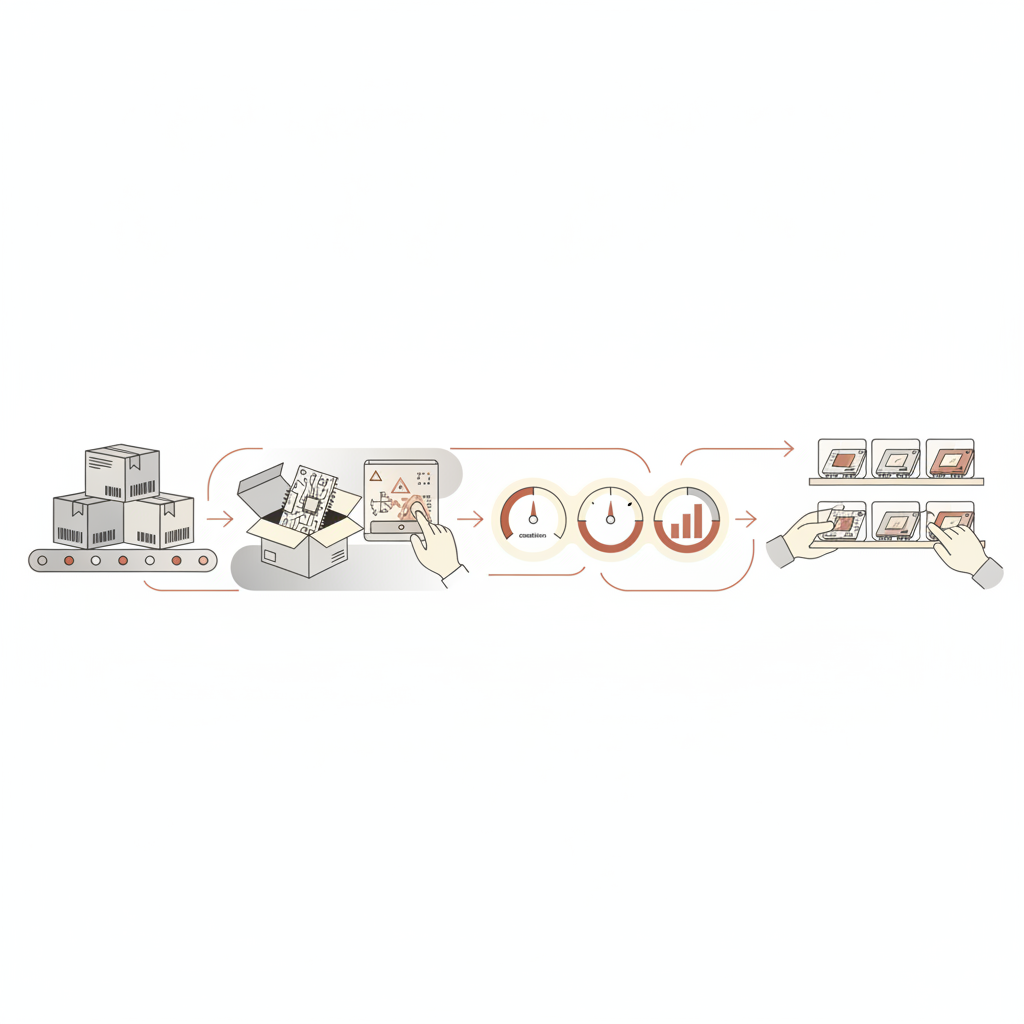
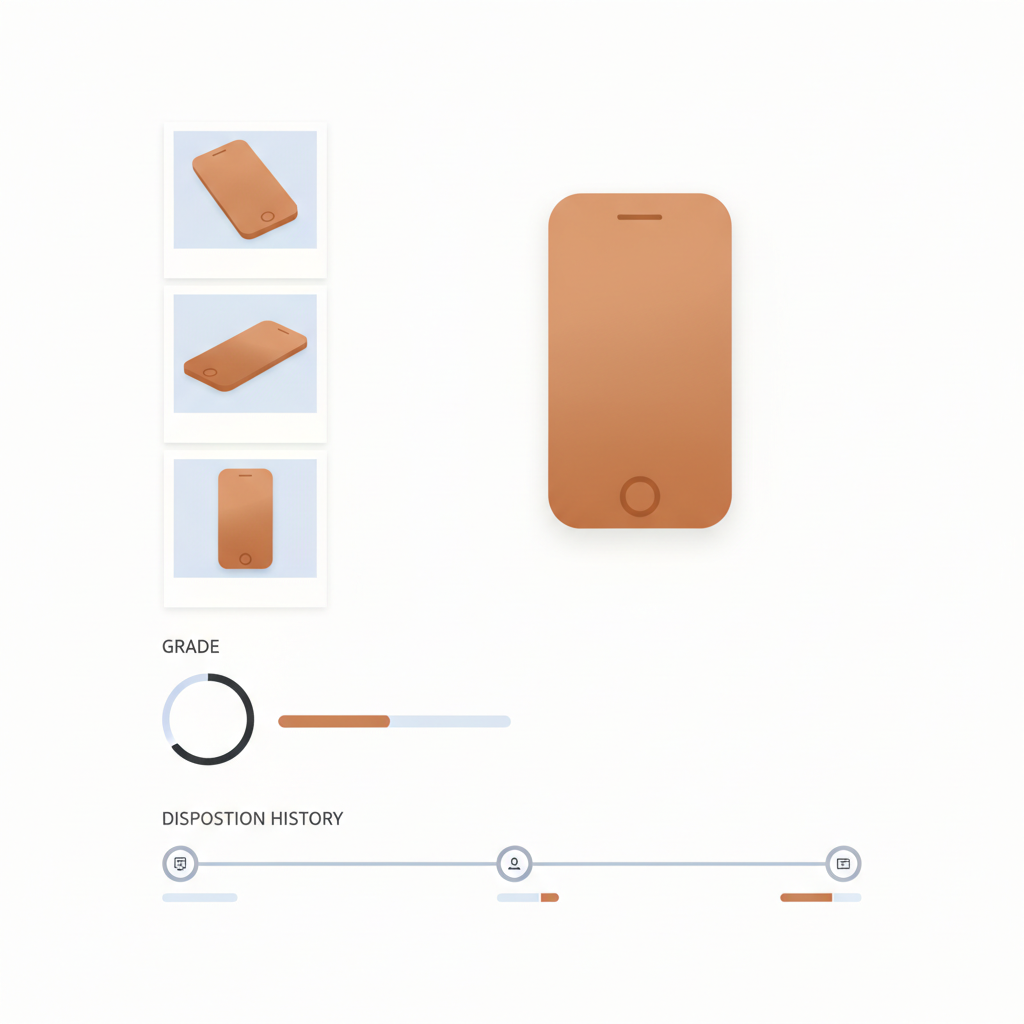
Chain of custody for high-value electronics is the practice of tying a specific serialized unit, by IMEI, serial number, or MAC address, to a documented sequence of custody events (receipt, photo capture, grading, and disposition) so every handoff can be proven after the fact. areturnz builds this into its receiving workflow by default: every phone, laptop, tablet, or camera gets its serial captured at intake, photographed at four checkpoints, graded A/B/C/R by AI with a confidence score, and routed to a disposition with an evidence bundle that stands up to a dispute, an insurer, or an auditor.
Why high-value electronics need a stricter standard
A returned t-shirt and a returned iPhone carry very different risk. A mismatched serial, a swapped battery, or a unit that was never actually in the box can cost hundreds or thousands of dollars, and it can trigger fraud patterns that spread across a seller account. Generic returns tracking that only logs a tracking number and a received-date is not enough for electronics. You need a record that proves which physical unit arrived, what condition it was in, and who or what (operator or AI) made the disposition call.
This is a narrower, vertical-specific version of the broader question covered in our guide to chain of custody audit trails for returns. That piece explains the general audit trail model across categories. This one goes deeper into what serialization adds for electronics specifically, and why it matters more here than almost anywhere else in a returns program.
What serialization captures at receiving
IMEI, serial number, and MAC address capture
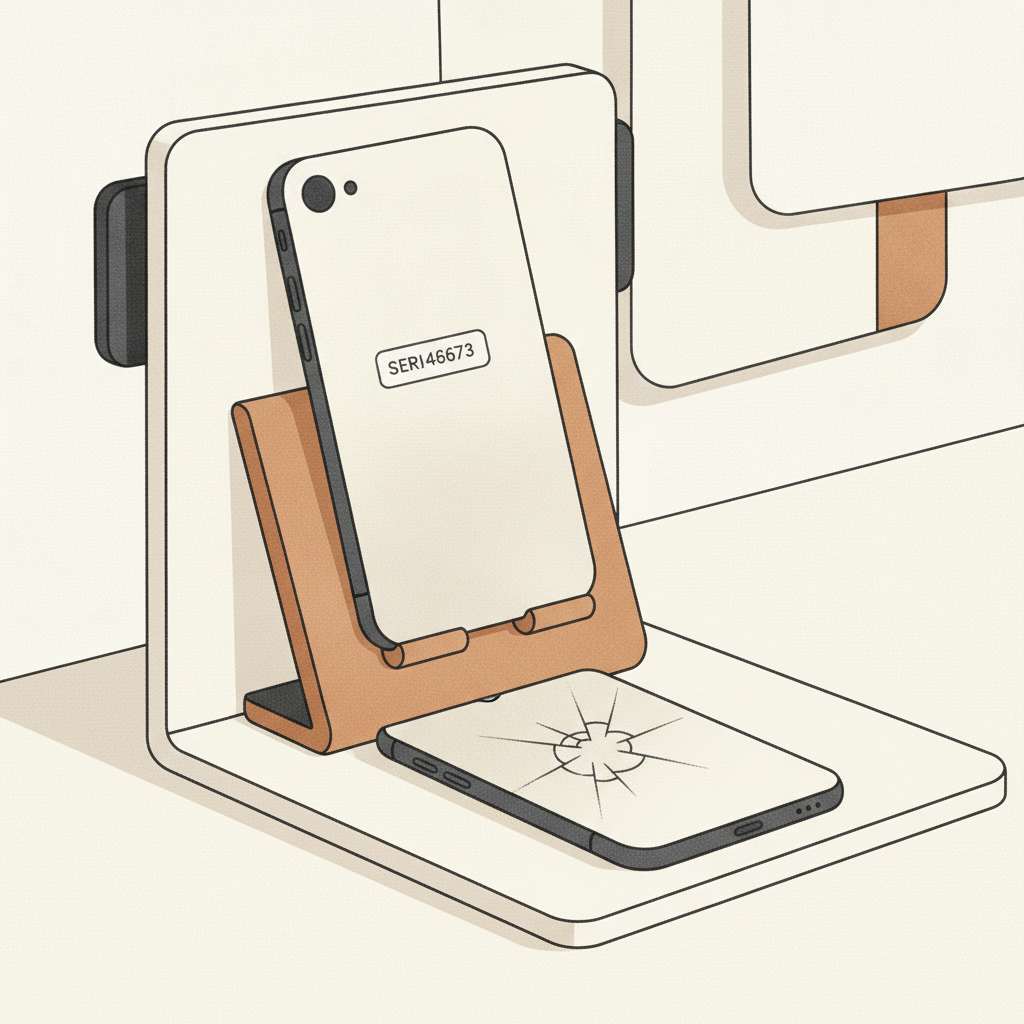
At inbound scan, the receiving operator (or the camera-based scanning flow) pulls the device's unique identifier directly off the hardware or its packaging label, not just off the shipping label. That identifier gets cross-checked against the original order or RMA record. A mismatch is flagged immediately, before grading even starts, which is the single most common way electronics fraud gets caught early.
Photo evidence at each stage
Every unit gets photographed at the outer label, the opened parcel, the item itself, and any visible defect. For electronics specifically, this usually extends to the screen (powered on where safe to do so), the charging port, battery health indicators where available, and any accessories included or missing. These images are timestamped and tied to the serial number, not just the parcel ID, so the record survives even if a unit is later repackaged or relabeled downstream.
From scan to disposition: the custody timeline
areturnz runs a median 48 hour cycle from inbound scan to disposition across its network, and electronics follow the same backbone with added serialization checkpoints. The table below shows what gets captured at each stage.
| Stage | Evidence captured | Typical timing |
|---|---|---|
| Inbound scan | Outer label photo, serial/IMEI capture, order cross-check | Within hours of arrival at NJ-01 |
| Unboxing | Opened parcel photo, accessory and inclusion check | Same shift |
| Condition grading | Item and defect photos, AI grade (A/B/C/R), confidence score, detected tags | Minutes per unit after unboxing |
| Disposition | Rule-based routing (restock, liquidate, donate, destroy), operator override log if applicable | Immediate to same day |
| Evidence bundle finalized | Full photo set, grade, serial, disposition reason, signed JSON export | Within the 48 hour median cycle |
Grading electronics on the ABCR scale
AI grading assigns one of four condition grades, each paired with a confidence score, and the thresholds for electronics are tuned differently than for apparel or beauty because functional defects (a cracked screen, a dead battery, a failed charging port) matter more than cosmetic wear alone. For a deeper look at how grading adapts by category, see our post on grading apparel vs electronics vs beauty.
| Grade | Typical electronics condition | Usual disposition |
|---|---|---|
| A | Functions fully, no visible wear beyond minor cosmetic marks, all accessories present | Restock as open-box or like-new |
| B | Functions fully, visible cosmetic wear or missing minor accessory | Restock at discount or resell as used |
| C | Functional defect present (battery health, port, screen) or significant cosmetic damage | Liquidate or route to repair/parts recovery |
| R | Non-functional, safety issue, or serial mismatch flagged | Destroy with certificate, or escalate to fraud review |
Across the network, AI grading matches operator judgment on condition about 99.6% of the time, and areturnz has processed more than 180,000 returns through this pipeline. Electronics carry a slightly higher rate of human spot-check on C and R grades because of the dollar value at stake, but the AI-first workflow still drives most routing decisions.
Why this differs from a general chain-of-custody audit trail
The broader chain-of-custody model, covered in our evidence and trust pillar guide, applies to every return regardless of category. What changes for high-value electronics is the unit of record. For apparel, the parcel or SKU is usually sufficient. For electronics, the serial number is the anchor, and every piece of evidence (photos, grade, disposition, even a later resale listing) gets tied back to that specific device rather than just the order it arrived on. This matters for three reasons: warranty claims often require the original serial, insurance claims need proof of which exact unit was damaged or lost, and marketplace disputes over item-not-as-described claims are far easier to close when you can show a serial-matched photo history rather than a generic condition note.
Common failure points without serialized evidence
Three patterns show up repeatedly when returns programs skip serialization on electronics. First, box-only fraud: a customer returns an empty or substituted box, and without a serial check at receiving, the loss is not caught until a retail associate or buyer discovers it much later. Second, grading disputes: without defect photos tied to a specific unit, a seller cannot prove whether a scratch existed before or after a return claim was filed. Third, compliance gaps: when a destroyed unit needs a certificate for duty drawback or insurance purposes, a generic disposal log is not enough. Our post on destruction certificates and duty drawback covers what that documentation actually needs to include.
Frequently asked questions
What counts as chain of custody for a returned phone or laptop?
It is the documented path from inbound scan to final disposition, tied to the device's serial number or IMEI, including photos at receiving, the AI condition grade with confidence score, and the disposition decision with any operator override logged.
Does areturnz capture IMEI numbers automatically?
Serial and IMEI capture happens at inbound scan as part of the standard receiving workflow, cross-checked against the original order record before grading begins.
How is electronics grading different from apparel grading?
Electronics grading weighs functional condition (battery health, screen, ports) alongside cosmetic wear, since a cosmetically perfect device with a dead battery still needs a lower grade and a different disposition path than cosmetic damage alone would suggest.
Can this evidence be used for a warranty or insurance claim?
Yes. Because each bundle is tied to a serial number with timestamped photos and a signed JSON export, it can support warranty claims, insurance claims, or marketplace disputes without needing to re-inspect the unit.
What happens if a serial number does not match the original order?
The unit is flagged before grading completes, routed for manual review, and the mismatch is recorded in the evidence bundle so the discrepancy is documented rather than silently processed.
If you process high-value electronics returns and need serialized, audit-ready evidence on every unit, see a real evidence bundle sample or contact areturnz to talk through your current chain-of-custody gaps.
Proof on every return
Photos, an AI condition grade, and a full custody chain, attached to every parcel and available via the API.