Free returns vs paid returns: the margin tradeoff
Free returns vs paid returns is not really a shipping decision, it is a margin decision disguised as one: free return shipping raises conversion and order size but increases return volume and absorbs the cost of every reverse shipment, while charging for returns shrinks volume and protects margin per unit but quietly taxes repeat purchase rate. areturnz does not set your policy, but because every parcel it processes gets photographed, graded A/B/C/R by AI, and routed to disposition within a 48 hour median cycle, it changes what either policy actually costs you once the item is back in your hands.
The tradeoff retailers actually face
Most merchants frame this as a binary: free returns to compete with Amazon and the big marketplaces, or paid returns to protect the P&L. The truth sits in the middle, and it depends almost entirely on what happens after the box lands at a receiving dock. A $9 return shipping fee looks like clean margin protection until you realize the item it discouraged from coming back was resellable at 85% of retail. A free return policy looks like pure customer acquisition cost until you realize half the inbound volume is graded C or R and liquidates at 20 cents on the dollar.
The policy only works as well as the processing behind it. That is the part most free-vs-paid debates skip, and it is the part covered in depth in the returns economics pillar guide.
What free returns actually cost
Free returns do three things to your numbers at once. They raise conversion rate at checkout, they raise average order value (customers buy multiple sizes or colors knowing they can send back what does not fit), and they raise gross return rate, often by 20 to 40 percent compared to a paid-return control group. The real cost is not the reverse shipping label. It is the carrying cost, grading labor, and markdown decay on everything that comes back, which we break down line by line in the real cost of a return is not the refund.
What paid returns actually cost
Paid returns cut volume, usually by making the customer think twice before ordering three sizes to compare at home. That reduces processing load and protects margin per order. But the hidden cost shows up downstream: lower repeat purchase rate, more cart abandonment on borderline purchases (shoes, fitted apparel, anything sold on sizing), and a measurable dip in customer lifetime value that does not show up on a quarterly returns report. Retailers who charge for returns also tend to see a higher share of the returns they do get being genuinely defective or wrong-item, which actually plays to areturnz's strengths since those are the easiest to restock fast.
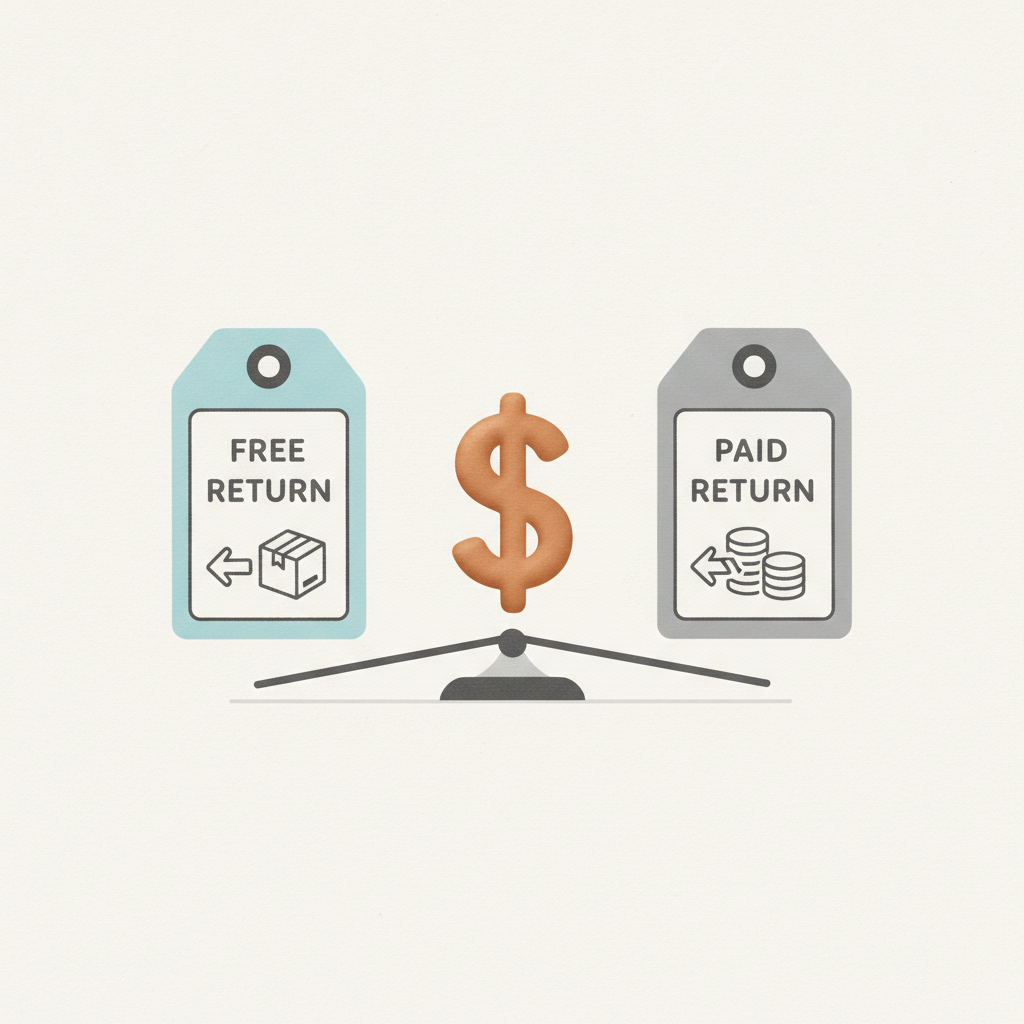
The margin math, side by side
| Factor | Free returns | Paid returns |
|---|---|---|
| Conversion rate at checkout | Higher, often 5 to 15 percent lift | Lower, more cart hesitation on sizing-dependent items |
| Gross return rate | Higher, 20 to 40 percent more volume in typical apparel data | Lower, customers self-select before ordering |
| Reverse shipping cost | Fully absorbed by retailer | Partially or fully passed to customer |
| Repeat purchase rate | Generally stronger | Can soften, especially for fit-dependent categories |
| Processing load per 1,000 orders | Higher volume, more grading and disposition work | Lower volume, higher share of genuine defects |
| Margin sensitivity to grading speed | Very high, since more units are in transit value-decaying at once | Moderate, fewer units but still time-sensitive |
Why the processing layer matters more than the policy
Here is the part that gets lost in most free-vs-paid debates: both policies lose money if the return sits in a warehouse for two weeks before anyone decides what to do with it. A free-returns retailer with a 10 day grading backlog is bleeding markdown value on resellable inventory the entire time. A paid-returns retailer with the same backlog is doing the same thing on a smaller but still real scale. Speed is the lever that works under either policy.
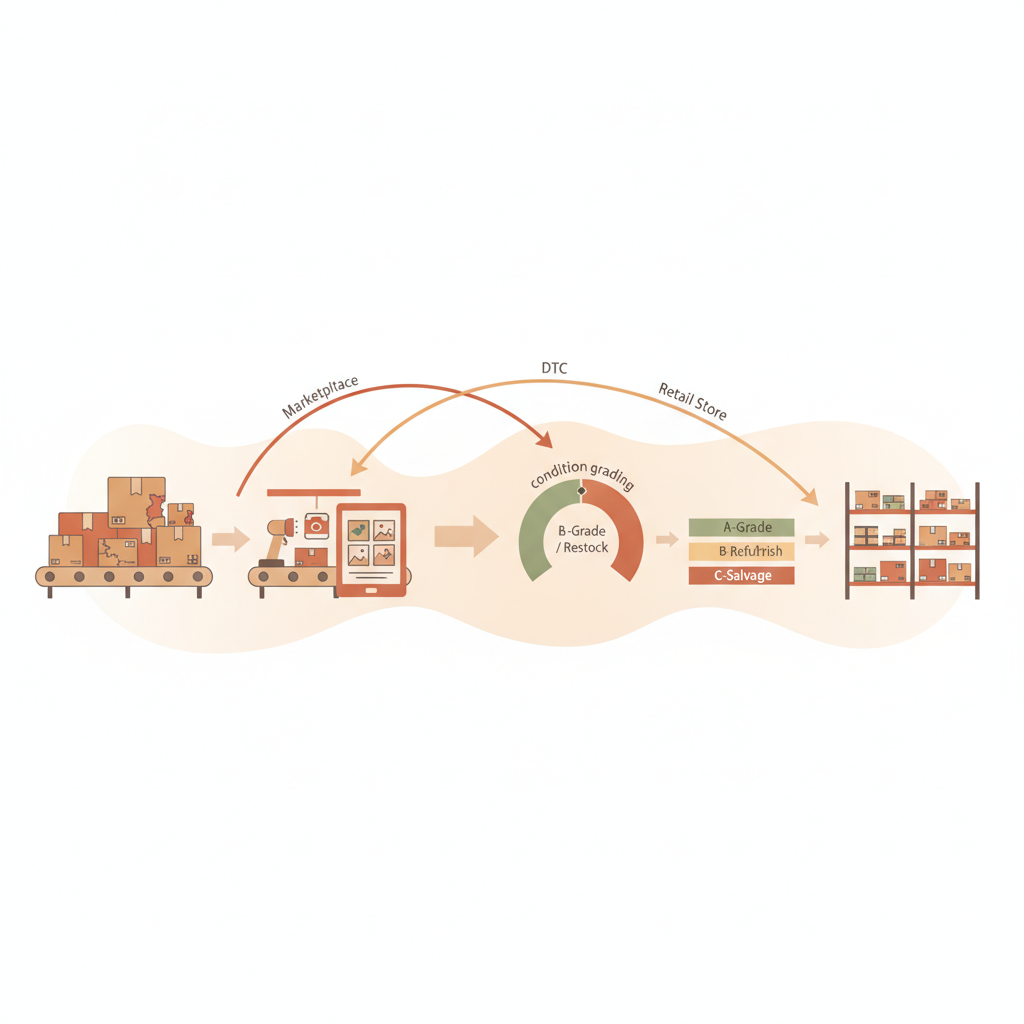
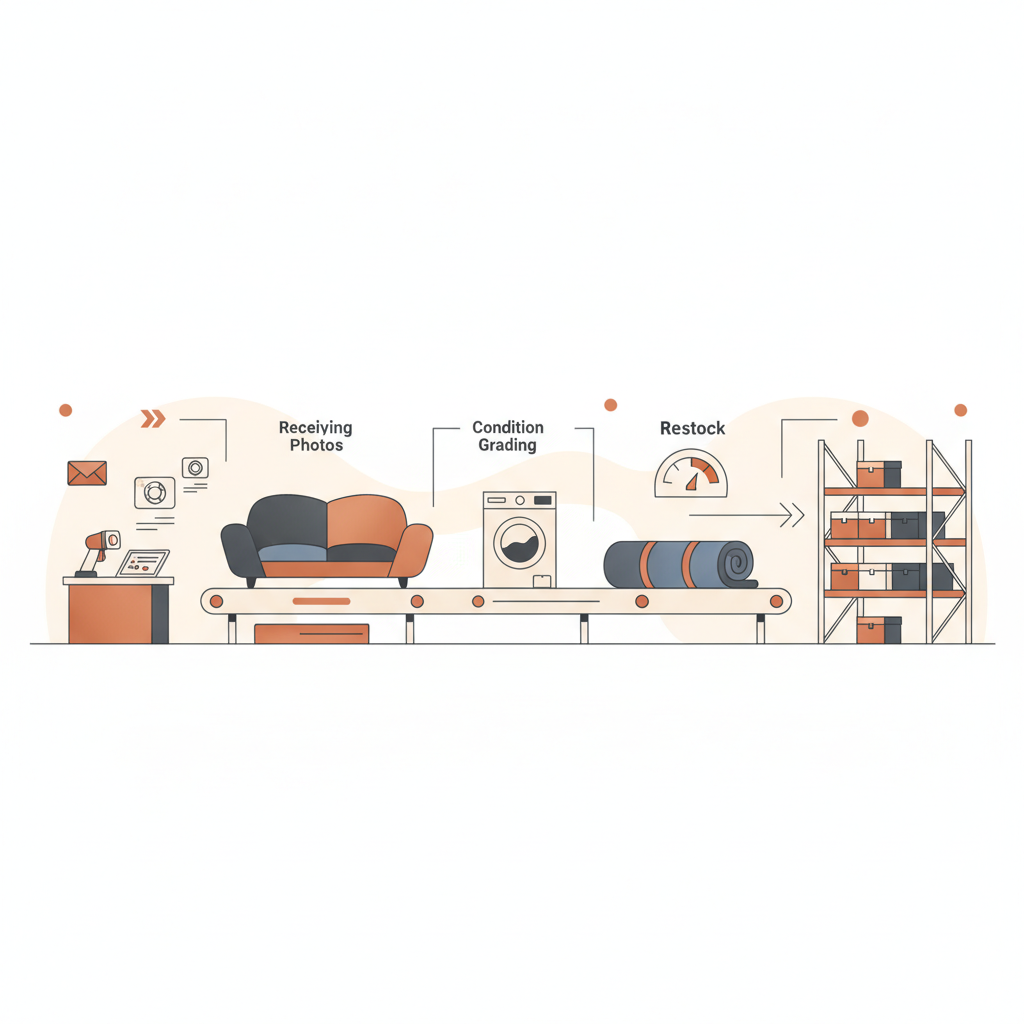
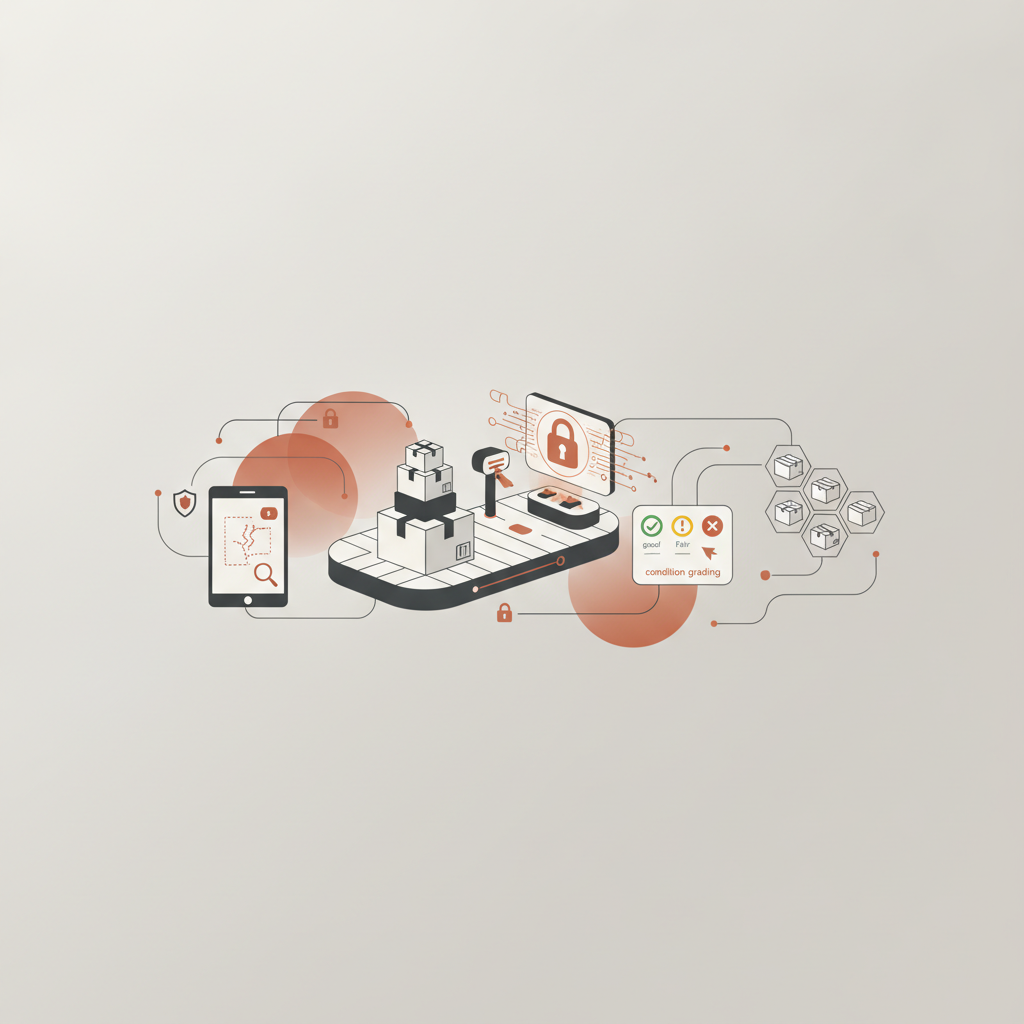
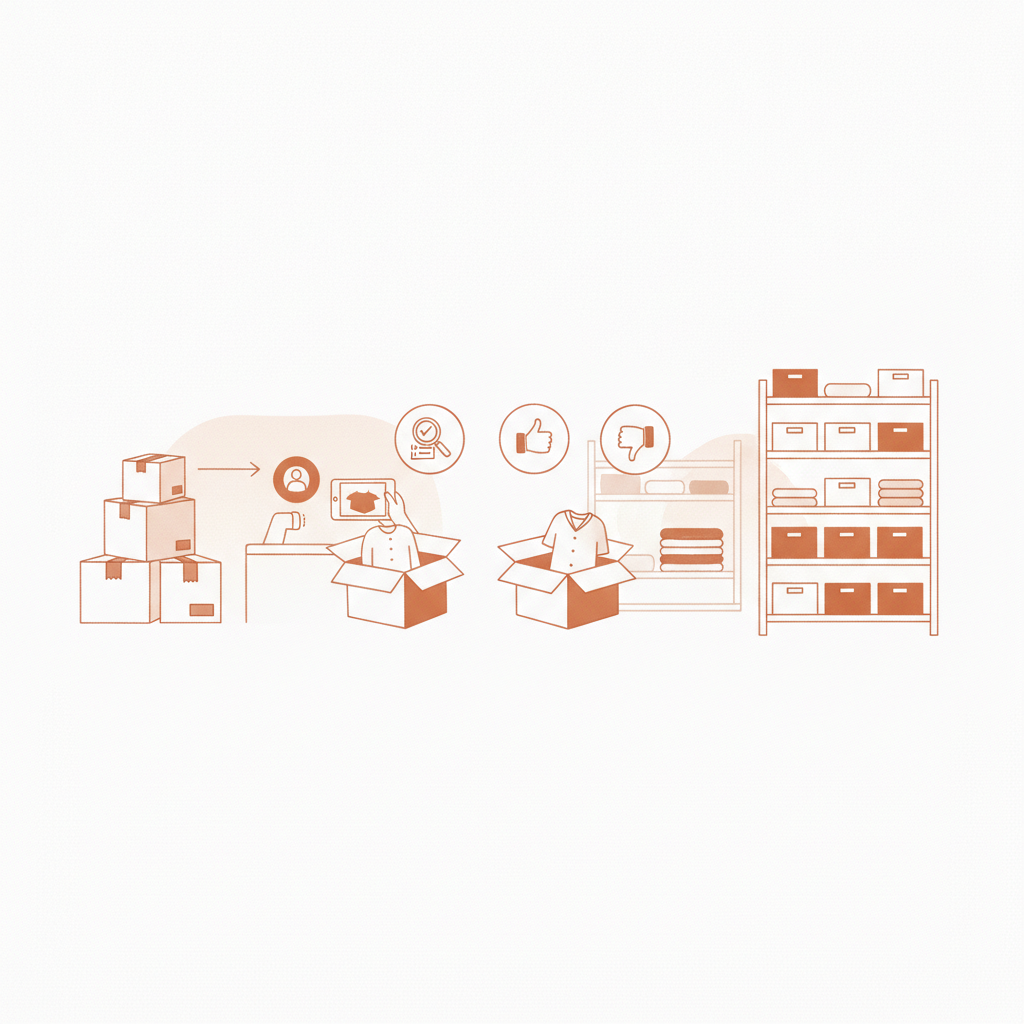
areturnz photographs the outer label, the opened parcel, the item, and any defect at intake, then runs AI grading against the A/B/C/R scale with a confidence score attached to every call. Across more than 180,000 returns processed, AI-vs-operator agreement sits at about 99.6 percent, and the median time from inbound scan to disposition decision is about 48 hours. That means a grade-A item gets routed back to resale inventory while it still has retail value, regardless of whether the customer paid $7.99 to ship it back or sent it free. For a deeper look at how speed converts directly into recovered margin, see restock velocity: the metric that pays for your returns program.
When paid returns make sense
Paid return fees tend to earn their keep in a few specific situations: categories with high size-exchange abuse (certain apparel and footwear segments), markets where return fraud is already a known problem, and brands competing on price rather than experience where margin protection outweighs the conversion hit. A modest fee, often $5 to $8, can cut bracketing behavior (ordering multiple sizes to pick one) without crashing conversion, especially if the fee is waived for store credit or exchange rather than refund.
When free returns still win
Free returns remain the stronger play for premium apparel, beauty, and categories where trial-before-keep is part of the buying habit, and for any brand competing directly against marketplaces that already offer free returns as table stakes. The key is pairing the policy with fast, accurate grading so the volume increase does not turn into a warehouse backlog. Retailers who have modeled this tradeoff against holiday volume specifically should also look at designing a holiday return window policy that does not eat your margin, since peak season amplifies whichever policy you choose.
A hybrid approach often wins
Many retailers are moving to tiered policies: free returns for store credit or exchange, paid returns for cash refunds. This captures most of the conversion benefit of free returns while reducing the share of returns that convert to pure markdown risk. It works best when the backend can grade and route fast enough that exchanged inventory gets back on shelves before the next size run sells out, which again comes down to cycle time rather than policy wording.
Frequently asked questions
Does a paid returns policy actually reduce fraud?
It reduces casual bracketing and opportunistic returns, but it does not stop deliberate fraud like wardrobing or item swaps. Evidence capture at receiving, including photos of the opened parcel and item condition, does more to contain fraud than a shipping fee does, since it creates a record operators and dispute teams can point to.
How much does free return shipping typically cost per order?
It varies by carrier and weight, but reverse shipping alone often runs $5 to $15 per returned unit before any processing, grading, or restocking labor is added. The full landed cost of a return, covered in the real cost of a return, is usually several times the shipping line alone.
Can areturnz process returns under either policy?
Yes. areturnz processes inbound returns regardless of whether the customer paid for shipping or not. Every parcel gets the same photo-backed intake, AI grading on the A/B/C/R scale, and disposition routing, so the margin recovery benefit applies whether your policy is free, paid, or hybrid.
What is the single biggest margin lever within either policy?
Speed to disposition. A grade-A item that sits ungraded for ten days loses resale value every day it waits. areturnz's roughly 48 hour median cycle from inbound scan to disposition is designed to close that gap regardless of which return policy brought the item back in the first place.
Want to see what the evidence and grading look like on an actual returned parcel before deciding how to change your policy? Talk to areturnz about running a pilot batch through NJ-01 and comparing the recovery numbers side by side.
Related reading: Return reason codes and margin leakage: what the codes actually tell you
Related reading: Return shipping cost optimization: carrier choice and the margin impact
Proof on every return
Photos, an AI condition grade, and a full custody chain, attached to every parcel and available via the API.