Return reason codes and margin leakage: what the codes actually tell you
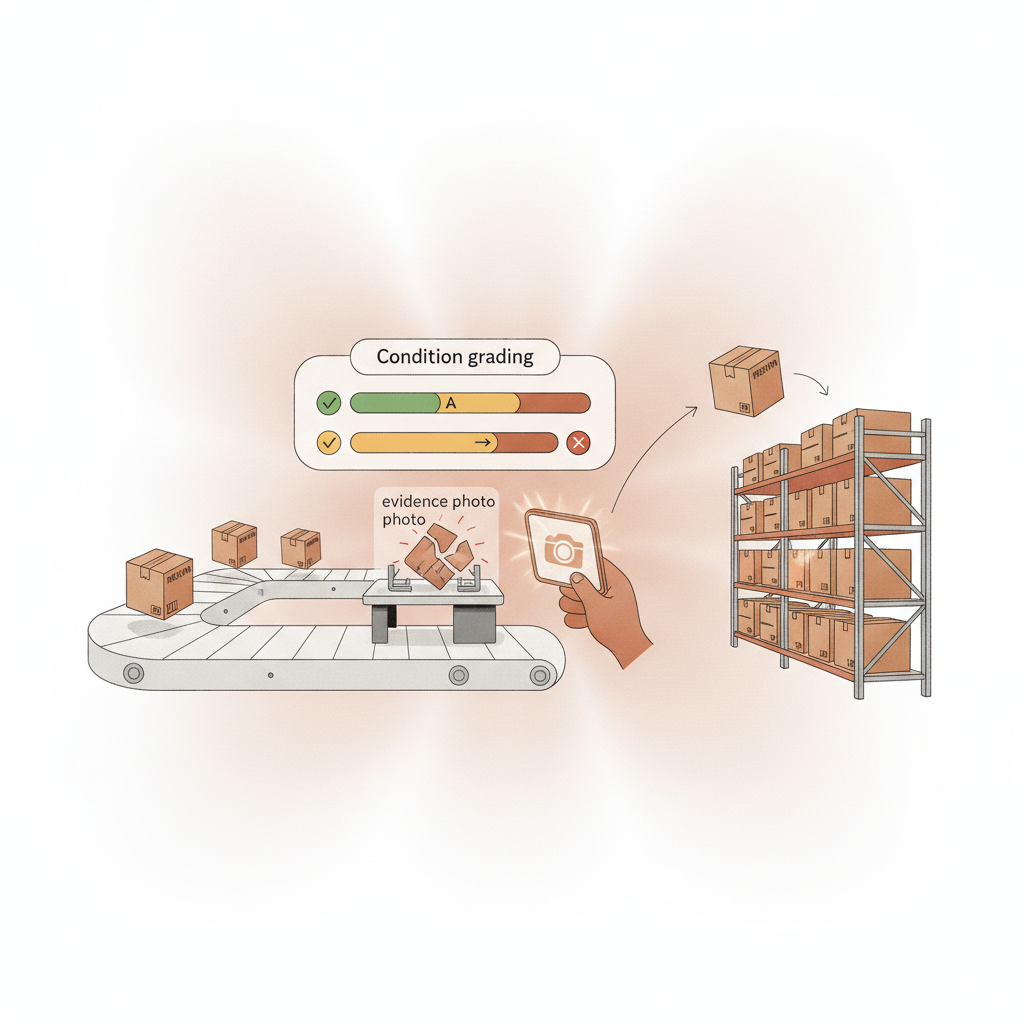
Return reason codes tell you about margin leakage only when they are checked against what actually arrives on the dock, not what the customer or the return portal claims. A code like "wrong size" or "defective" is a self-reported label captured at the moment someone starts a return, and on its own it explains very little. areturnz treats reason codes as one input among several: the stated reason gets logged, but the parcel is also photographed, opened, and run through AI condition grading on the A/B/C/R scale, so you can see where the stated reason and the real condition agree, and where they do not. That gap is usually where the margin is actually leaking.
Why reason codes alone undercount leakage
Most returns systems ask the customer to pick a reason from a dropdown before they ever ship the item back. That data point is collected before anyone on your side has looked at the product. It is useful for customer service routing and refund timing, but it is a weak proxy for financial impact. A shopper who clicks "changed my mind" might be returning a worn item. A shopper who clicks "defective" might be returning something with no fault at all, just buyer's remorse dressed up to avoid a restocking fee. Neither code, on its own, tells you whether that unit can go back to sellable inventory or needs to be liquidated at a fraction of its value.
This is the blind spot that turns returns into a hidden cost center. Finance teams often build returns P&L models on reason code volume alone, which overstates how many units are genuinely restockable and understates how much is quietly being lost to grading mismatches.
The reason code categories that actually move margin
Not all reason codes carry equal financial weight. Some correlate tightly with high resale value loss, others barely move the needle. The table below groups common reason codes by typical margin impact and the disposition path they tend to produce once the item is actually graded.
| Reason code category | Typical margin impact | Common disposition after grading | Evidence need |
|---|---|---|---|
| Wrong size or color | Low to moderate | Restock (Grade A/B) | Low, confirms unworn condition |
| Changed my mind | Moderate | Mixed: restock or markdown liquidation | Moderate, catches undisclosed wear |
| Item not as described | High (dispute risk) | Varies widely, often disputed | High, full evidence bundle required |
| Defective or damaged | High | Liquidate, donate, or destroy (Grade C/R) | High, needed for vendor chargebacks |
| Arrived late | Low | Restock (Grade A) | Low |
| No reason given | Unknown until graded | Depends entirely on grading outcome | High, this is where leakage hides |
The last row matters more than it looks. "No reason given" or vague catch-all codes are often the largest bucket in a retailer's data, and they are the category where grading does the most work, because there is no stated reason to even sanity-check against.
Where the mismatch actually shows up
Margin leakage from reason codes tends to cluster in three places. First, items coded as lightly used that grade out as C or R, meaning the return is worth far less than the reason code implied and the item was quietly misrepresented. Second, items coded as defective that grade A or B, meaning a perfectly sellable unit got routed to liquidation or destruction because nobody checked the claim against the physical item. Third, high-value SKUs where even a small percentage of reason code mismatch translates into real dollars, because the per-unit loss is large even if the unit count is small.
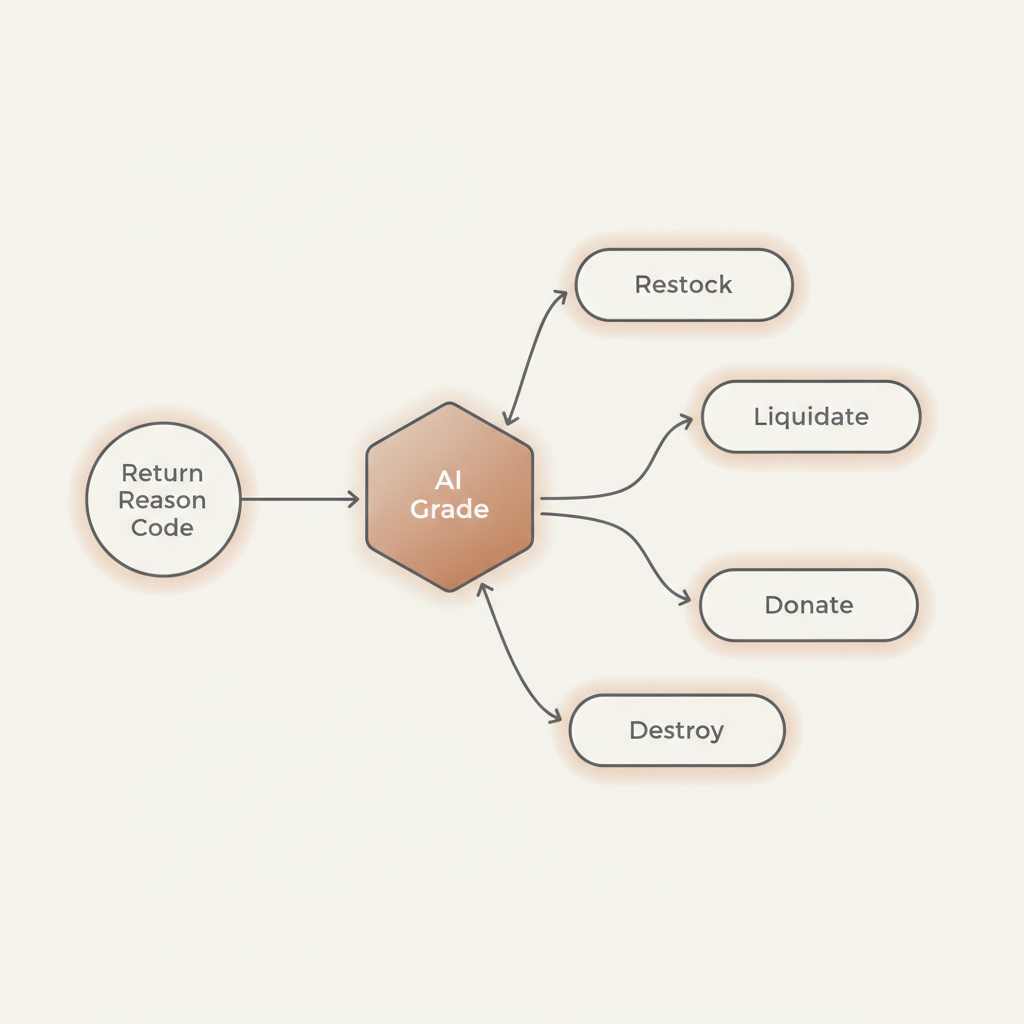
All three of these are solvable, but only if the reason code is never treated as the final word. areturnz routes every parcel through disposition rules that weigh the AI grade and confidence score alongside the stated reason, with human operator overrides logged whenever the two disagree. Across the network that process runs at about 99.6% AI-versus-operator match accuracy on 180K+ returns processed, which means the mismatches that do surface are flagged, not buried in an averaged-out reason code report.
Turning reason code data into a margin recovery process
A reason code becomes useful for margin work once it is reconciled against grading outcomes at the SKU and vendor level. In practice that looks like three recurring checks: tracking what percentage of each reason code bucket actually restocks at Grade A or B, flagging vendors or categories where "defective" claims consistently grade higher than expected (a sign of buyer-side misuse rather than product quality), and watching the median time from inbound scan to disposition for each reason code, since delays compound markdown decay regardless of what the customer claimed. areturnz's median cycle across all reason codes runs about 48 hours from inbound scan to disposition, which keeps that decay window short enough that reason code accuracy problems do not get a chance to snowball into deep markdowns.
This reconciliation work is also what makes reason codes useful beyond operations. Finance teams building a returns economics model get a cleaner input when the reason code is paired with actual grade data instead of treated as ground truth, and that pairing is exactly what shows up in the evidence bundle behind every return, viewable in the dashboard or pulled via the signed-JSON API.
What this looks like end to end
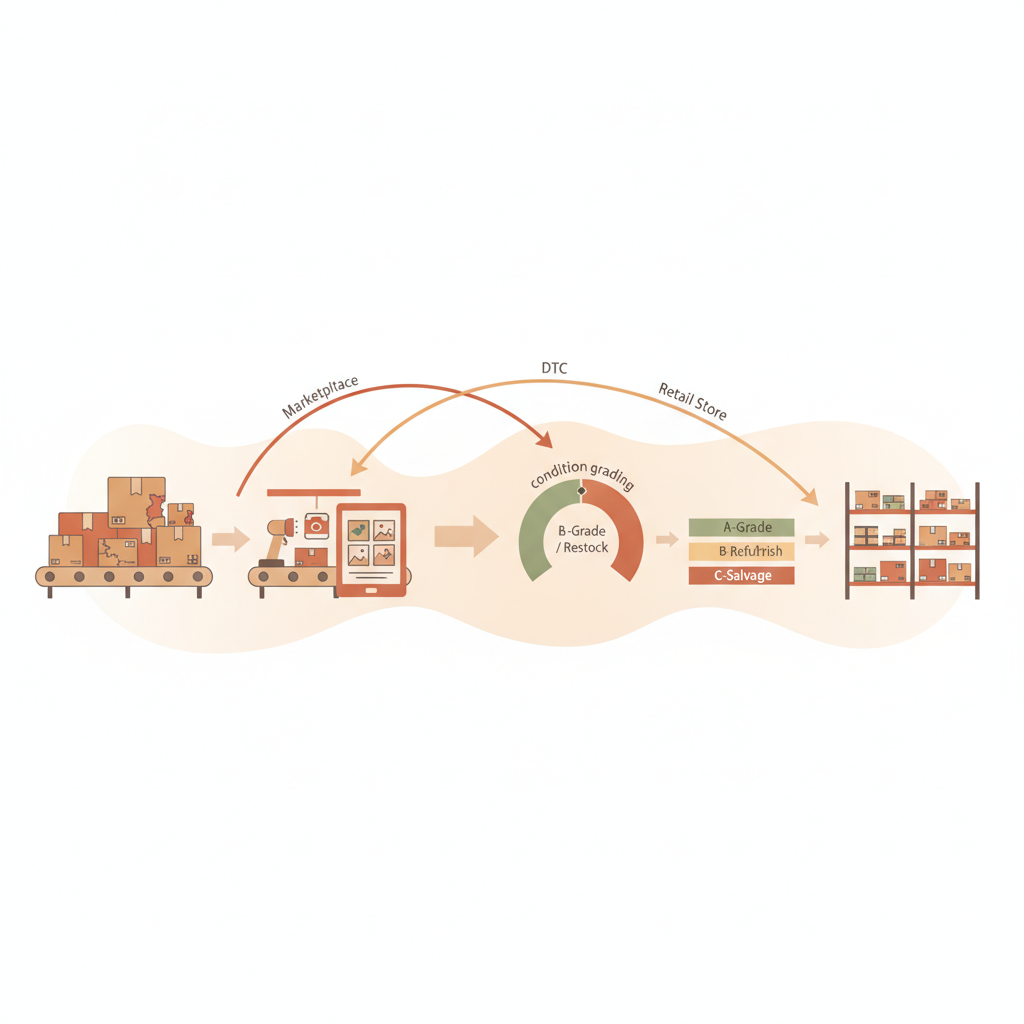
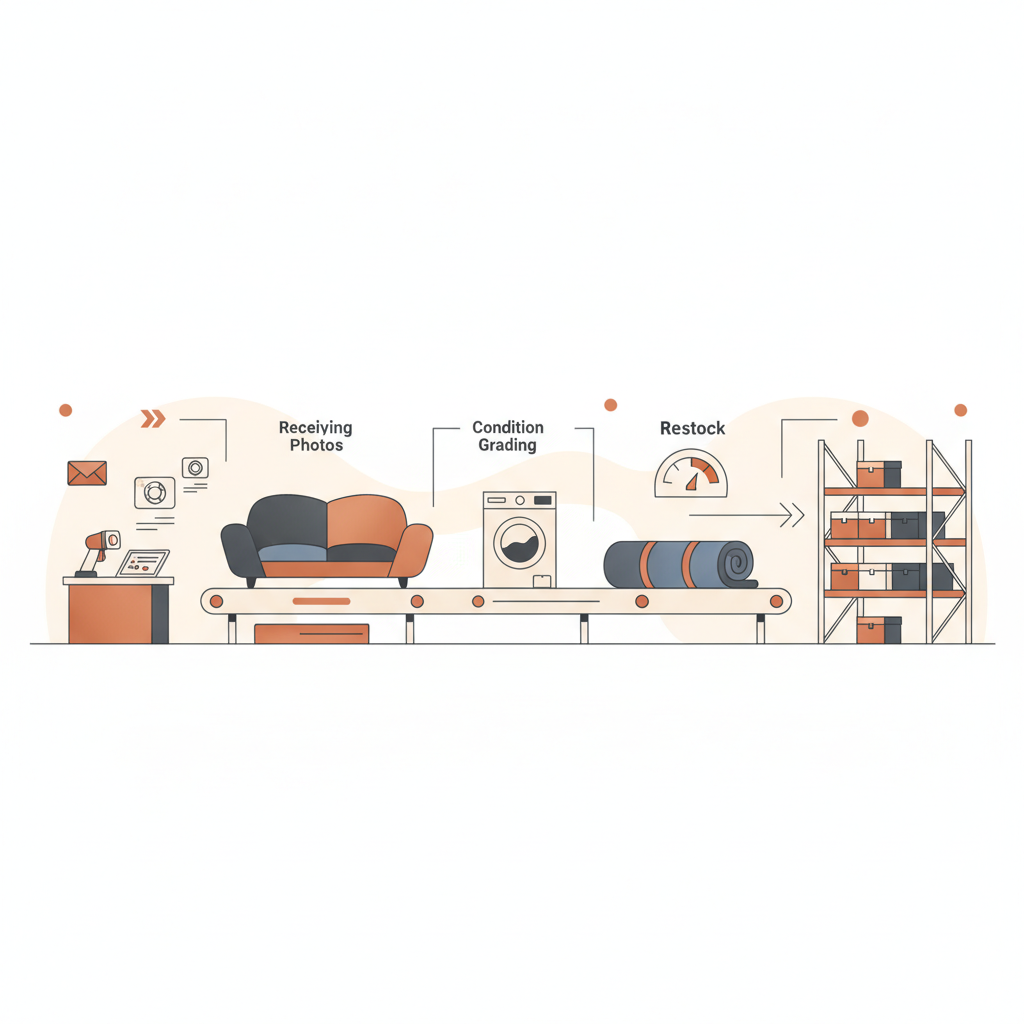
Each returned parcel gets photographed at receiving (the outer label, the opened box, the item itself, and any defect), graded A, B, C, or R with a confidence score, and tagged with whatever condition issues the AI detects. Disposition rules then route the unit to restock, liquidate, donate, or destroy, with any operator override logged against the original reason code. That full chain, reason code plus grade plus disposition plus evidence, is what lets a margin review actually explain variance instead of guessing at it. You can see what one of these bundles looks like on the evidence sample page, and how disposition decisions get made in more detail in our breakdown of disposition rules.
Frequently asked questions
Are return reason codes reliable on their own?
Not for margin analysis. They are self-reported at the start of the return process, before anyone inspects the item, so they are useful for routing and refund timing but weak as a financial signal. They become reliable once cross-checked against an actual condition grade.
How does areturnz combine reason codes with grading?
Every parcel is photographed and graded A, B, C, or R by AI with a confidence score, independent of the stated reason code. Disposition rules then weigh both, and any case where an operator overrides the AI recommendation is logged, which is how the network holds about 99.6% AI-versus-operator match accuracy.
Which reason code category hides the most margin leakage?
Vague or "no reason given" codes, and claims of defect that turn out to grade A or B on inspection. Both only become visible once grading data is reconciled against the code, which is why reason codes alone understate the real picture.
Does fixing reason code accuracy actually change recovery rates?
Yes, mainly by catching misrouted units early. An item coded as defective but graded sellable that gets corrected to restock, rather than sent to liquidation by default, recovers full margin instead of a liquidation fraction, and the 48 hour median cycle keeps that correction fast enough to matter before markdown decay sets in.
Can this data support vendor or chargeback disputes?
Yes. Because reason codes, photos, grades, and disposition outcomes are tied together in one evidence bundle, retailers can show a vendor exactly how many "defective" claims actually graded as damaged versus how many were sellable, which strengthens chargeback and vendor compliance conversations.
Want to see how your current reason code mix would grade out on the network? Talk to areturnz about running a sample batch through evidence-backed grading.
Related reading: Return shipping cost optimization: carrier choice and the margin impact
Related reading: Seasonal Staffing Economics: Labor Cost Per Return, Peak vs Off-Peak