
Marketplace Seller Return Fraud: Closing the INAD Loophole With Evidence
Item-not-as-described claims are the easiest lever for return fraud on marketplaces. Here is how photo evidence, AI grading, and chain of custody close the loophole without slowing down honest buyers.

Chain of custody audit trails: proving where every returned unit went
When a returned unit's history is in question, a chain of custody audit trail is the record that answers it. Here is what a real one contains and why most returns programs cannot produce one.

Buyer Trust for Resold Open-Box Items: What Actually Closes the Sale
Resold open-box items sell at a discount, but they still need to sell. Here is what actually convinces a buyer to trust a grade they cannot see in person, and how areturnz builds that proof into every listing.
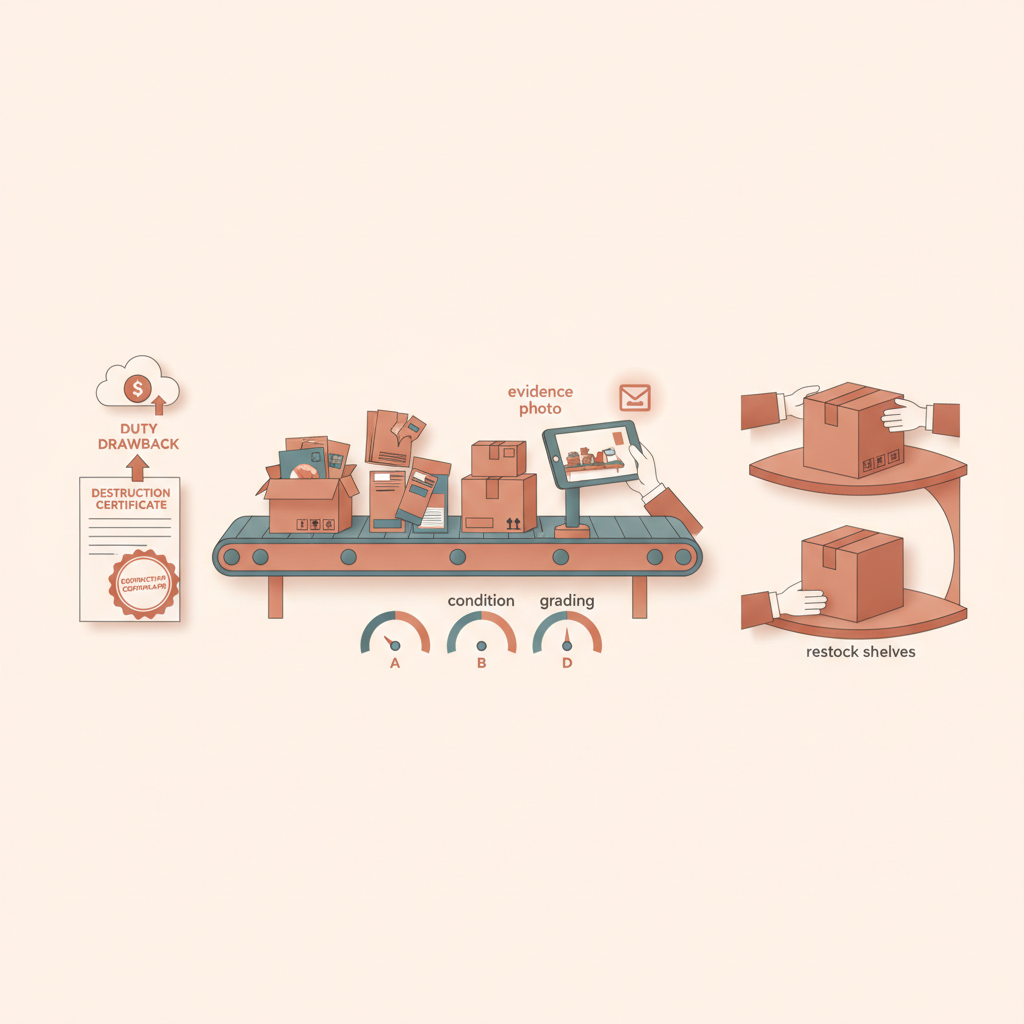
Destruction Certificates and Duty Drawback: Closing the Compliance Loop
Duty drawback claims live or die on documentation. Here is how destruction certificates, disposition records, and photo evidence work together to close the compliance loop on returned goods.

Building the Dispute-Ready Evidence Dossier
A dispute-ready evidence dossier is the single record that proves what a returned item actually looked like, who touched it, and why it was routed the way it was. Here is what belongs in one and how areturnz builds it automatically.

Returns Evidence and Dispute Proof: The Complete Guide
A category hub on returns evidence and dispute proof: how photo chain of custody, AI grading, and disposition rules combine to close disputes and build resale trust.

Disposition rules: turning grades into decisions
A grade is only useful if it triggers an action. Disposition rules combine the grade with item attributes to route every return to the right lane, automatically, with overrides logged.

Killing the "item not as described" dispute
The single most common returns dispute is also the most preventable. Content verification at receiving catches swaps and mismatches before they become chargebacks.

Why every return should ship with proof
A photo taken the moment a box is opened ends most condition disputes before they start. Here is what a complete evidence bundle contains and why it matters.