Open Box vs Refurbished vs Used: What the Condition Labels Actually Mean

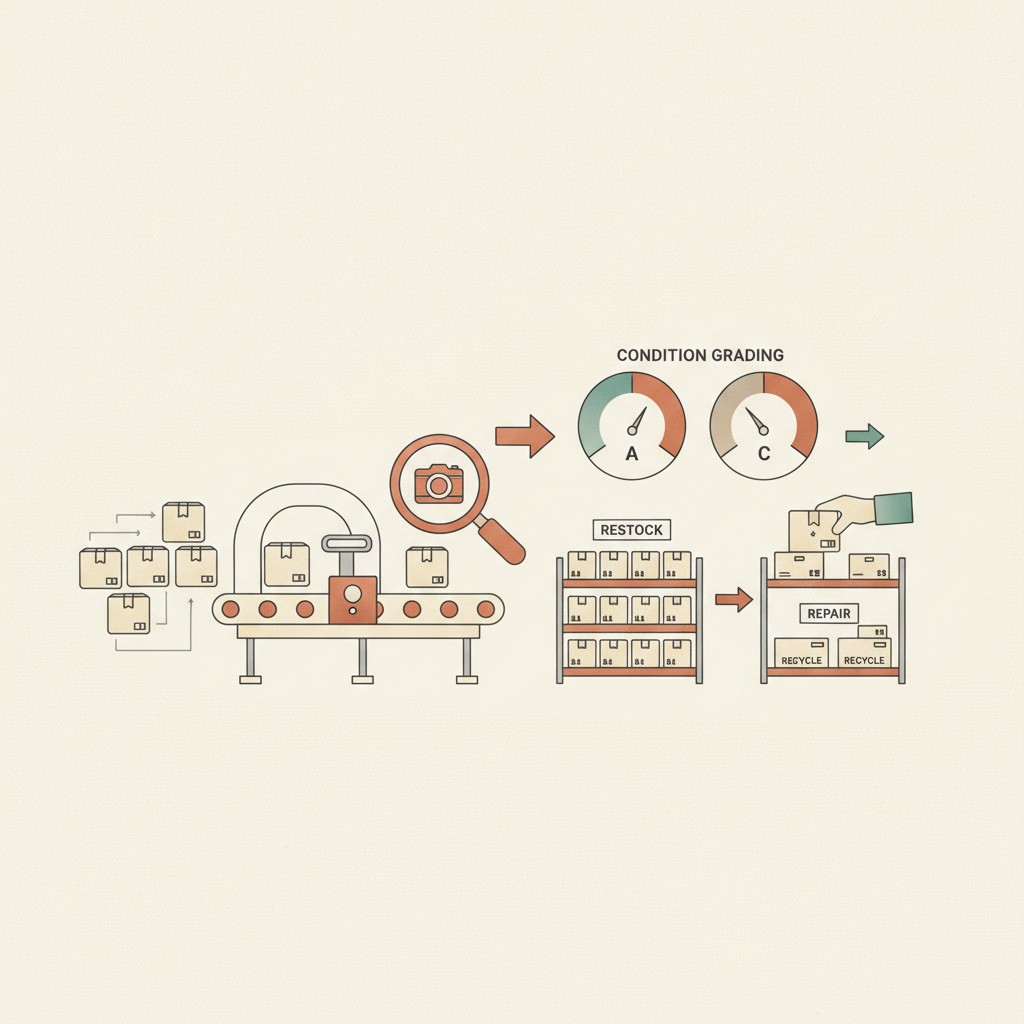
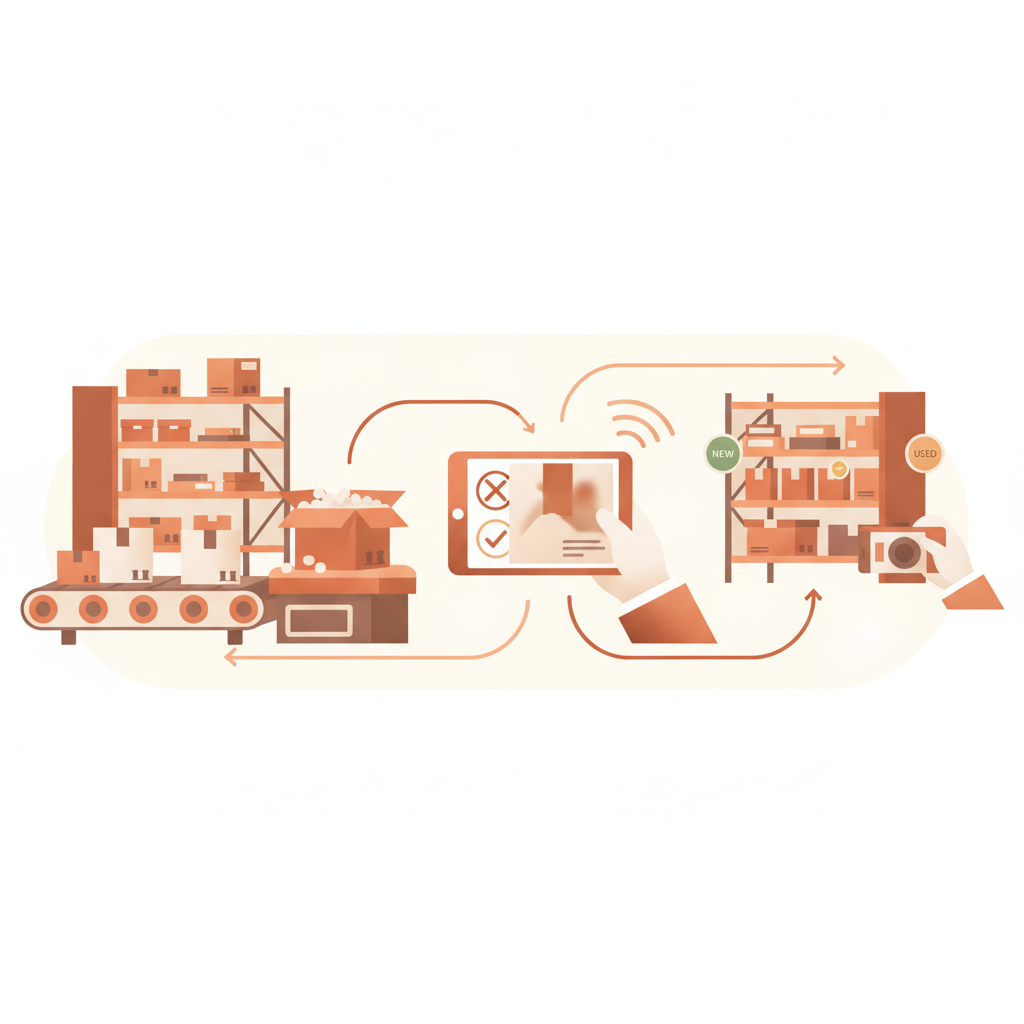
Open box means an item was purchased, the packaging was opened, and the product was returned unused or lightly handled, with no repair performed and typically all original accessories intact. At areturnz, that definition is not a marketing claim. Every returned unit is photographed at receiving (outer label, opened parcel, the item itself, any defect), then graded A, B, C, or R by an AI model with a confidence score, so \"open box\" maps to a specific grade backed by evidence rather than a guess made on a shelf.
The trouble is that resellers, marketplaces, and shoppers often use \"open box,\" \"refurbished,\" and \"used\" as if they were interchangeable. They are not. Each term implies a different history for the item: whether it was ever used outside the box, whether anything was repaired or tested, and how much risk a buyer is taking on. Getting the label wrong is one of the fastest ways to generate an item-not-as-described dispute.
The three labels, defined properly
Open box
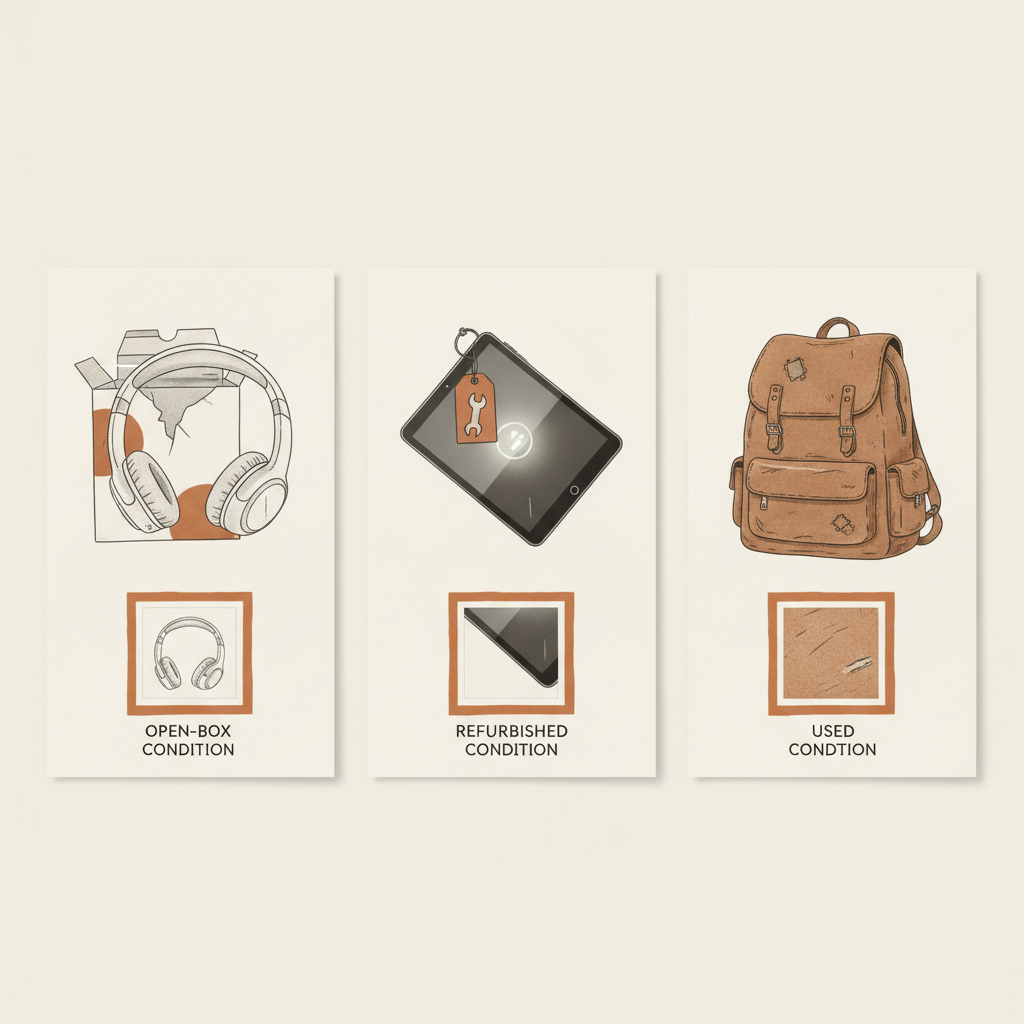
An open box item has had its packaging opened and possibly the product handled or tried on, but it has not been used in any meaningful sense and was not sent out for repair. Think of a customer who orders two sizes of the same jacket, opens both boxes, keeps one, and returns the other unworn. The returned item is open box: new condition, disturbed packaging.
Refurbished
Refurbished means the item went through an inspection and repair or restoration process before it was offered for resale again. That could be a replaced battery, a cleaned and tested circuit board, or cosmetic repair on a housing. Refurbished items carry more handling history than open box items and usually come with some form of functional testing or warranty attached, because somebody actively intervened to make the item sellable.
Used
Used covers items that were actually used by a prior owner, sometimes for an extended period, with no repair or restoration step applied before resale. Used items can range from barely touched to visibly worn, and the label by itself tells a buyer very little about actual condition. That is exactly the gap that condition grading is supposed to close.
Why the labels keep getting confused
Part of the confusion is that \"open box\" sounds similar to \"used\" in casual conversation, and both get mixed up with \"refurbished\" when a seller wants to make an item sound more trustworthy than it is. Part of it is operational: without photo evidence and a consistent grading process, warehouse staff default to whatever label moves inventory fastest, not the one that is accurate. That inconsistency is what erodes buyer trust in resold open-box inventory and drives return-to-sender cycles that cost money twice.
areturnz solves this at the point of intake. The AI condition grading system assigns a condition grade the moment a return is scanned, using the same A/B/C/R scale across 180K+ returns processed, with a 99.6% match rate between the AI grade and operator review. The label a buyer eventually sees is tied to that grade, not to a warehouse worker's best guess at 4pm on a Friday.
How the grades map to the labels
The table below shows roughly how the familiar resale labels line up with the ABCR grading scale used internally. This is not a strict one-to-one mapping (grading is about physical condition and function, not retail terminology) but it gives a useful reference point.
| Resale label | Typical ABCR grade | What it implies | Evidence expected |
|---|---|---|---|
| Open box | A or high B | Packaging opened, item unused or barely handled, all accessories present | Outer label photo, opened parcel photo, item photo showing no wear |
| Refurbished | B (post-repair) | Functional defect found and corrected, cosmetic repair possible | Pre-repair defect photo, post-repair item photo, test result if applicable |
| Used, good condition | B or C | Prior use with light to moderate cosmetic wear, fully functional | Item photo, defect tags if any, confidence score on grade |
| Used, fair condition | C | Noticeable wear or minor functional issues disclosed upfront | Defect close-up photo, tags describing specific wear |
| Not resellable | R | Damaged beyond resale threshold, routed to liquidate, donate, or destroy | Damage photo, disposition decision, operator override log if applicable |
The median cycle from inbound scan to a disposition decision runs about 48 hours, so a return does not sit in limbo while someone decides which label applies. The grade, the tags, and the disposition rule resolve it quickly, and the full record is available to the client. The underlying grading mechanics are covered in more depth in the A/B/C/R grading scale breakdown.
Why the distinction matters for resale and disputes
Mislabeling an item is not a cosmetic problem. A refurbished unit sold as open box invites a dispute the moment a buyer notices evidence of repair. A used item sold as open box invites a return, a chargeback, or both. Every one of those outcomes costs more than getting the label right the first time would have cost.
This is where evidence pays for itself. Each return in the areturnz network ships with an evidence bundle, available in the dashboard and via a signed-JSON API with webhooks, documenting the outer label, the opened parcel, the item, and any defect found. If a buyer disputes the label on a resold item, the bundle shows exactly what condition it was in at intake and what grade it received. You can see what that evidence actually looks like at /evidence-sample, and the broader trust implications for resale are covered in buyer trust for resold open-box items.
Confidence scores reduce mislabeling risk
Every AI grade comes with a confidence score. High-confidence grades move straight to disposition. Lower-confidence calls get flagged for operator review, and the operator's decision is logged against the AI's original call. That loop is part of why the AI-to-operator match rate holds at 99.6% across the network, and it is the mechanism that keeps an open-box label from quietly drifting into used-item territory over time.
What this means if you resell returned inventory
If you are a brand, marketplace, or 3PL trying to recover value from returns, the label you put on resold inventory is a promise to the next buyer. Getting it wrong once is a dispute. Getting it wrong repeatedly is a trust problem that shows up in return rates and negative reviews. A grading process with photo evidence at every step gives you a defensible answer every time someone asks why an item was labeled the way it was.
For partners reselling under their own brand, this consistency matters even more, since the label is representing their name, not just the item. See how that plays out for partner programs at /use-cases/partners, and check current plans at /pricing.
Frequently asked questions
What does open box mean exactly?
It means the original packaging was opened and the item was handled minimally or not used at all, with no repair performed. It should come with all original accessories and show no functional or significant cosmetic defects.
Is refurbished better or worse than open box?
Neither is strictly better. Refurbished means a defect was found and corrected, which can mean excellent post-repair function but also means the item had an issue at some point. Open box typically means no issue was ever found, just disturbed packaging.
Can an item be both open box and graded B instead of A?
Yes. Open box describes packaging and purchase history, not a guaranteed top condition. If the item shows minor cosmetic wear from handling even without use, it can still land in grade B under the ABCR system.
How does areturnz decide which label to apply to a resold item?
The AI grading model assigns an ABCR grade with a confidence score based on photos taken at receiving. Disposition rules then route the item, and the grade and tags inform the resale label applied downstream, whether that is open box, refurbished, or used.
What happens if a buyer disputes the condition label?
The evidence bundle tied to that return, including receiving photos, the AI grade, confidence score, and any operator override, settles the question. That record is available through the dashboard or the signed-JSON API.
Want to see how accurate condition labeling actually protects your margin and your resale reputation? Contact areturnz to talk through your returns volume and grading needs.