Return to vendor vs liquidation: choosing the right disposition path
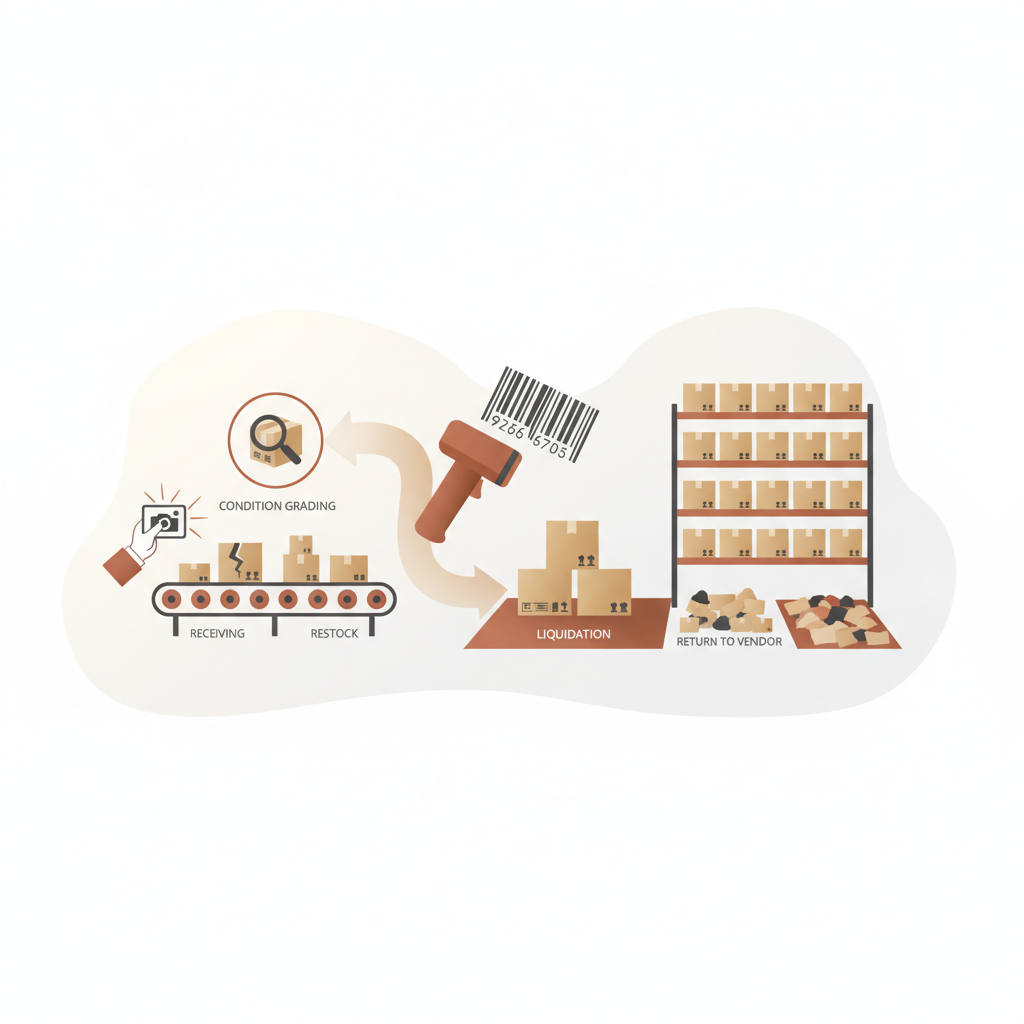
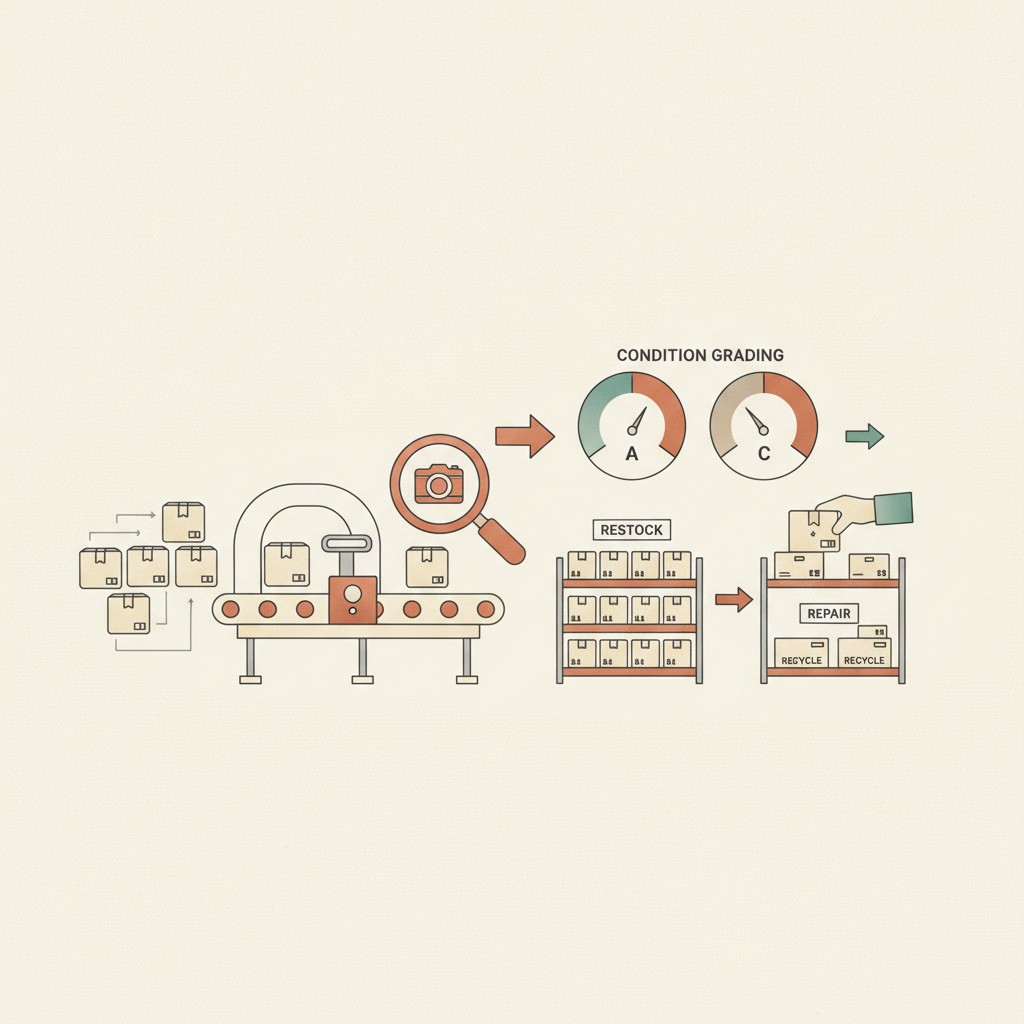
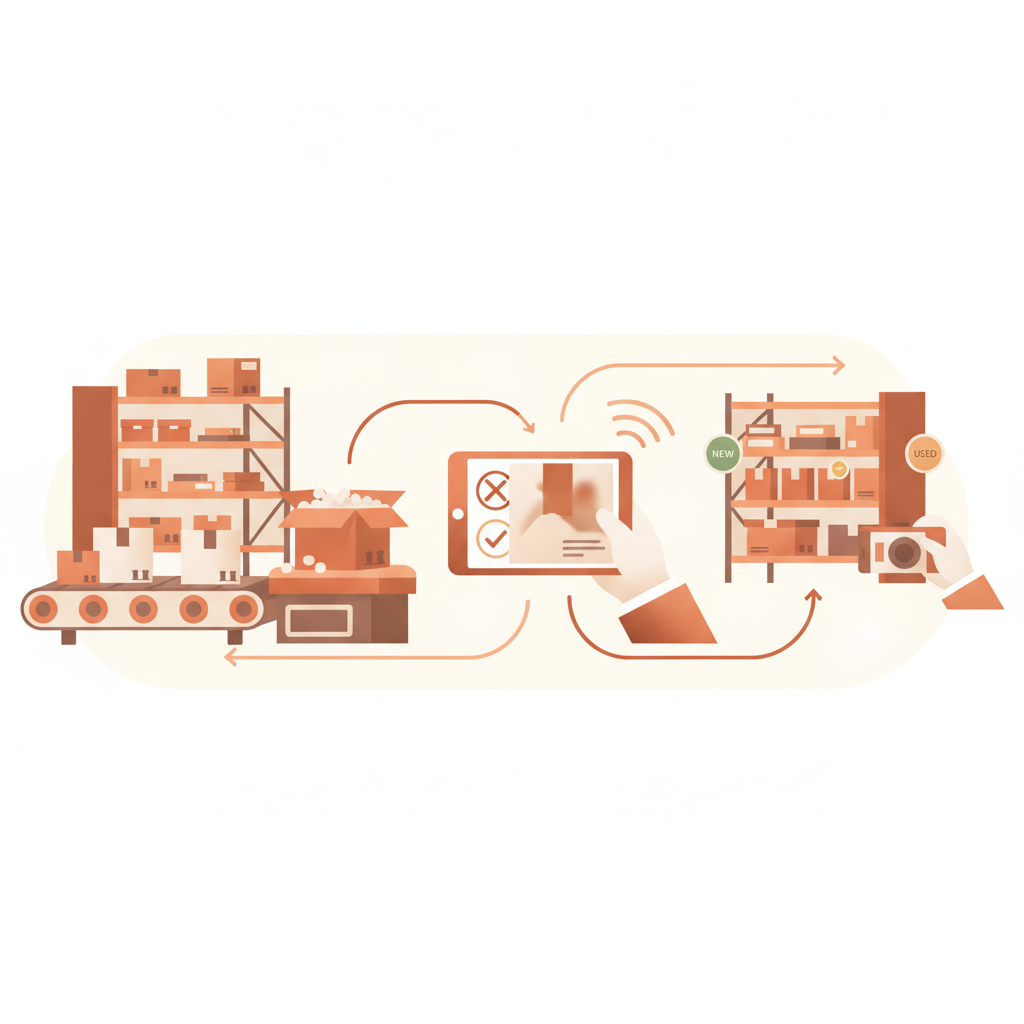
Return to vendor (RTV) and liquidation are two different disposition paths, not interchangeable fallback options, and the right choice depends on recovery value, cycle time, and who owns the defect. Return to vendor sends a unit back to the manufacturer or supplier for credit, often because of a quality defect or an overstock agreement, while liquidation sells the unit into secondary channels at a markdown, usually because restocking at full price is no longer realistic. areturnz routes each returned unit through AI condition grading (A, B, C, R) and disposition rules that compare the two paths on actual recovery math, not on which bin is closest to the dock.
Most retailers default to one path out of habit. A vendor agreement from five years ago routes everything back regardless of condition, or a liquidation partner takes whatever shows up because nobody built the logic to split the stream. Neither habit is free. This article lays out the economics of each path, where they overlap, and how grading data and disposition rules let you stop guessing.
What return to vendor actually means
RTV sends a unit, or a pallet of units, back to the original manufacturer or supplier under a chargeback or credit agreement. It is most common for defective goods still under warranty, overstock buybacks written into the original purchase order, and recalls or compliance issues where the vendor is contractually on the hook. The retailer gets a credit against future invoices rather than cash, and the vendor absorbs the cost of refurbishing, scrapping, or reselling the unit through their own channels.
The economics only work when three conditions hold: the vendor agreement actually covers the return reason, the credit rate is high enough to beat other paths, and the freight and labor cost of shipping back doesn't eat the credit. A $40 credit on a $45 item sounds fine until you add $12 in freight and handling, at which point liquidating locally for $20 cash nets more.
What liquidation actually means
Liquidation sells graded inventory into secondary channels: off-price retailers, liquidation marketplaces, export buyers, or B2B lot buyers. Recovery is cash, not credit, and it arrives faster because there's no vendor approval cycle. The tradeoff is rate: liquidation recovery typically lands well below both full retail and RTV credit, because the buyer is pricing in their own resale risk and markdown. Our liquidation recovery rates breakdown covers what percentage you can realistically expect by grade and category; this article is about the decision point itself, choosing RTV or liquidation in the first place.
The economics side by side
The comparison below uses typical ranges seen across apparel, electronics, and general merchandise programs. Exact numbers vary by vendor contract and liquidation channel, but the relative shape holds.
| Factor | Return to vendor | Liquidation |
|---|---|---|
| Payment form | Credit against future invoices | Cash, often net terms 15 to 30 days |
| Typical recovery | 60 to 90 percent of cost, when agreement applies | 10 to 40 percent of retail, varies by grade and category |
| Cycle time | Weeks to months, depends on vendor approval | Days to a few weeks once graded |
| Best for | Defective units under warranty, overstock buybacks, recalls | Cosmetic damage, excess inventory, end-of-life SKUs, R-grade units |
| Who controls condition disclosure | Vendor's own inspection, often disputed | Your grading data, if you have evidence to back it |
| Risk if evidence is weak | Vendor disputes the defect, credit denied or delayed | Buyer disputes the grade, price renegotiated downward |
The row that gets overlooked most often is evidence control. A vendor can reject an RTV claim by disputing that the defect existed at receiving, and a liquidation buyer can renegotiate price after the fact by claiming the lot graded lower than represented. Both disputes get resolved faster, and more in your favor, when the claim is backed by photos taken at intake rather than a description written days later.
When RTV wins
RTV makes sense when the vendor agreement explicitly covers the return reason, the defect is verifiable (a manufacturing flaw, not wear from use), and the credit rate clears freight and handling with room to spare. It's also the right call for recalled products or compliance-driven returns where the vendor is required to take the unit back regardless of economics. Electronics with clear hardware failures and apparel with manufacturing defects (stitching, zipper failure, mislabeled sizing) are common RTV candidates when caught early in the grading process.
When liquidation wins
Liquidation wins when the defect is cosmetic rather than functional, the vendor agreement doesn't cover the return reason, or the unit is simply excess inventory with no defect at all. It's also faster, which matters for markdown decay on seasonal goods: a unit sitting in RTV approval limbo for six weeks loses more value than the extra credit percentage is worth. R-grade units (unsellable as new, not vendor-eligible either) almost always route to liquidation or, if condition warrants, donation or destruction instead.
How grading and evidence change the decision
The core problem with manual disposition is that the decision gets made once, at receiving, usually by whoever is fastest rather than whoever has the full picture. areturnz photographs every parcel at four points (outer label, opened parcel, item, defect) and an AI model grades condition on the A/B/C/R scale with a confidence score, running at about 99.6% match accuracy against operator review across 180K+ processed returns. That grade, paired with the photo evidence, is what makes the RTV-versus-liquidate call defensible on both sides of the transaction: the vendor sees proof of the defect, the liquidation buyer sees proof of the grade they're bidding on.
The median cycle from inbound scan to disposition runs about 48 hours, which matters more for liquidation-bound inventory than RTV, since liquidation value decays with every day a unit sits ungraded. Our disposition rules guide covers how grades map to specific routing logic in more detail.
Building disposition rules that choose automatically
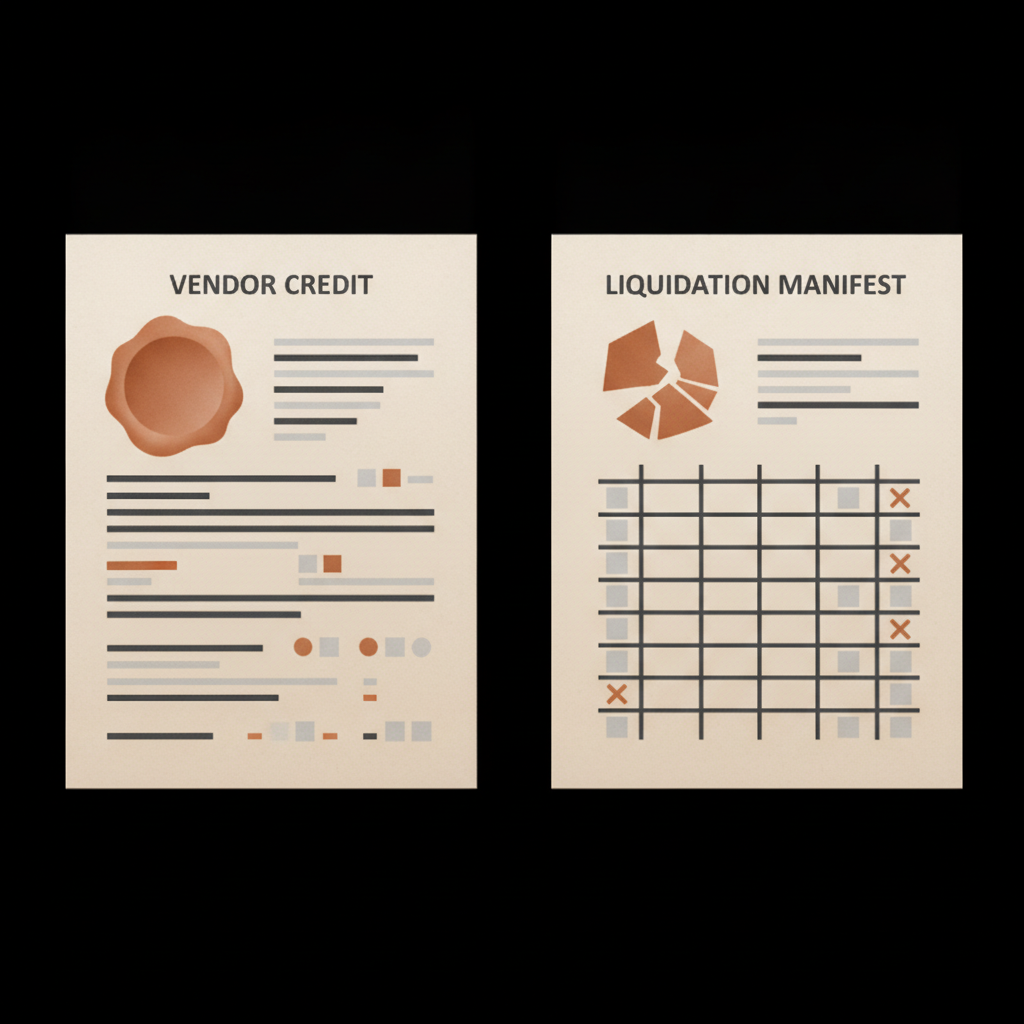
The fastest way to stop losing margin to habit-based routing is to encode the decision into rules tied to grade, defect type, and vendor agreement terms. A typical rule set looks like: A and B grade units with a verified vendor-covered defect route to RTV automatically; B and C grade units without vendor coverage route to liquidation; R grade routes to liquidation, donation, or destruction based on category. Operators can still override, but every override gets logged against the evidence bundle, so the exception becomes data for the next quarter's rule tuning rather than a one-off judgment call.
Every unit that moves through either path ships with a signed-JSON evidence bundle, available in the dashboard or via webhook, so finance and the vendor relations team are working from the same record instead of reconciling spreadsheets after the fact. You can see what that evidence actually looks like on the evidence sample page, and pricing for routing volume through a managed disposition program is on the pricing page.
Frequently asked questions
Can a single return go to both RTV and liquidation?
Not the same unit, but a mixed lot often splits: defective units with vendor coverage go RTV, while cosmetically damaged or excess units from the same batch go to liquidation. Grading each unit individually, rather than disposing of a whole batch one way, is what makes the split possible and increases blended recovery across the lot.
Does liquidation always mean lower recovery than RTV?
Usually, but not always. If a vendor agreement caps credit at a low percentage, or approval takes long enough that markdown decay erodes the item's resale value anyway, liquidation can net more in practice even though the headline recovery rate looks lower.
How does areturnz decide which path a return takes?
Disposition rules reference the AI condition grade, the confidence score, the detected defect tags, and whatever vendor agreement terms are loaded for that SKU or category. Rules route automatically where confidence is high; lower-confidence cases go to an operator review queue, and every decision, automated or manual, is logged against the evidence bundle.
What happens to R-grade units that aren't vendor-eligible?
They typically route to liquidation, donation, or destruction depending on category and condition. Destruction comes with a certificate for compliance and, where applicable, duty drawback documentation.
Where does this fit into overall returns economics?
RTV and liquidation are two levers inside the larger cost structure covered in our returns economics guide, alongside restock velocity, reserve accounting, and cost of processing. Getting the RTV-versus-liquidate split right is one of the more direct ways to move the recovery number without changing anything upstream in receiving.
Want to see how disposition rules would route your current return mix between RTV and liquidation? Talk to areturnz about setting up grading and rules for your returns stream.
Related reading: Reverse Logistics Companies: The Provider Types and How They Differ
Related reading: What Is a Restocking Fee? How It Works and Why Retailers Charge It
Pruebas en cada devolución
Fotos, un grado de estado con IA y una cadena de custodia completa, adjuntos a cada paquete y disponibles vía la API.