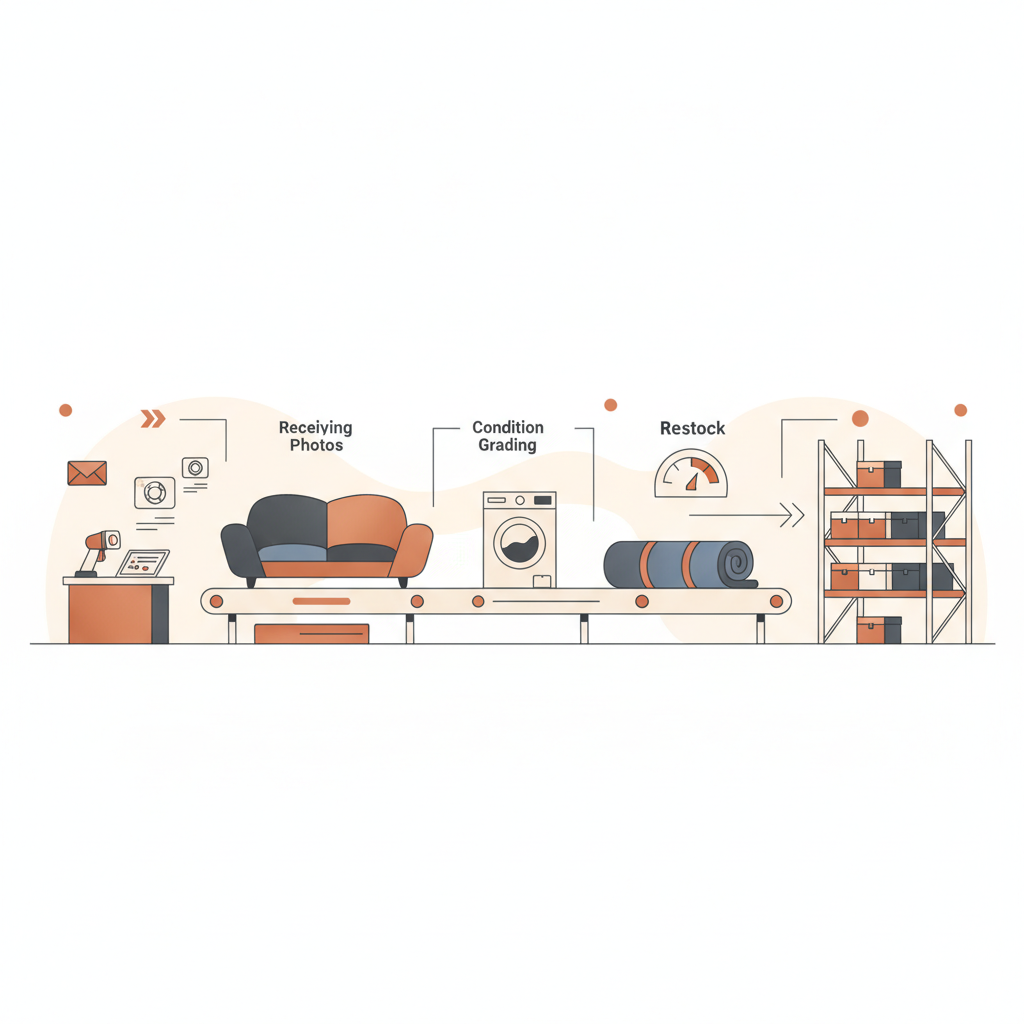
Returns Benchmarking by Channel: Marketplace vs DTC vs Retail Store Returns
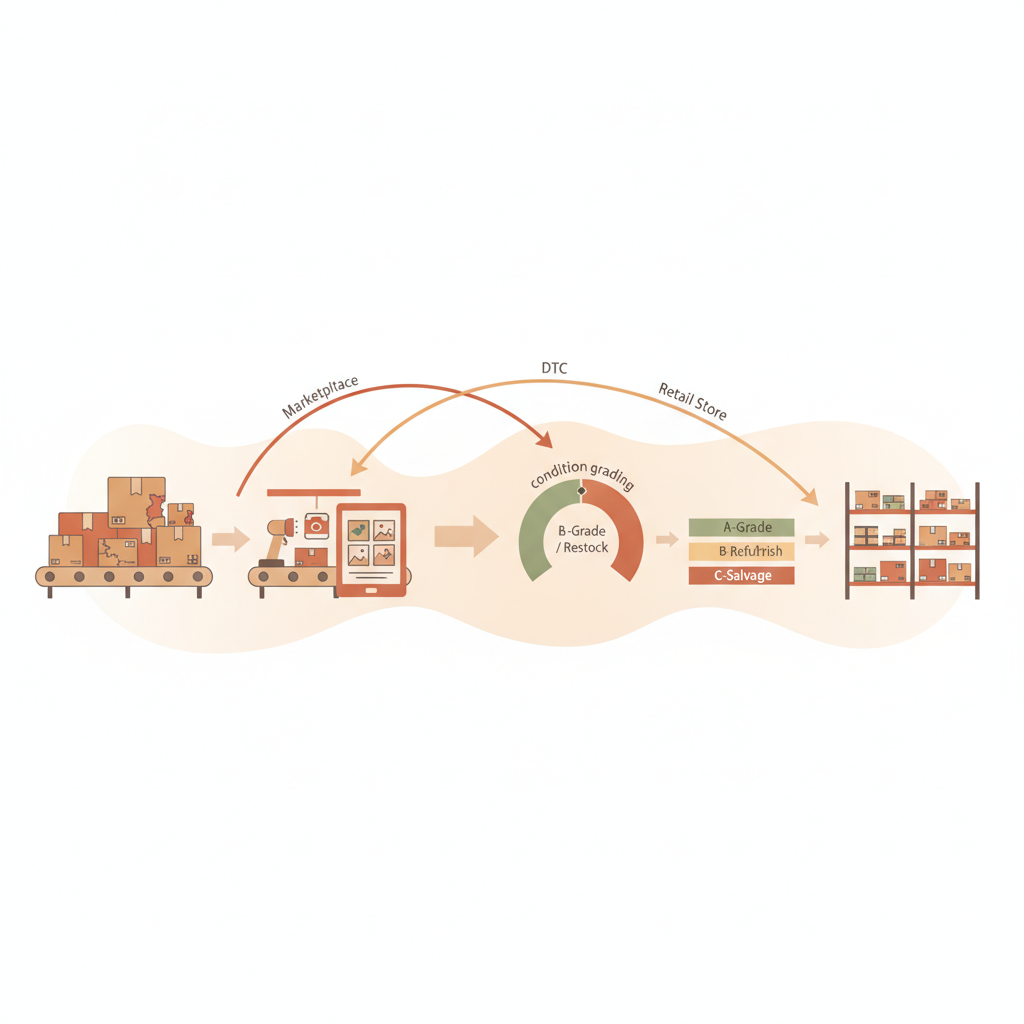
Returns benchmarking by channel means comparing return rate, return reason, fraud exposure, and disposition speed separately for marketplace, direct-to-consumer, and retail store returns, rather than treating all returns as one pool. areturnz builds this comparison from photographed, AI-graded return data (A/B/C/R condition grades with confidence scores) across 180K+ processed returns, so the benchmark reflects what actually arrives at a dock instead of what a policy page assumes.
Most retailers track one blended return rate for the whole business. That number hides more than it reveals. A marketplace listing, a DTC checkout, and a retail counter each produce a different mix of reasons, fraud risk, and packaging condition, and each one needs a different disposition path to protect margin. Benchmarking by channel is how you find out which one is actually costing you money.
Why the channel a return came through changes everything about it
A return is not just a product coming back. It carries a context: who bought it, how they bought it, what they expected, and who they can blame if it goes wrong. Channel shapes all of that.
Marketplace returns carry dispute risk built in
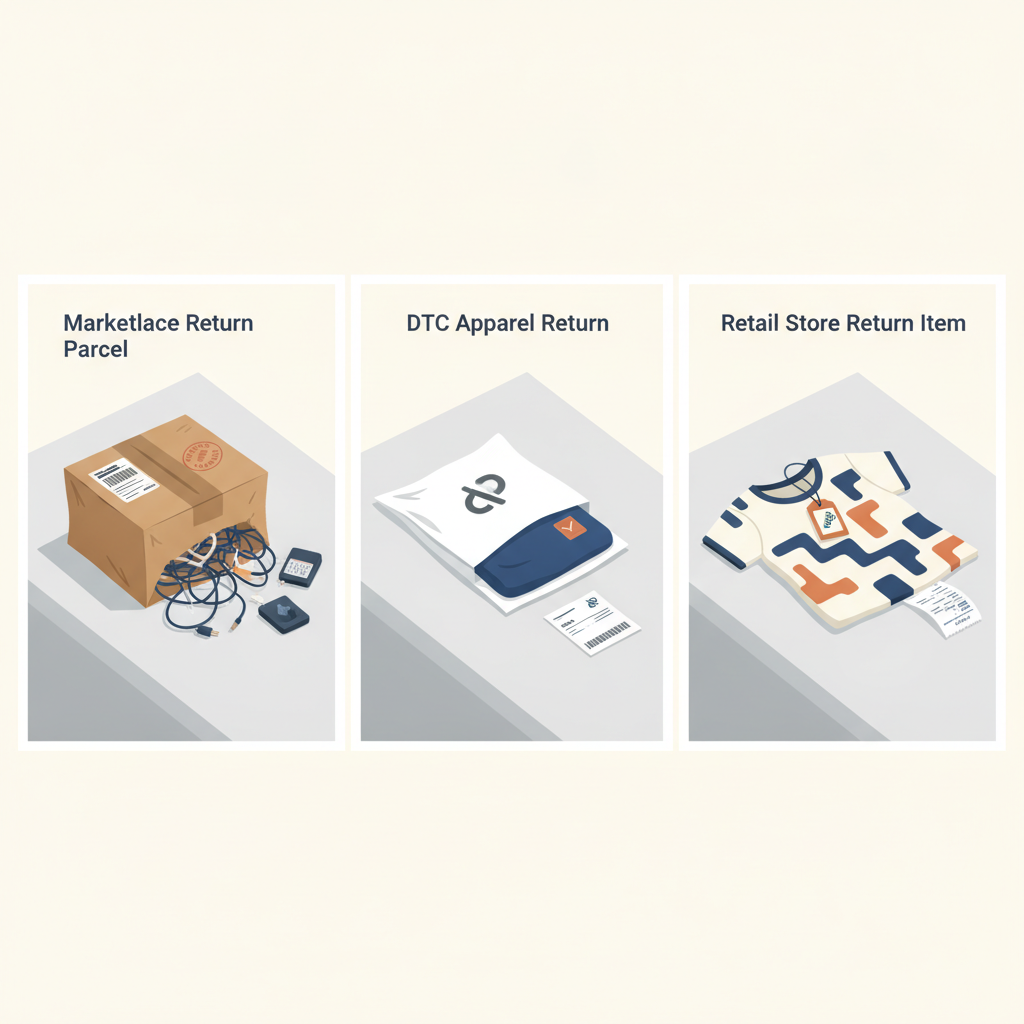
On a marketplace, the platform mediates the relationship. Buyers can file an item-not-as-described (INAD) claim without much friction, and sellers often lose the dispute by default because they have no proof of what was actually shipped or what actually came back. This is the channel where evidence does the most work, because the platform, not the retailer, is often the final judge.
DTC returns carry fit and expectation risk
Direct-to-consumer returns are driven heavily by sizing, color accuracy, and the gap between a product photo and the physical item. There is no marketplace mediator, but there is a brand reputation at stake every time a return is handled slowly or a refund is delayed.
Retail store returns carry speed and shrink risk
In-store returns happen face to face, so disputes are rare, but the operational cost is different: a staff member has to make a condition call in seconds at the counter, and that call is rarely documented. Shrink and policy abuse (wardrobing, receipt-less swaps) tend to concentrate here.
Benchmarking the three channels side by side
The table below sets rough, directional benchmarks drawn from across the areturnz network. Your own numbers will vary by category and price point, but the shape of the comparison holds across most retailers processing returns at volume.
| Dimension | Marketplace | DTC | Retail store |
|---|---|---|---|
| Typical return rate range | 15-30% | 10-25% | 6-12% |
| Dominant return reason | Item not as described, wrong item | Fit, size, color mismatch | Changed mind, gift return |
| Fraud and dispute exposure | High (INAD, serial returners) | Moderate (wardrobing) | Low on disputes, higher on shrink |
| Evidence need at receiving | Very high | High | Low to moderate |
| Disposition speed required | Fast (platform SLA clocks) | Fast (brand trust) | Immediate (counter decision) |
| Restock vs liquidate mix | Liquidate-heavy for graded C/R | Restock-heavy for A/B grade | Restock-heavy, often same-day |
Return reason codes are a useful lens for this work on their own; see our breakdown of return reason codes and margin leakage for how to read the codes your systems already collect.
Marketplace returns: where evidence pays for itself fastest
Marketplace sellers lose a disproportionate share of INAD disputes simply because they cannot prove condition at the point of return. A buyer claims the item arrived damaged or was not what was listed, the platform sides with the buyer by default, and the seller eats the refund plus the inventory loss. Photographed evidence (outer label, opened parcel, item, and any defect) closes that gap. areturnz grades every marketplace return on the A/B/C/R scale with a confidence score, and the full evidence bundle is available in the dashboard or via signed-JSON API, which gives sellers something concrete to submit when a dispute is opened. Our deeper look at this is in closing the INAD loophole with evidence, and the partner use case page covers the integration details.
DTC returns: fit problems disguised as quality complaints
A lot of DTC return reason data is noisy because customers select the closest available dropdown option rather than the real reason. "Defective" often means "did not fit as expected." AI grading helps sort this out after the fact: if a returned item grades A or B with no detected defect tags, the stated reason was almost certainly fit or preference, not quality. That distinction matters for restock decisions, because a true A-grade item with a mislabeled defect reason should go straight back to sellable inventory instead of sitting in a quarantine queue. Category matters here too, since apparel, electronics, and beauty each grade differently; our post on grading apparel vs electronics vs beauty breaks down the category-specific signals.
Retail store returns: the counter call nobody can audit
Store returns move fast because they have to. A customer is standing at the counter, and the associate makes a condition judgment in seconds, often without a photo or a consistent rubric. That speed is good for customer experience and bad for consistency: two associates can grade the same returned item differently, and neither decision is documented anywhere. Centralizing physical receiving and grading, even for store returns routed through a regional hub, brings the same A/B/C/R rigor and photo evidence to this channel that marketplace and DTC returns already get, without slowing down the customer-facing moment.
How to benchmark your own channel mix
Three steps make this benchmarking exercise usable instead of theoretical.
First, split your return data by channel before you look at rate or reason trends, not after. A blended 18% return rate could be a healthy 8% in retail and an alarming 28% in marketplace, and you will not see that until you separate the two. Second, track grade distribution (A/B/C/R) by channel, not just volume. A channel with a high return rate but mostly A and B grades is a revenue-recovery opportunity, not a loss center. Third, track time-to-disposition by channel against a consistent benchmark. areturnz runs a roughly 48 hour median cycle from inbound scan to disposition across the network, and AI-vs-operator grading agreement holds at about 99.6%, which gives you a stable baseline to compare each channel against rather than guessing at what "fast" should mean.
For the full economic model behind these numbers, our returns economics guide walks through cost of returns processing, restock velocity, and liquidation recovery in more depth than fits here.
What changes once you grade and photograph every channel the same way
The biggest shift is not in the return rate itself, it is in what happens after the item lands. When every return, regardless of channel, gets the same photographed evidence bundle and the same A/B/C/R grading with a confidence score, disposition rules can route consistently: restock, liquidate, donate, or destroy, with every override logged. That consistency is what makes a channel comparison fair in the first place. You can see the kind of evidence bundle this produces at the evidence sample page, and pricing for running this across your full channel mix is on the pricing page.
Frequently asked questions
Which channel typically has the highest return rate?
Marketplace channels usually run highest, often in the 15-30% range, because of lenient platform return policies and higher INAD dispute rates. DTC follows, driven mostly by fit and sizing. Retail store returns tend to run lowest in rate but carry their own shrink and policy-abuse risk.
Is a high return rate always bad for a channel?
No. A channel with a high return rate but a strong share of A and B grade items on the way back is recovering most of its value through fast restock. The grade distribution matters more than the raw rate on its own.
How does areturnz benchmark across channels without mixing up the data?
Every return is tagged at receiving with its source channel, photographed, and graded independently, so channel-level reporting (rate, reason, grade mix, disposition) stays separate even when volume from multiple channels lands at the same facility, including NJ-01 in East Hanover, New Jersey.
Do marketplace returns need different evidence than DTC or retail returns?
Marketplace returns generally need the most complete evidence bundle because a third-party platform, not the retailer, adjudicates disputes. DTC and retail returns benefit from the same photo and grading discipline, but the evidence is used more for internal restock decisions than for external disputes.
Can I benchmark my own channel mix against the 48 hour median cycle?
Yes. The 48 hour median cycle from inbound scan to disposition is a network-wide figure across 180K+ processed returns, and it works as a baseline to compare how quickly each of your channels moves from received to resellable, liquidated, donated, or destroyed.
Want to see how your marketplace, DTC, and retail store returns compare side by side with real evidence and grading data behind them? Contact areturnz to talk through your channel mix.
Pruebas en cada devolución
Fotos, un grado de estado con IA y una cadena de custodia completa, adjuntos a cada paquete y disponibles vía la API.