areturnz vs a Generic 3PL Returns Add-On: An Honest Comparison
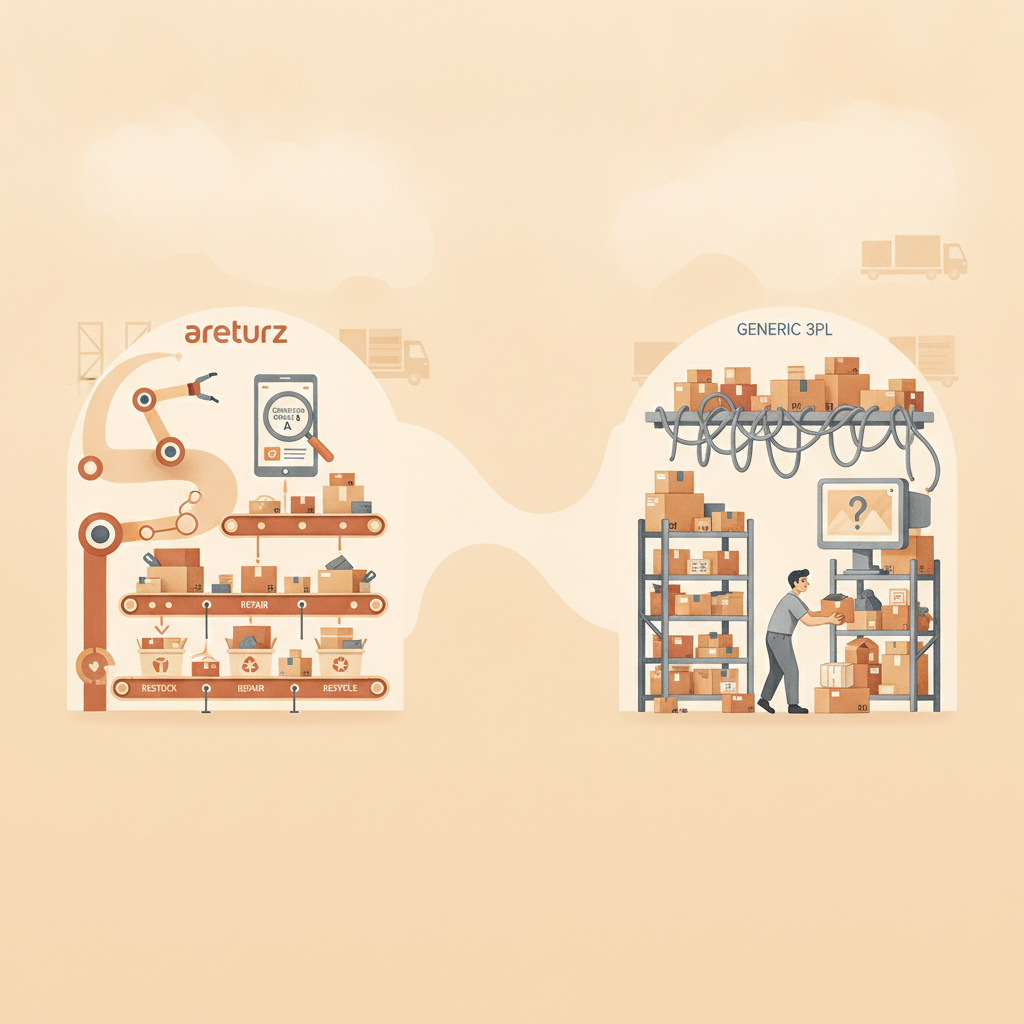
areturnz is an owned-and-operated returns processing network built around photo evidence, AI condition grading, and disposition rules, while a generic 3PL returns add-on is usually a receiving and reshipping function bolted onto a warehouse that was designed for forward logistics. The practical difference shows up in three places: what gets documented at the parcel level, how fast a return moves from inbound scan to a resale-ready decision, and whether the data behind that decision can survive a dispute. This comparison lays out where the two overlap and where they genuinely do not.
What a generic 3PL returns add-on actually is
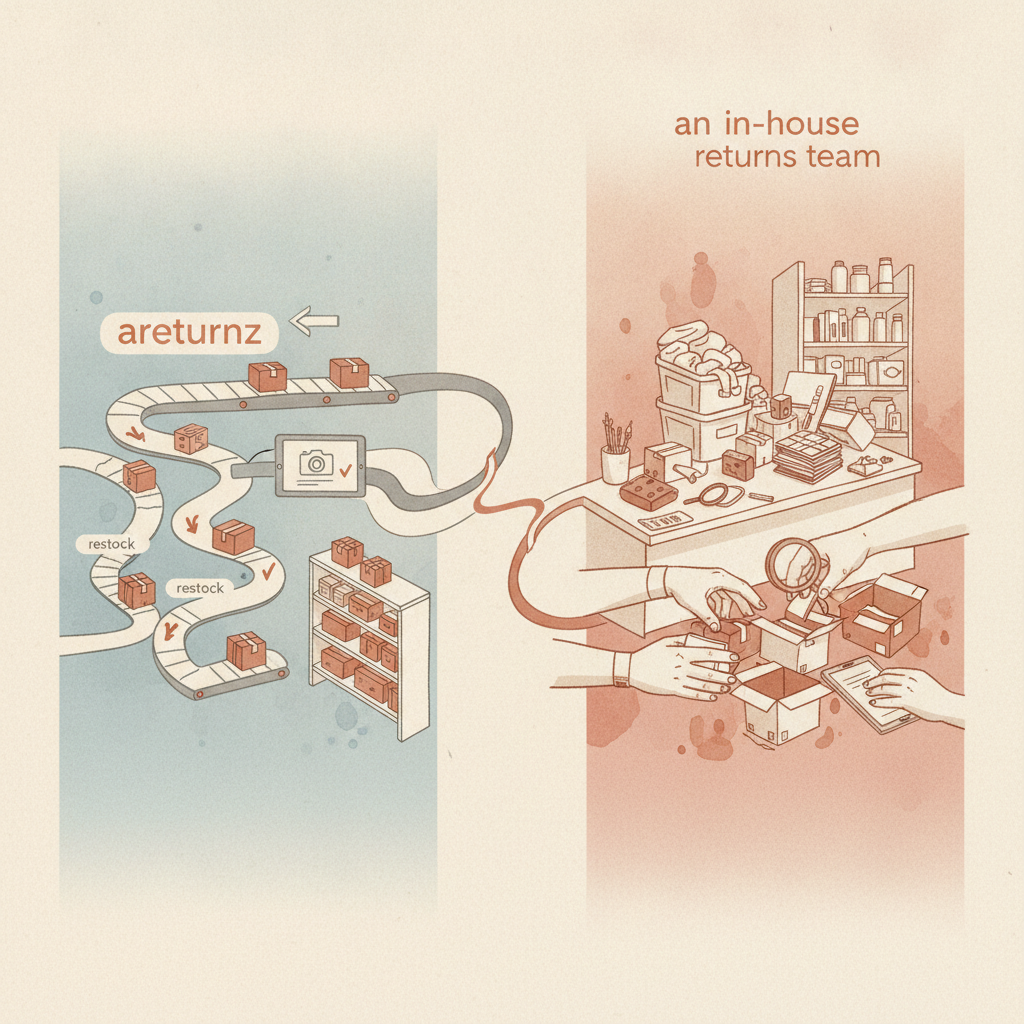
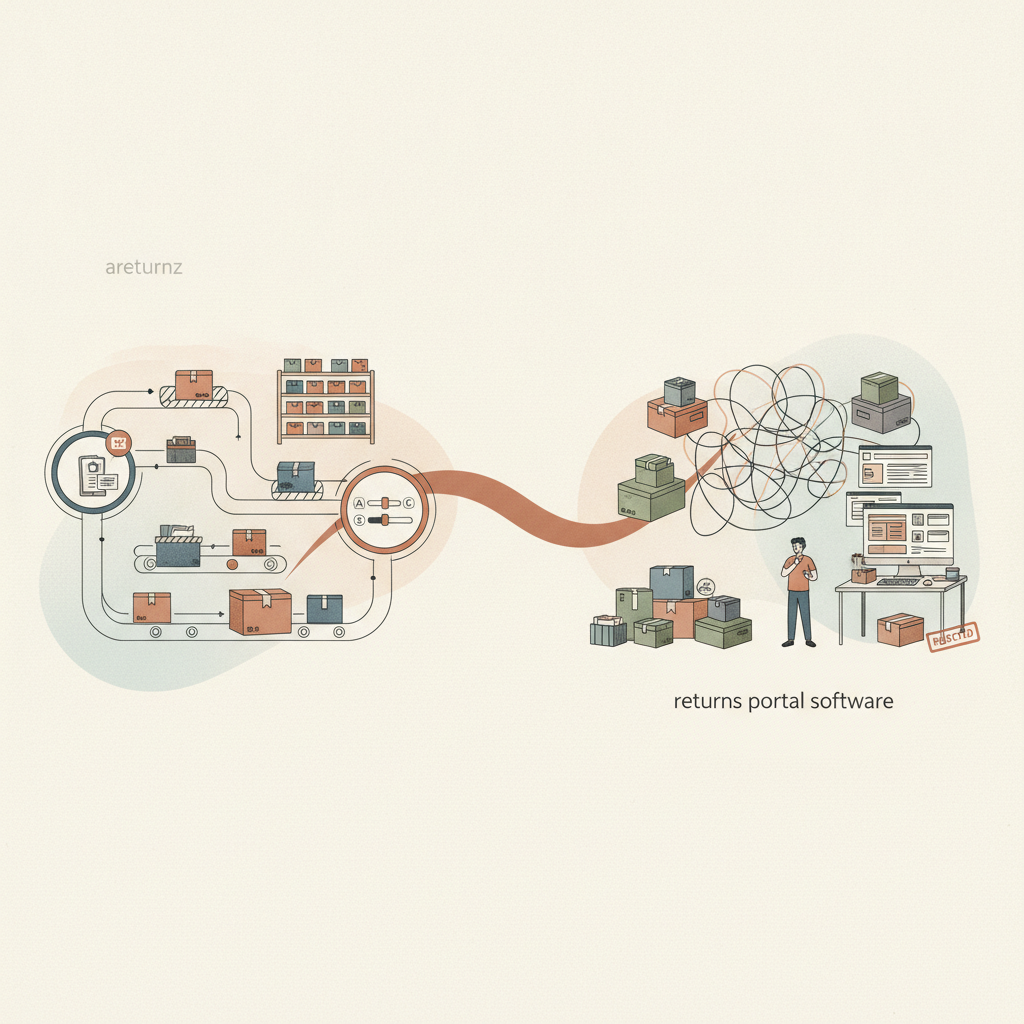
Most 3PLs did not start as returns businesses. They started moving outbound freight, and at some point a client asked them to also accept inbound returns because the warehouse already had dock doors and shelving. The add-on usually means a receiving clerk scans a barcode, glances at the item, marks it as sellable or not, and moves it to a bin. There is rarely a structured photo record, rarely a confidence score attached to the condition call, and rarely a consistent rulebook for what happens next. The person making the grading decision that morning might not be the same person making it next week, and there is no audit trail connecting the two.
This works fine for low volume or low dispute exposure. It gets expensive fast once a brand is fielding item-not-as-described claims, running a resale channel for open-box units, or trying to reconcile a returns reserve against actual recovery.
What areturnz is built to do instead
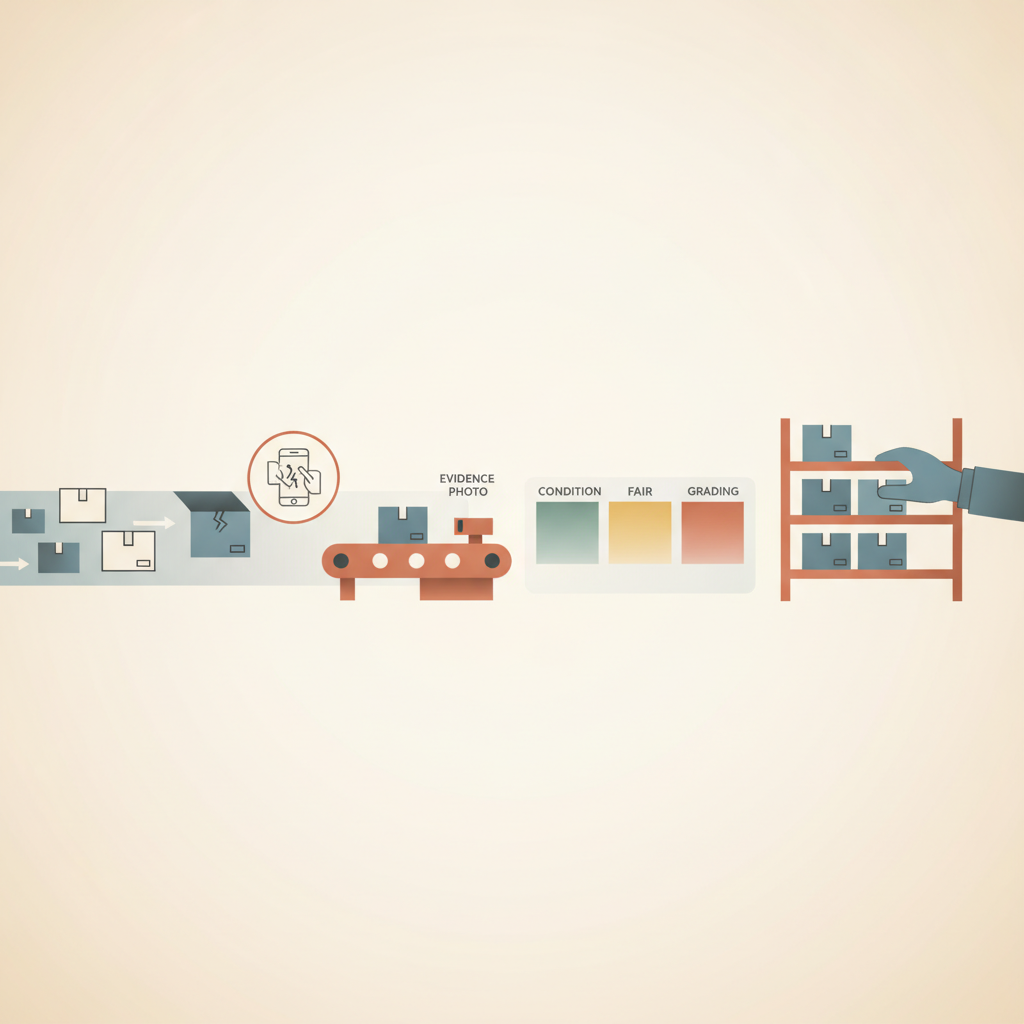
Every parcel that comes through areturnz gets photographed at four points: the outer label, the opened parcel, the item itself, and any defect found. An AI model then grades condition on an A, B, C, or R scale, attaches a confidence score, and tags what it detected. Disposition rules use that grade and confidence to route the item toward restock, liquidation, donation, or destruction, and any operator override is logged against the original AI call. The median cycle from inbound scan to disposition sits at about 48 hours, and the AI-vs-operator match rate runs about 99.6% across more than 180,000 returns processed. All of it, including the photos and the grade history, ships as an evidence bundle available in a dashboard or through a signed-JSON API with webhooks.
The facility behind this is NJ-01 in East Hanover, New Jersey, and the whole model is resellable white-label, which is why partners lean on it for the partner playbook rather than trying to build a grading and evidence layer themselves.
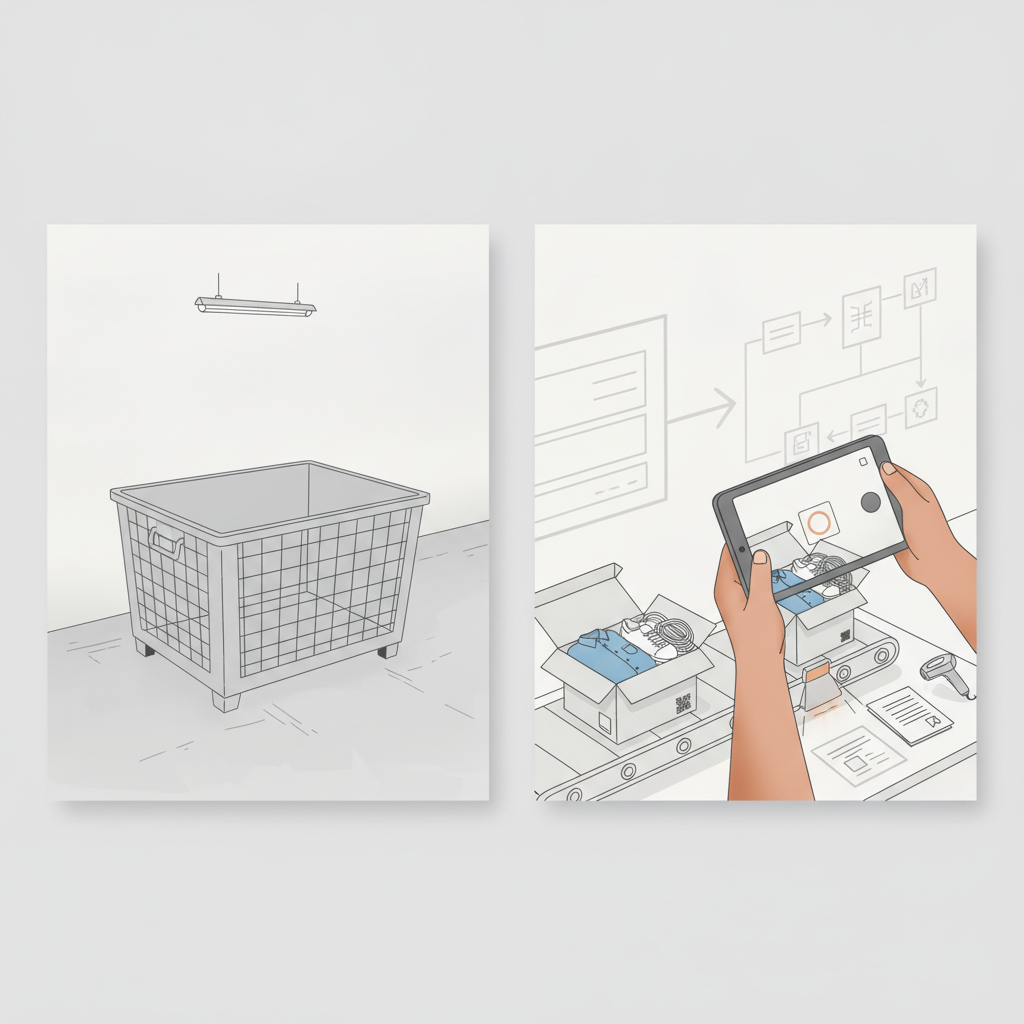
Side by side: the honest comparison
| Dimension | Generic 3PL returns add-on | areturnz |
|---|---|---|
| Condition documentation | Visual check, rarely photographed consistently | Four photos per parcel: label, opened parcel, item, defect |
| Grading method | Warehouse staff judgment, varies by shift | AI grading on A/B/C/R scale with a confidence score |
| Match accuracy vs a trained human grader | Not typically measured | About 99.6% AI-vs-operator match |
| Disposition logic | Ad hoc, decided per item | Rules engine routing to restock, liquidate, donate, or destroy |
| Cycle time, inbound scan to decision | Varies, often days to weeks | About 48 hour median |
| Dispute evidence | Rarely retrievable after the fact | Evidence bundle in dashboard and signed-JSON API with webhooks |
| Volume processed to date | Not publicly benchmarked | 180,000+ returns processed |
| Core business model | Forward logistics 3PL with a returns bolt-on | Owned-and-operated returns processing network |
Where a 3PL add-on still makes sense
If a brand has low return volume, sells a category where condition disputes almost never happen, and does not need resale-grade evidence for open-box inventory, a generic add-on can be cheaper to start with. It also makes sense as a stopgap while a brand figures out whether returns are even a big enough line item to warrant a dedicated process. The real cost of a return often only becomes visible once volume climbs past a few hundred units a month, and that is usually the point where the gaps in a bolt-on process start costing more than they save.
Where the gap actually shows up
The gap is not in receiving speed on day one. It shows up three months later when a marketplace opens an item-not-as-described dispute and there is no photo proving the item's condition at intake. It shows up when a finance team tries to reconcile a returns reserve against what actually got restocked versus liquidated, and the grading data does not exist to support the math. It shows up when a resale channel for open-box units needs buyer trust and there is nothing beyond a warehouse worker's memory to back the listed condition.
Evidence and grading are not features you can bolt on after the fact. They have to be built into the receiving workflow itself, which is why an evidence sample from a real returned parcel tends to make the comparison concrete faster than any spec sheet.
How partners actually evaluate the switch
Partners weighing a move away from a bolt-on 3PL usually run the same short checklist: can the network prove condition at intake, can it hit a cycle time that beats markdown decay, and can it be resold under their own brand without exposing the underlying operator. areturnz answers all three, and the economics of doing it as a partner rather than building in-house are laid out in pricing a resold returns service and reselling returns under your own brand. Current pricing and partner use cases are worth a look before committing either way.
Frequently asked questions
Is a generic 3PL returns add-on ever a bad fit regardless of volume?
Yes, mainly for categories with high dispute rates like electronics and luxury apparel, where the absence of photo evidence at intake means every item-not-as-described claim gets fought without proof.
Does areturnz replace a forward logistics 3PL entirely?
No. areturnz is a returns processing network, not a forward-logistics 3PL or a returns-portal generator. It handles what happens after a return arrives, and many partners run it alongside their existing outbound logistics setup.
How does the 48 hour cycle compare to a typical 3PL add-on?
Generic add-ons rarely publish a cycle time metric at all, since receiving and grading are handled as a side task rather than a measured workflow. areturnz tracks and reports the median 48 hour window from inbound scan to disposition.
What happens when the AI grading and a human grader disagree?
The operator override is logged against the original AI call, and that discrepancy feeds back into the confidence scoring. Across more than 180,000 returns, the AI-vs-operator match rate holds at about 99.6%.
Can a 3PL add-on be upgraded with evidence and grading later?
In theory, but it usually means rebuilding the receiving workflow from scratch rather than adding a feature, which is why most partners find it faster to move volume onto a network already built for it.
If you are comparing real numbers instead of sales decks, contact areturnz to see how a generic 3PL returns add-on stacks up against an evidence bundle from an actual returned parcel.
Une preuve sur chaque retour
Des photos, un grade d'état par IA et une chaîne de traçabilité complète, rattachés à chaque colis et accessibles via l'API.