Evidence for Warranty and Manufacturer Claims: Beyond the Insurance Use Case
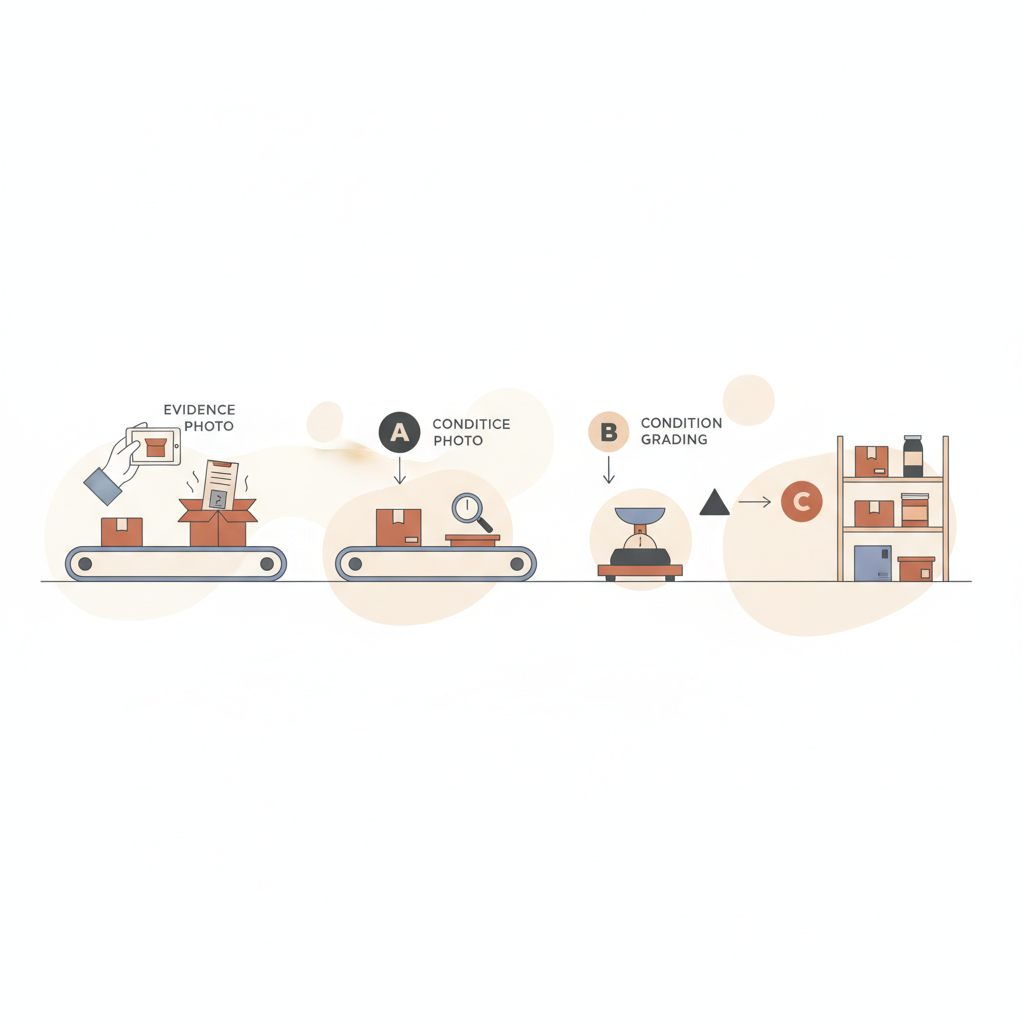
Evidence for warranty and manufacturer claims means a documented, timestamped record of a product's condition at the point of return, tied to a specific unit, that an OEM or warranty administrator can use to approve a claim, reject fraud, or recover cost from a supplier. areturnz builds this record automatically on every parcel it processes: photos at receiving, an AI-assigned A/B/C/R grade with a confidence score, and a signed evidence bundle that stands up to scrutiny from a manufacturer's claims desk, not just an insurer's.
Most of the writing on returns evidence focuses on disputes: chargebacks, item-not-as-described claims, marketplace fraud. Warranty and manufacturer claims are a different animal. The audience isn't a card network or a buyer. It's an OEM quality team, a warranty administrator, or a supplier being charged back for a defect rate they dispute. The evidence bar is different, and so is what counts as proof.
Why warranty claims need their own evidence trail
An insurance claim usually asks one question: did this item get damaged in a covered event? A warranty or manufacturer claim asks several, often at once. Was the failure within the warranty period? Is it a manufacturing defect or customer misuse? Does the serial number match a known recall batch? Is this a pattern across a batch, a plant, or a supplier, or an isolated unit?
Without a structured answer to those questions, warranty claims get resolved on trust: the retailer's word against the manufacturer's skepticism. That's slow, and it tends to default toward denial because the manufacturer has no independent evidence to work from. A documented condition record at the moment of return changes that dynamic. It's also why we built a dedicated dossier format for disputes in general, covered in building the dispute-ready evidence dossier, and why the warranty use case needs its own layer on top of that foundation.
What OEMs and warranty providers actually need to see
Defect documentation, not just damage photos
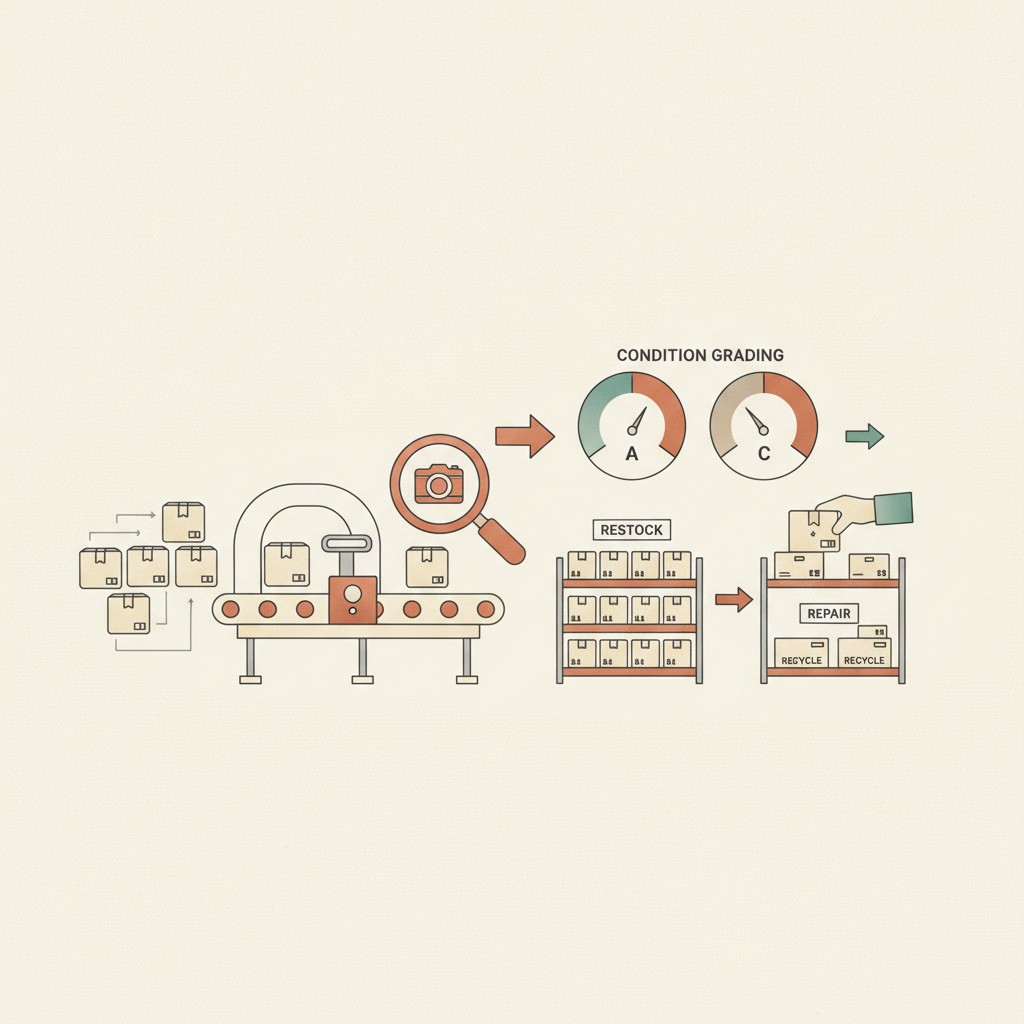
A photo showing a cracked screen or a failed motor isn't enough on its own. Warranty reviewers want the failure mode classified: is this impact damage, a component failure, water ingress, or a software fault that presents as a hardware issue? areturnz's AI grading tags detected conditions at receiving (cracks, missing parts, corrosion, liquid damage indicators) alongside the ABCR condition grade, so the defect type is captured in structured form, not just in a picture a human has to interpret later.
Serial-level and lot-level traceability
Manufacturer chargebacks and recalls are almost always serial or batch specific. If a claim can't be tied to a serial number, IMEI, or lot code, it can't be matched against a recall list or a known defective batch. We cover the mechanics of this in detail in chain of custody for high-value electronics, and the same serialization discipline applies directly to warranty and recall evidence, not only electronics resale.
Chain of custody from inbound scan to disposition
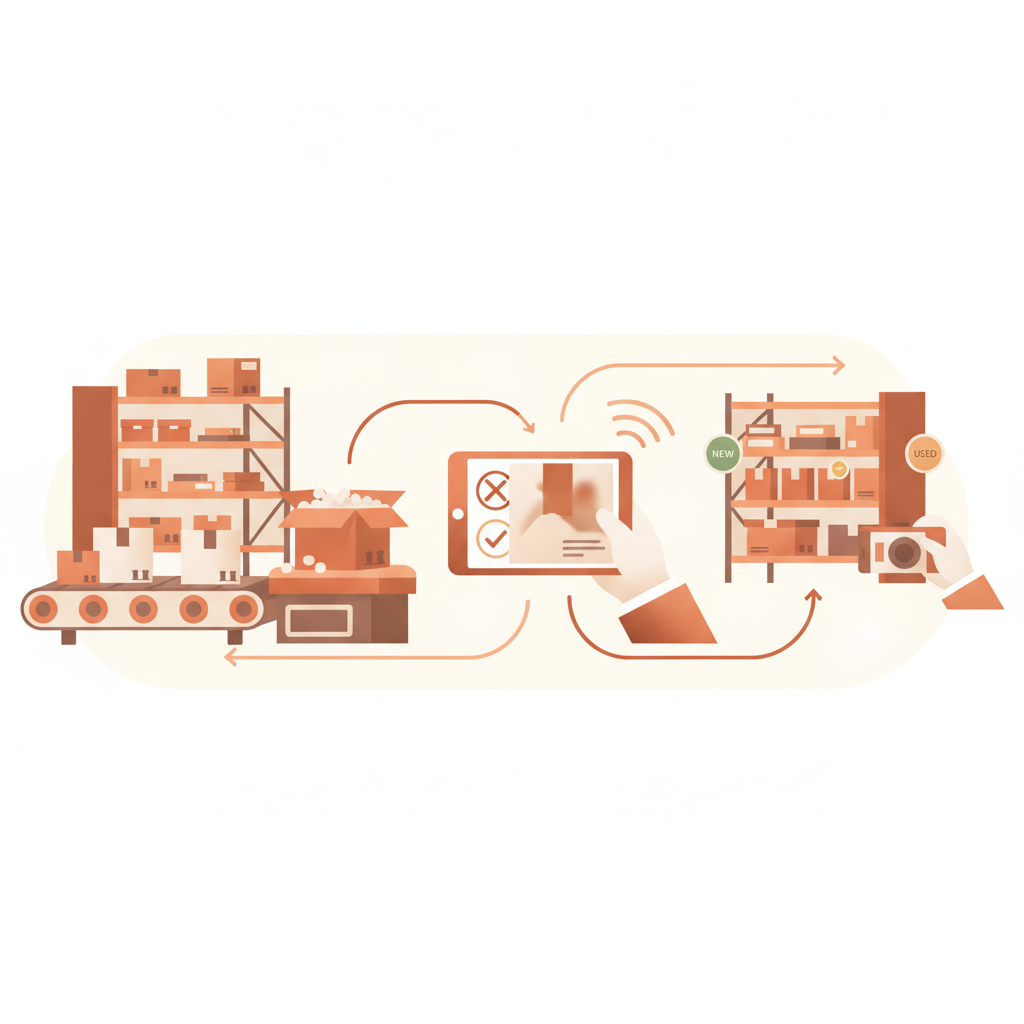
A warranty claim can get contested on a technicality: who handled the unit, where it sat, whether it was tampered with before the defect was logged. An auditable chain of custody closes that gap. Every return in the areturnz network is scanned in, photographed, graded, and routed under a disposition rule, with operator overrides logged against the AI's original call. That full record, not a single photo, is what makes a warranty claim hard to dispute.
Timestamped proof of condition relative to warranty window
Warranty periods are date-bound. A receiving timestamp, matched against purchase date and failure description, establishes whether a claim falls inside or outside the covered window without relying on a customer's account of when the item actually broke.
Insurance claims vs warranty claims vs standard dispute evidence
| Evidence need | Insurance claims | Warranty / manufacturer claims | Standard buyer dispute |
|---|---|---|---|
| Primary audience | Insurer claims adjuster | OEM quality team / warranty administrator | Card network / marketplace / buyer |
| Core question | Was this a covered loss event? | Is this a manufacturing defect inside the warranty period? | Was the item as described / not damaged by the seller? |
| Key evidence | Condition at receiving vs claimed damage | Failure mode tag, serial/lot match, timestamp vs purchase date | Outer label, opened parcel, item condition photos |
| Traceability need | Low to moderate | High: serial, lot, batch | Low to moderate |
| Typical output | Evidence bundle attached to claim file | Dossier plus serialized defect log for chargeback or recall match | Evidence bundle attached to dispute response |
How areturnz builds warranty-ready evidence
Grading and tagging failure modes at receiving
Every unit gets an A/B/C/R grade with a confidence score, and the AI-vs-operator match rate runs at about 99.6% across the network, which is why reviewers can trust the automated tag instead of re-inspecting every claim by hand. The tags generated at this step (crack, corrosion, missing component, liquid damage, functional failure) map directly onto the categories a warranty reviewer needs to classify a claim.
Routing and disposition tied to the claim type
Disposition rules decide whether a unit is restocked, liquidated, donated, or destroyed, and every decision is logged with the grade and confidence score that drove it. For warranty flows, that same rule set can flag units for return-to-vendor or quarantine pending a manufacturer review, instead of routing straight to resale. The mechanics of how grades become decisions are covered in disposition rules: turning grades into decisions.
API access and signed evidence bundles for OEM systems
Warranty administrators rarely want to log into a vendor's dashboard to pull evidence manually. The signed-JSON API and webhooks let a manufacturer's claims system pull the evidence bundle, including photos, grade, confidence score, and chain-of-custody log, directly into its own workflow the moment disposition completes. You can see the structure of a full bundle at the evidence sample page.
Where this fits in the return lifecycle
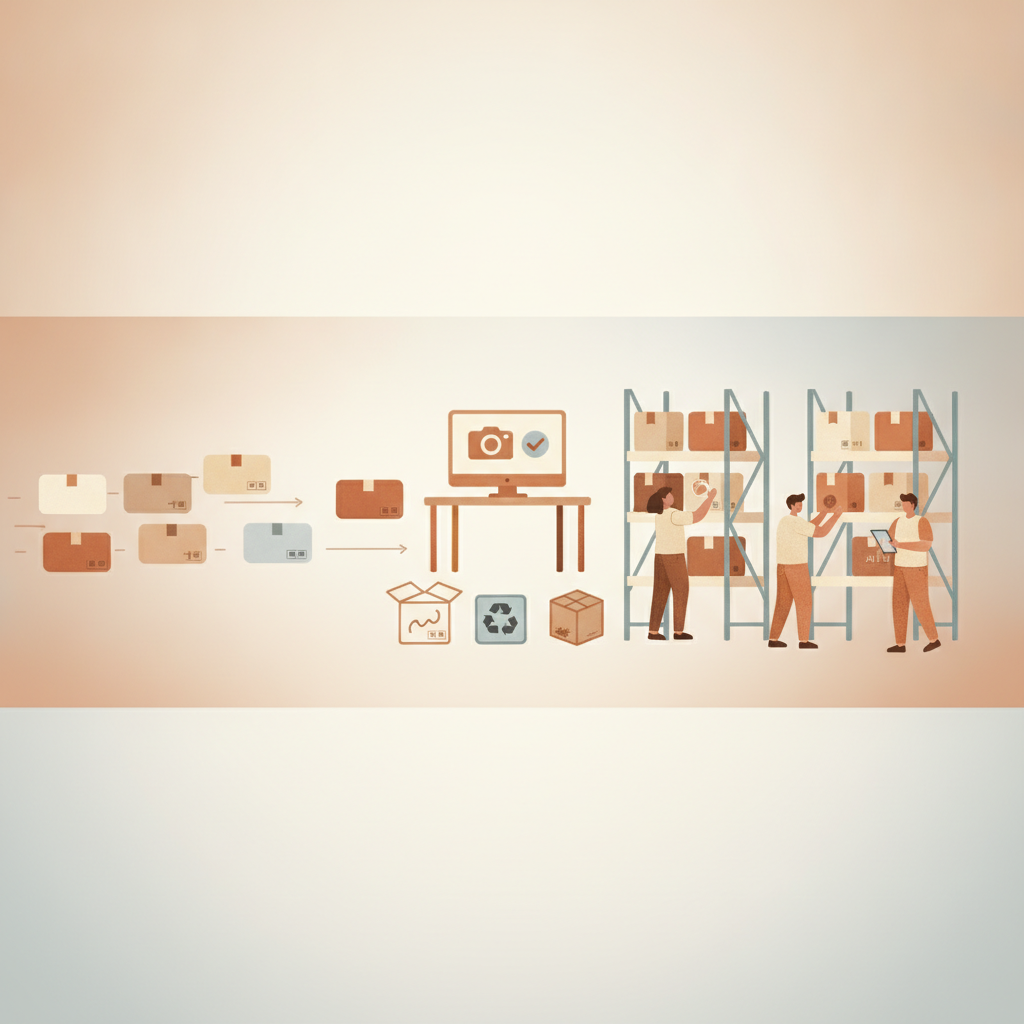
The median cycle from inbound scan to disposition across the network runs about 48 hours, and areturnz has processed 180K+ returns through that pipeline out of facility NJ-01 in East Hanover, New Jersey. For a warranty claim, speed matters almost as much as accuracy: a defect that sits ungraded for two weeks is a defect that's harder to trace back to a specific production run or supplier batch. Fast, structured capture at receiving is what keeps a warranty claim tied to facts instead of memory.
This warranty and manufacturer use case sits alongside the broader evidence and trust work covered in the evidence and trust guide, and it complements the insurance-specific approach detailed in evidence for insurance claims on returns. The underlying system is the same: photo capture, AI grading, chain of custody, and a signed bundle. What changes is which fields matter most to the reviewer on the other end.
Frequently asked questions
Can areturnz's evidence be used to dispute a manufacturer chargeback?
Yes. The evidence bundle includes receiving photos, the ABCR grade with confidence score, detected failure tags, and a chain-of-custody log, which gives a retailer or brand documented proof of condition to support or contest a manufacturer's chargeback decision.
How does this differ from the insurance claims use case?
Insurance claims focus on whether damage occurred during a covered event. Warranty and manufacturer claims focus on defect classification, serial or lot traceability, and whether the failure falls inside a warranty window. Both use the same underlying evidence bundle, applied differently.
Does areturnz track serial numbers or IMEI for electronics returns?
Serialization and lot tracking are part of the chain-of-custody process for high-value and electronics categories, letting a unit be matched against a recall list or a known defective batch. See chain of custody for high-value electronics for the detailed mechanics.
Can a manufacturer pull evidence directly into its own claims system?
Yes, through the signed-JSON API and webhooks. Evidence bundles can be pulled automatically once disposition completes, instead of requiring manual dashboard access.
What happens to units flagged for manufacturer review instead of resale?
Disposition rules can route flagged units to quarantine or return-to-vendor instead of restock or liquidation, with the AI grade, confidence score, and any operator override logged against that decision for later review.
If your team is handling warranty claims or manufacturer chargebacks without a documented condition trail, talk to areturnz about building that evidence into your returns pipeline from day one.
Une preuve sur chaque retour
Des photos, un grade d'état par IA et une chaîne de traçabilité complète, rattachés à chaque colis et accessibles via l'API.