Confidence calibration: how the grading model learns its own accuracy
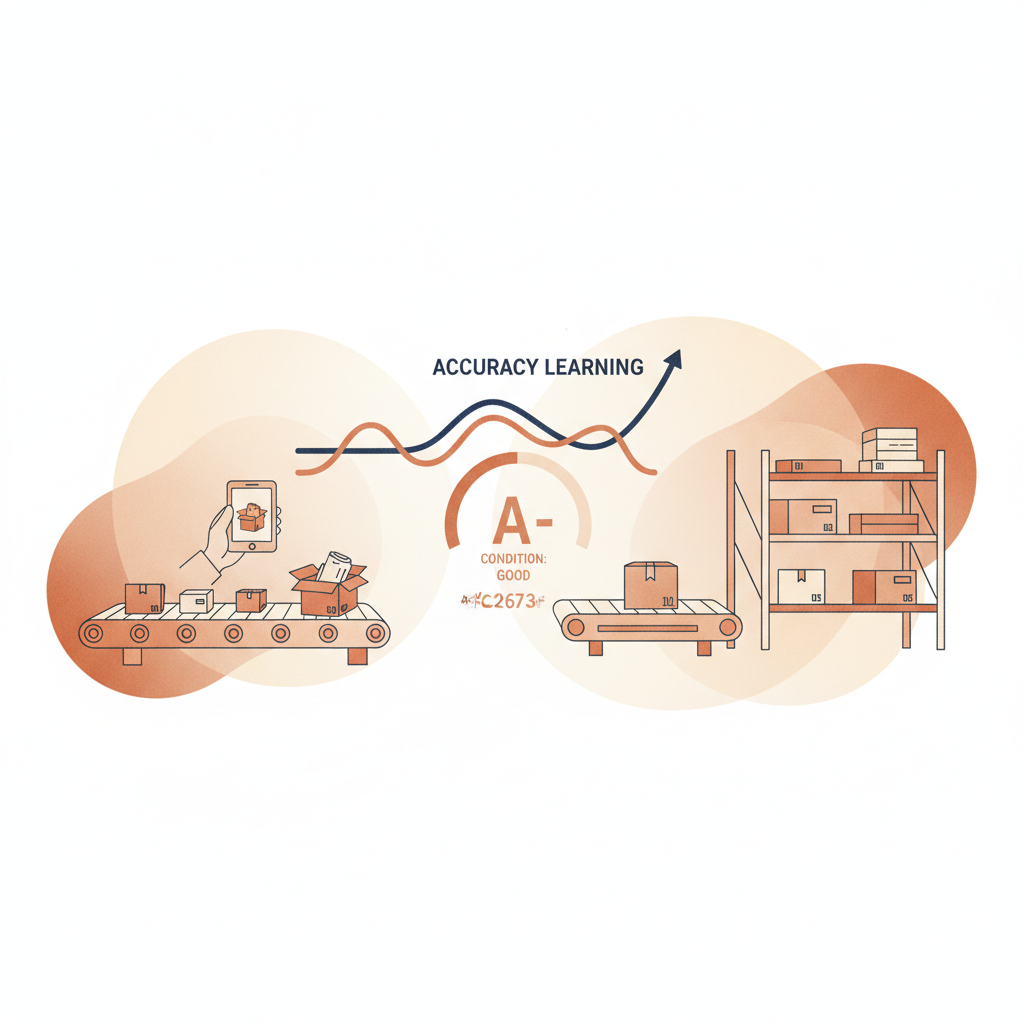
Grading confidence calibration is the process of checking whether a model's stated confidence actually matches how often it's right, then adjusting the scoring so a 90% confidence grade really does land correctly around 90% of the time. At areturnz, every AI condition grade (A, B, C, or R) ships with a confidence score, and that score is continuously reconciled against operator review across 180K+ processed returns to hold the system at roughly 99.6% AI-vs-operator match accuracy.
Most people assume a confidence score is just the model's opinion of itself. It isn't, or at least it shouldn't be treated that way. A model can be very confident and very wrong, especially on edge cases like a lightly worn shoe sole or a cosmetic scratch on a phone back glass. Calibration is the discipline that keeps confidence honest, and it's the part of the grading system that rarely gets explained even though it's the reason the 99.6% number holds up under scrutiny.
Why raw model confidence isn't enough
A grading model outputs a probability distribution across A, B, C, and R for every item it sees. The highest probability becomes the grade, and the gap between that top probability and the rest becomes the confidence score. On its own, that number is just internal math. It tells you how sure the model is of its own output, not how often that output matches reality.
This distinction matters because models can be overconfident in predictable ways. A model trained mostly on apparel returns might carry high confidence into an electronics grading call simply because the pixel patterns look statistically clean, even though the failure mode (a hairline crack, a missing accessory) sits outside what it learned well. Without calibration, a business would be making disposition decisions on confidence numbers that look precise but aren't trustworthy.
How areturnz calibrates confidence against operator review
Calibration at areturnz runs as a closed loop between the model and human operators, not a one-time training step. Every grade the model produces gets a confidence score at the moment of inbound scan. A sampled slice of those grades, weighted toward lower-confidence and borderline cases, goes to an operator for independent review before disposition finalizes.
The reconciliation loop
When the operator's grade matches the model's grade, that outcome is logged as a calibration point confirming the confidence band was justified. When it doesn't match, the disagreement is logged with the item's photo evidence, the model's stated confidence, and the operator's reasoning. Those mismatches feed back into recalibration, adjusting how much weight a given confidence range deserves for that product category going forward. This is the same reconciliation process that produces the 99.6% AI-vs-operator match figure across the full return volume, and it runs continuously rather than as a quarterly audit.
Confidence bands and what they trigger
In practice, calibration sorts every grade into a band, and each band maps to a different level of automation. High-confidence grades in a well-calibrated range move straight to disposition. Mid-confidence grades get a lighter secondary check. Low-confidence grades route to full operator review before anything ships. The median cycle from inbound scan to disposition still holds around 48 hours across these bands, because most volume clears the high-confidence tier without added handling time.
| Confidence band | Typical model behavior | Operator involvement | Disposition path |
|---|---|---|---|
| High (calibrated ~95%+ match) | Clear visual signal, low ambiguity between grades | Spot-check sampling only | Auto-routed to restock, liquidate, donate, or destroy |
| Medium (calibrated ~80-95% match) | Some ambiguity, often category-specific edge cases | Secondary review before finalizing | Routed after confirmation |
| Low (calibrated below ~80% match) | Conflicting signals, novel damage type, or thin training data | Full operator grading, model output logged but not final | Held pending manual disposition |
Confidence calibration by category
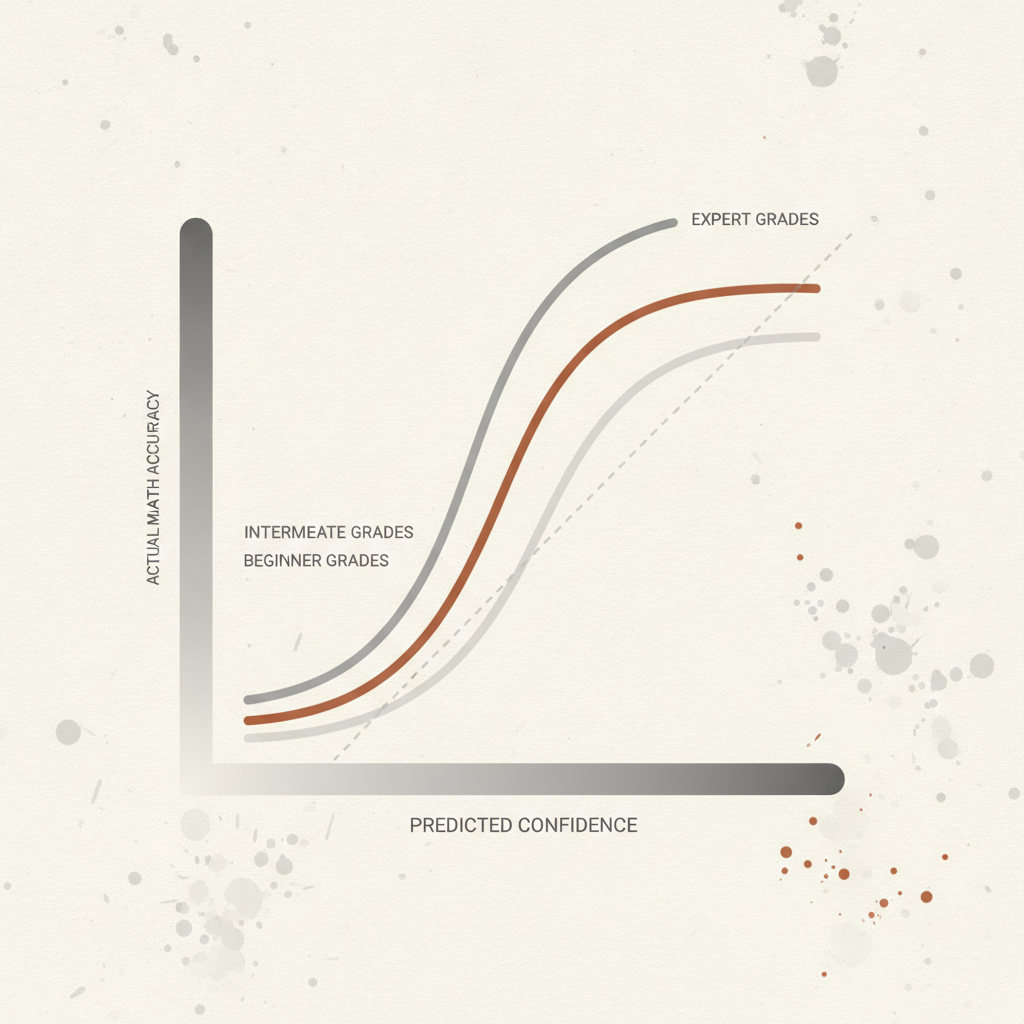
Calibration isn't a single number applied network-wide. Apparel, electronics, and beauty each have different failure modes, so each category holds its own calibration curve. A worn seam is a visually obvious signal for apparel and tends to calibrate at high confidence quickly. A cracked internal component on electronics may look fine externally, which is why electronics grading often leans more heavily on operator confirmation even at moderate confidence scores. Beauty items carry seal and fill-level checks that behave differently again. This is part of why the A, B, C, R framework works the way it does across categories, as covered in more depth in the ABCR grading explainer.
What happens when confidence is low
Low confidence isn't treated as a failure of the system, it's treated as the system working correctly. A well-calibrated model that flags uncertainty is more valuable than an overconfident one that guesses cleanly and is occasionally wrong in a way nobody catches. When confidence drops below a category's calibrated threshold, the item routes to full operator grading, and that operator decision becomes a new calibration data point rather than a one-off override. Every override, whether it confirms or corrects the model, is logged and timestamped as part of the evidence bundle attached to that return. You can see what that evidence actually looks like on the evidence sample page.
Why calibration matters for disposition trust
Disposition rules only work if the grade feeding them is trustworthy, and a grade is only trustworthy if its confidence score means what it claims to mean. A retailer or brand relying on areturnz isn't just trusting an AI grade, they're trusting a calibrated system that has been checked against tens of thousands of operator reviews and holds a documented 99.6% match rate. That's a different claim than an unverified accuracy figure, and it's one that can be audited through the dashboard or the signed-JSON API rather than taken on faith. For the operational side of how confidence scores change day-to-day grading decisions, see how confidence scores beat gut calls on the grading line, and for the broader picture of how AI grading fits into the full returns workflow, visit the AI and grading hub.
Frequently asked questions
What is confidence calibration in AI grading?
It's the process of verifying that a model's stated confidence score matches its real-world accuracy, then adjusting scoring so a given confidence level reliably predicts how often the grade is correct.
Is a high confidence score the same as a correct grade?
Not automatically. A model can be confident and wrong. Calibration is what forces confidence numbers to reflect actual match rates against operator review rather than the model's own certainty.
How does areturnz measure calibration accuracy?
Through continuous reconciliation between AI grades and operator review across the return volume, which currently holds at about 99.6% AI-vs-operator match accuracy across 180K+ processed returns.
Does calibration slow down the grading process?
No. Most volume clears through high-confidence bands without added handling, which is why the median cycle from inbound scan to disposition still runs around 48 hours.
Does calibration differ by product category?
Yes. Apparel, electronics, and beauty each have distinct failure modes and separate calibration curves, since a confident visual signal in one category can be an unreliable signal in another.
If you want to see calibrated confidence scores and disposition evidence on your own return volume, talk to areturnz about running a pilot batch through the network.
Related reading: Grading Apparel vs Electronics vs Beauty: How ABCR Adapts by Category
Related reading: False-positive handling: what happens when AI grading gets it wrong
Une preuve sur chaque retour
Des photos, un grade d'état par IA et une chaîne de traçabilité complète, rattachés à chaque colis et accessibles via l'API.


