Building the Dispute-Ready Evidence Dossier
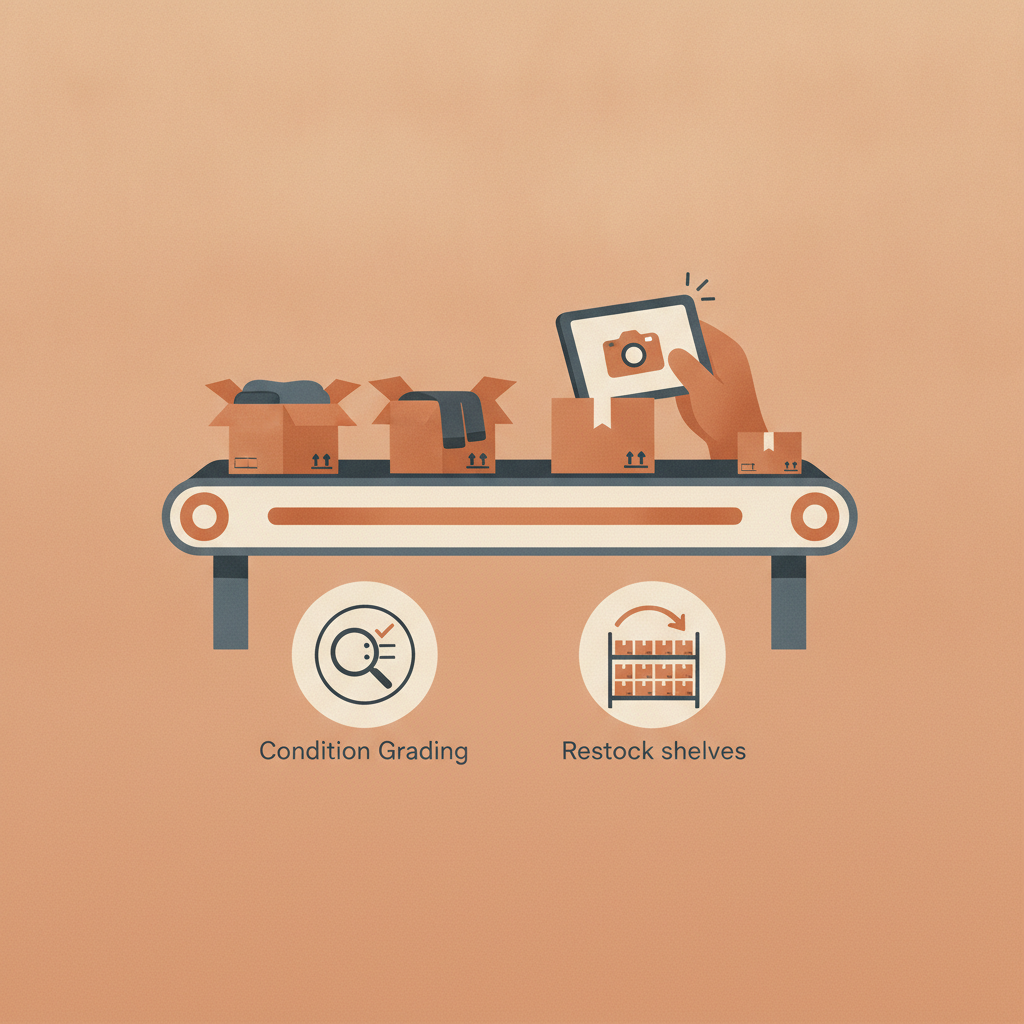
A dispute-ready evidence dossier is a single, time-stamped record that documents a returned item's condition, chain of custody, grading result, and disposition decision, packaged so it can be handed to a bank, a marketplace, or a brand partner without extra work. areturnz builds one for every parcel it processes, not just the ones that end up disputed, because you never know which return will need it until someone asks.
Most returns programs only discover they need proof after the chargeback lands or the marketplace claim opens. By then the parcel has been resold, donated, or shredded, and the only evidence left is whatever note an associate happened to type into a spreadsheet three weeks ago. A dossier assembled at the moment of receiving, not reconstructed after the fact, is the difference between a dispute you win in an afternoon and one you lose because you cannot prove what actually came back.
What actually belongs in the dossier
A dossier is not a single photo attached to an email. It is a bundle of specific artifacts, each one answering a question a bank or platform reviewer will actually ask.
The core artifacts
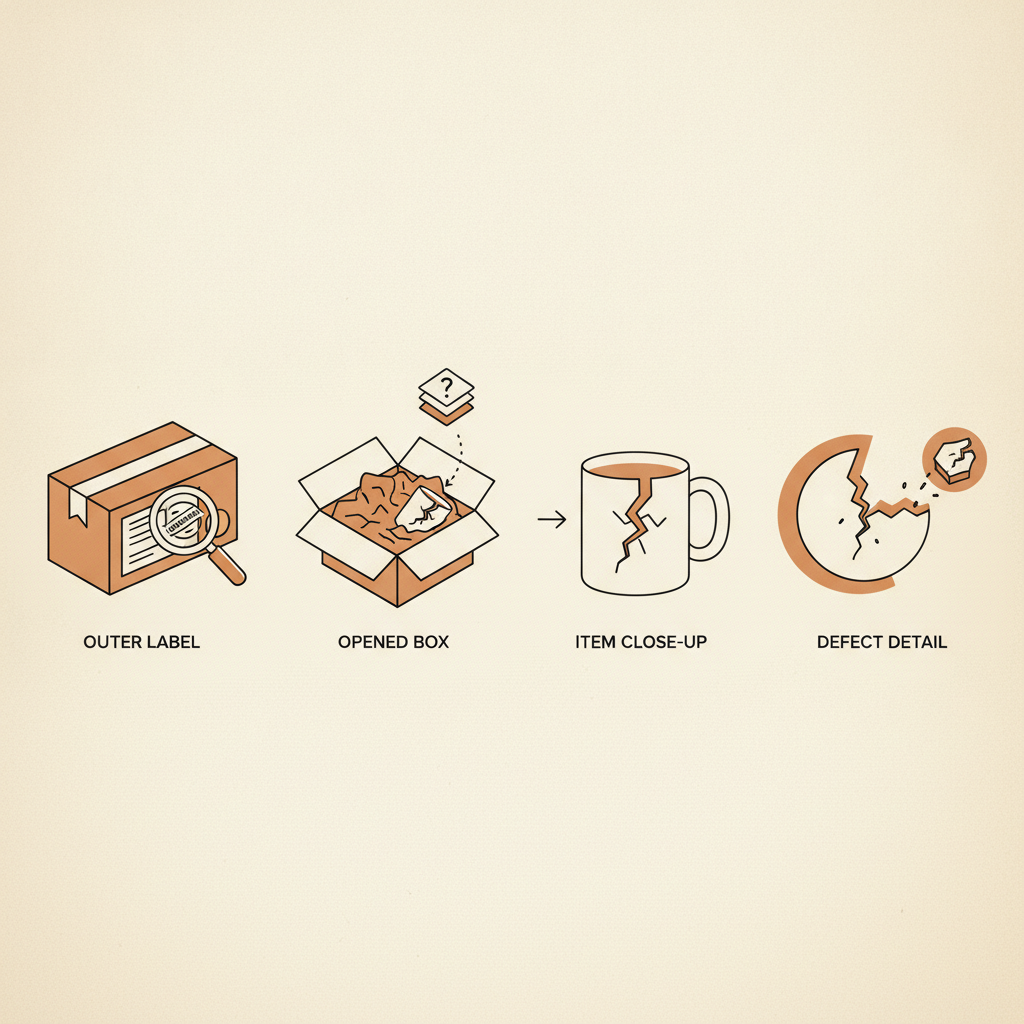
Every areturnz evidence bundle includes four photo layers: the outer shipping label as received, the parcel as opened, the item itself from multiple angles, and any defect or damage in close detail. Alongside the photos sits the AI grade (A, B, C, or R), a confidence score, the detected condition tags, and a disposition record showing whether the item was restocked, liquidated, donated, or destroyed, plus any operator override with a name and timestamp attached.
Why chain of custody matters more than the photo itself
A photo alone can be challenged as staged, mislabeled, or unrelated to the actual claim. A photo tied to a scan event, a facility ID, a timestamp, and a grading model version is much harder to argue with. NJ-01, our East Hanover, New Jersey facility, timestamps every inbound scan, and that scan-to-disposition window runs about 48 hours on the median parcel. That speed matters for disputes too: the faster a return is documented, the closer the evidence sits to the actual return event, and the less room there is for a counterparty to claim the item changed hands before it was photographed.
Assembling it before you need it, not after
The traditional approach treats evidence as a special request. Someone opens a dispute, an ops manager digs through a warehouse management system, and if the photos exist at all they are buried in a folder with no link back to the specific RMA. That process alone can burn days, and days matter when a chargeback response window is often 20 to 30 days from notification.
areturnz flips the order. Every parcel gets photographed and graded at receiving regardless of whether a dispute is expected, and the resulting bundle is available in the dashboard or pulled programmatically through a signed-JSON API with webhooks. Across more than 180,000 returns processed, the AI grade has matched what an operator would independently assign about 99.6% of the time, which means the dossier is not just documentation, it is documentation backed by a measurable accuracy rate you can cite when a reviewer pushes back.
What a dossier needs to look like for different dispute types
Not every dispute wants the same slice of the bundle. A card-network chargeback reviewer cares about proof the item does not match the buyer's claim. A marketplace claims team wants proof of condition at receipt versus the listing. An internal finance or audit team wants the disposition trail and, for destroyed items, a certificate. The table below breaks down what typically gets pulled for each.
| Dispute or audit type | Primary evidence needed | Secondary evidence | Typical resolution window |
|---|---|---|---|
| Card network chargeback (item not as described) | Item photos, defect close-up, AI grade and tags | Chain-of-custody timestamps, operator override notes | 20 to 30 days from notification |
| Marketplace INAD claim | Opened-parcel photo, item condition photos | Grading confidence score, disposition record | Platform-specific, often 48 to 72 hours to respond |
| Brand or retailer partner audit | Full evidence bundle export via API | Webhook event log, facility scan record | Ongoing, spot-checked monthly or quarterly |
| Destruction or write-off verification | Destruction certificate, item photo pre-destruction | Disposition rule reference, override log if applicable | Tied to accounting close cycle |
Where portal-only or label-only setups fall short
A returns portal that just generates a shipping label gives you a tracking number and a reason code the customer typed in. It does not give you a photo of what actually arrived, and it certainly does not give you a graded condition assessment tied to a chain of custody. That gap is exactly where item-not-as-described disputes go unwon, because the burden of proof sits with the seller and a reason code is not proof of anything. Our post on killing the item not as described dispute goes deeper into why photo evidence closes these claims faster than argument alone.
The same gap shows up on the cost side. A chargeback that gets reversed because you had no evidence to submit is not just a lost sale, it is a fee, a penalty risk if your dispute rate climbs, and lost inventory you already wrote off. We broke down those numbers in the real cost of a chargeback, and the dossier is the direct countermeasure to that cost.
How disposition ties back into the dossier
The dossier is not only useful for external disputes. It is also the internal record that justifies why an item went to restock instead of liquidation, or destroy instead of donate. Our disposition rules take the AI grade, confidence score, and detected tags, and route each item automatically, logging any operator override with a name and reason. That record matters for finance teams reconciling returns as a write-off, and for partner audits that want to confirm nothing was quietly diverted off the books. See disposition rules: turning grades into decisions for how that routing logic works end to end.
For a look at what an actual bundle contains, the evidence sample page walks through a real dossier layer by layer. And if you are weighing this against a per-return cost, the pricing page breaks down how evidence bundling factors into the per-parcel rate.
Why this matters more for partners and marketplaces
Brands and retailers running their own returns desk feel this pain occasionally. Partners reselling returns processing under their own brand feel it constantly, because every disputed item reflects on their relationship with the seller they serve, not just on areturnz. A white-label partner needs to hand a dossier to their own client with confidence, which is why the evidence bundle ships through the same signed-JSON API and webhook structure regardless of who is looking at it. If you are building or evaluating a partner program, the partner use case page covers how that resale model works, and our evidence and trust pillar ties all of this back to the broader case for proof-first returns processing.
Frequently asked questions
What is the difference between a dispute-ready dossier and a basic return photo?
A single photo shows what an item looked like at one moment. A dossier ties multiple photo layers (label, opened parcel, item, defect) to a scan timestamp, facility ID, AI grade with confidence score, and a disposition decision, so a reviewer sees the full sequence rather than one disconnected image.
How fast can areturnz produce a dossier once a dispute opens?
Because every parcel is photographed and graded at receiving, the bundle already exists by the time a dispute is filed. It is pulled from the dashboard or the signed-JSON API rather than assembled from scratch, which matters given that chargeback response windows often run 20 to 30 days and marketplace claims can be much tighter.
Does the dossier cover destruction and donation, or only restock and liquidation?
All four disposition paths are documented. Destroyed items get a certificate tied to the item photo and disposition rule reference, and donated items carry the same chain-of-custody record, which supports both accounting write-offs and any partner or brand audit.
What happens when the AI grade and an operator disagree?
The operator override is logged with a name, timestamp, and reason, and it becomes part of the dossier rather than replacing the AI's original grade. Across 180,000-plus returns processed, the AI-vs-operator match rate runs about 99.6%, so overrides are the exception, but when they happen they are fully traceable.
Can a partner reselling areturnz under their own brand access the same dossiers?
Yes. The evidence bundle and API access work the same way for white-label partners as they do for direct brand and retailer accounts, with webhook isolation per tenant so each partner's data stays separated.
If you are dealing with recurring chargebacks or marketplace claims and want to see what a real evidence bundle looks like before you commit, get in touch with areturnz and we'll walk through a sample dossier from a live parcel.
Related reading: Destruction Certificates and Duty Drawback: Closing the Compliance Loop
Related reading: Buyer Trust for Resold Open-Box Items: What Actually Closes the Sale


