Donating Unsellable Returns: Tax Benefits and Compliance for Retailers
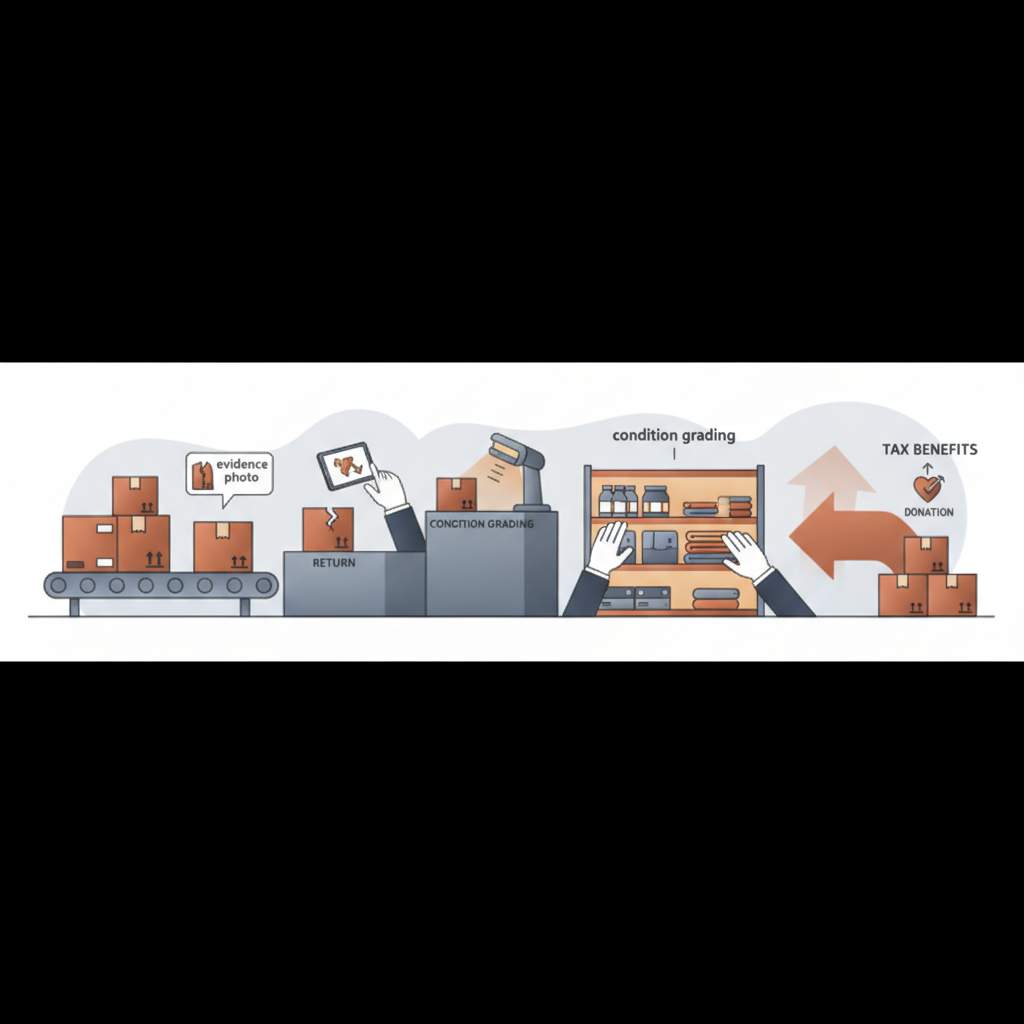
Donating unsellable returns means routing graded, non-resellable inventory to a qualified charity instead of liquidating or destroying it, which can generate a tax deduction under IRC Section 170(e) while cutting landfill volume. areturnz treats donation as one of four disposition outcomes (restock, liquidate, donate, destroy) and attaches a photo-based evidence bundle to every donated unit so the deduction has something to stand on if a tax authority ever asks.
Why donation matters in the disposition stack
Most returns programs default to liquidation for anything that fails a resale grade. That is understandable, liquidation produces cash fast. But a meaningful slice of C and R grade inventory, think apparel with a missing tag, open electronics accessories, or beauty items that cannot be resold under brand policy, is often still usable by a nonprofit. Sending that inventory to a liquidator at pennies on the dollar when a donation could produce a deduction worth more than the liquidation check is a quiet margin leak. It also runs against the sustainability math retailers now have to report publicly.
areturnz's network has processed 180K+ returns to date, and donation is written directly into the disposition rules engine next to restock, liquidate, and destroy. When a return grades out below resale threshold but meets a brand's donation criteria, the rule routes it automatically, with an operator able to override and log a reason if needed. For the full mechanics of how grades become disposition decisions, see disposition rules: turning grades into decisions.

The tax mechanics: IRC Section 170(e)(3) and beyond
Under ordinary charitable contribution rules, a business donating inventory can generally deduct the lower of fair market value or cost basis. Section 170(e)(3) of the Internal Revenue Code changes that for qualifying donations: C corporations that donate inventory to a charity serving the ill, the needy, or infants can claim an enhanced deduction, generally cost basis plus half the difference between cost and fair market value, capped at twice cost basis. That enhancement is the reason donation programs for unsellable returns are worth building deliberately rather than treating as an afterthought.
Who qualifies for the enhanced deduction
The enhanced deduction under 170(e)(3) is available to C corporations. S corporations, partnerships, and sole proprietors can still deduct inventory donations, but typically at the standard lower-of-cost-or-market rule rather than the enhanced calculation. The donee also has to be a qualifying 501(c)(3) organization, and the use of the donated goods has to align with the charity's exempt purpose (clothing a shelter, stocking a food pantry, outfitting a job training program, and similar uses generally qualify).
How fair market value and cost basis set the deduction
Valuation disputes are where donation deductions get challenged. A retailer needs a defensible fair market value at the time of donation, not at original retail price, and a clean cost basis tied to the SKU. This is exactly where condition grading matters: an item graded B or C carries a different resale-adjacent value than a graded-A unit, and that grade, along with the confidence score behind it, becomes part of the valuation support. areturnz's AI grading runs at about 99.6% match accuracy against operator review, so the grade attached to a donated unit is not a guess, it is a documented, auditable data point.
Compliance requirements before you write anything off
A tax deduction is only as good as the paper behind it. Auditors and the IRS expect specific documentation for inventory donations, and the requirements get stricter as deduction size grows.
Donee acknowledgment and chain of custody
Every donation needs a written acknowledgment from the receiving charity describing what was received and confirming no goods or services were exchanged. For a returns program moving thousands of units a month, that acknowledgment is only useful if it can be tied back to specific units, not just a vague count. A chain of custody record that shows a unit moved from inbound scan, through grading, to a donation disposition and out the door to a named charity closes that gap. For a deeper look at how that custody trail gets built and preserved, see chain of custody audit trails.
Recordkeeping the IRS and auditors expect
For non-cash contributions above certain thresholds, the IRS requires more detailed substantiation, including itemized descriptions of donated property and, at higher dollar amounts, a qualified appraisal. A returns network that photographs the outer label, the opened parcel, the item, and any defect at receiving, and that grades condition on an A/B/C/R scale with a confidence score, produces most of that itemized record as a byproduct of normal processing rather than as a special compliance project. That evidence bundle is also what you want on file if a state attorney general or a brand partner ever questions whether a donated item was actually destroyed or diverted somewhere else.

Donate vs other disposition paths: a quick comparison
Donation is not always the right call. The table below lines up donation against the other three disposition paths on the factors that usually decide the routing rule.
| Disposition path | Typical trigger | Financial outcome | Evidence needed |
|---|---|---|---|
| Restock | Grade A or high-confidence B, no defect tags | Recovers close to full resale value | Condition photos, grade, confidence score |
| Liquidate | Grade B or C, resellable through secondary channel | Partial recovery, typically a fraction of retail | Grade, buyer manifest, settlement record |
| Donate | Grade C or R, meets charity use criteria, brand policy allows | Tax deduction (enhanced under 170(e)(3) for qualifying C corps) | Donee acknowledgment, itemized valuation, chain of custody |
| Destroy | Grade R, safety or brand-protection concern, counterfeit risk | No recovery, possible duty drawback eligibility | Destruction certificate, photo proof, disposition log |
Destruction and donation sit next to each other more often than people expect, since both typically apply to R-grade or deep C-grade inventory. The difference is usually brand policy (private label items sometimes must be destroyed to avoid gray-market resale) rather than condition alone. For the destruction side of that comparison, including how duty drawback claims work, see destruction certificates and duty drawback.
How areturnz supports donation compliance
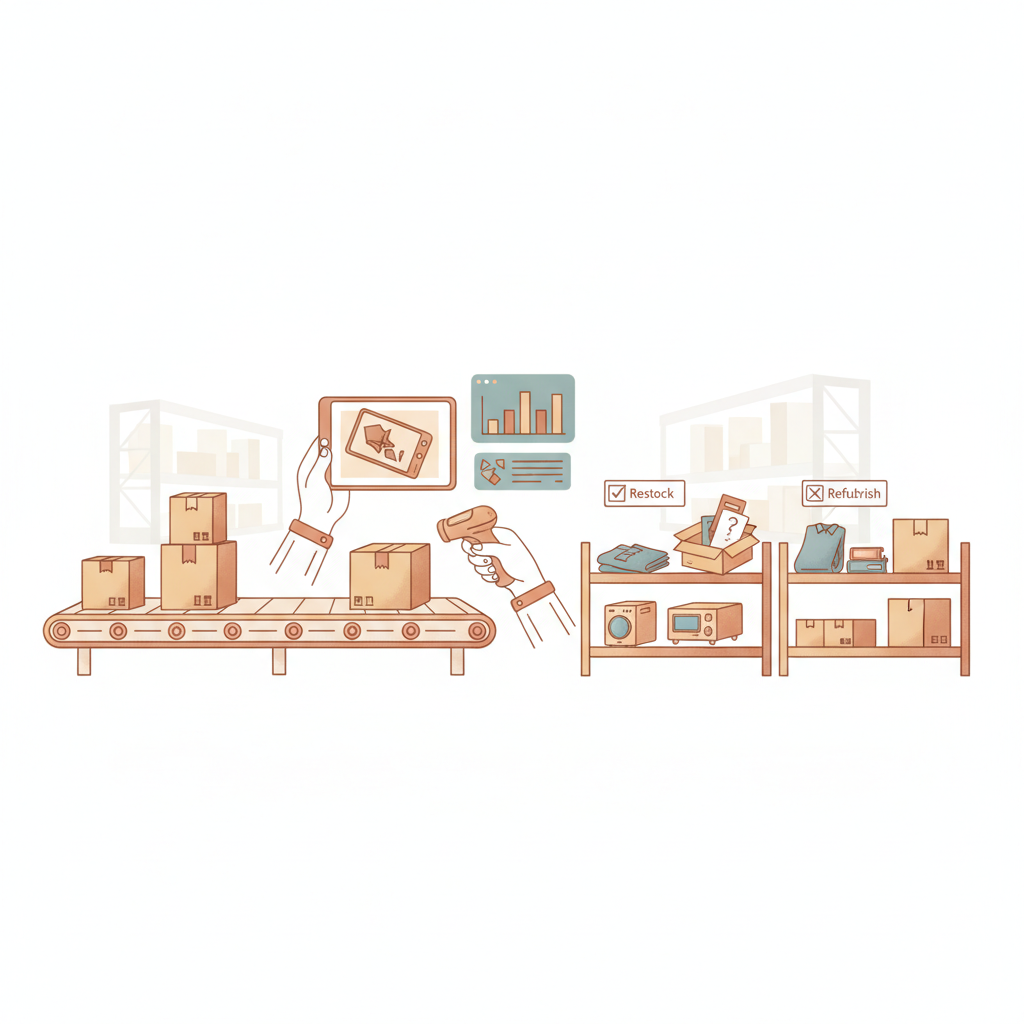
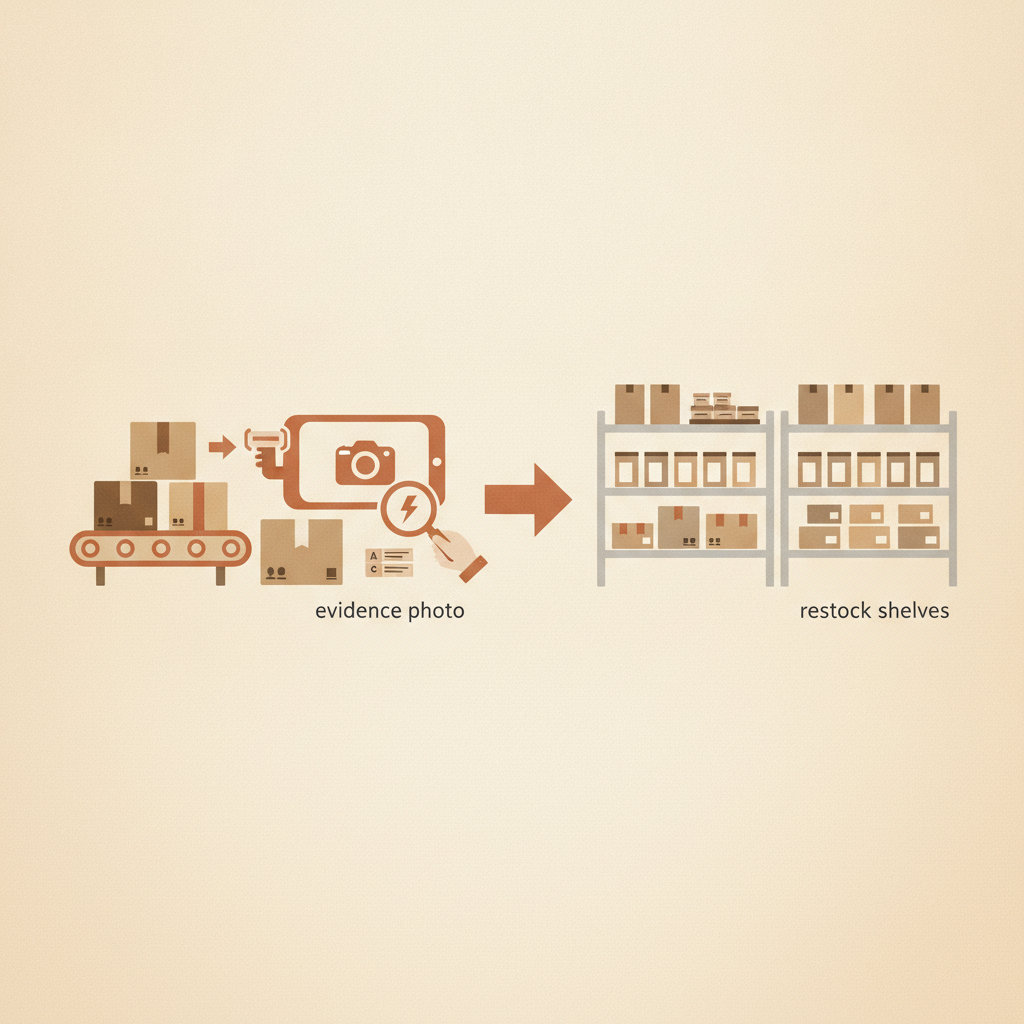
Every return in the areturnz network moves through the same inbound sequence regardless of eventual disposition: a photo of the outer label, a photo of the opened parcel, a photo of the item, and a photo of any defect. AI grading assigns an A/B/C/R condition grade with a confidence score and detected tags, and the median cycle from inbound scan to disposition runs about 48 hours. When disposition rules route a unit to donate, that full record travels with it into the evidence bundle, available in the dashboard or pulled programmatically through the signed-JSON API with webhooks.
That matters for three audiences at once: your finance team building the deduction schedule, your tax preparer substantiating it, and your sustainability team reporting landfill diversion. You can see what a complete evidence record looks like at the evidence sample page, and how donation fits into the broader recommerce picture in the recommerce hub.
Building a donation program that doesn't create new risk
A few practical rules keep a donation program from turning into an audit headache. Set clear brand-level criteria for what can be donated (category, grade threshold, any trademark or safety exclusions) and write it into the disposition rules rather than leaving it to ad hoc judgment. Use a small number of vetted 501(c)(3) partners rather than a long tail of one-off donees, since fewer relationships means fewer acknowledgment letters to chase. Keep the valuation methodology consistent across tax years. And treat the evidence bundle as the system of record, not a nice-to-have, because it is the thing that turns a vague claim of donating some returns into a deduction a CFO will actually sign off on.
Pricing for how donation and other disposition paths factor into a processing agreement is outlined on the pricing page.
Frequently asked questions
Can any retailer claim the enhanced inventory donation deduction?
No. The enhanced deduction under IRC Section 170(e)(3) is generally limited to C corporations donating to a qualifying charity that uses the goods for the ill, the needy, or infants. Other business structures can still deduct inventory donations, typically at the standard lower-of-cost-or-basis calculation, so it is worth confirming your entity type with a tax advisor before projecting deduction value.
What documentation do I need to defend a returns donation deduction?
At minimum: a written acknowledgment from the donee charity, an itemized description of what was donated, supporting valuation (condition grade and fair market value basis), and for larger claims, a qualified appraisal. A chain of custody record linking each unit from receiving through disposition to the donee closes most audit gaps.
How does condition grading affect a donation's valuation?
Fair market value for a donated item should reflect its actual condition, not its original retail price. A unit graded B carries different value support than one graded C or R. areturnz's AI grading runs at about 99.6% match accuracy against operator review, so the grade and confidence score attached to each unit function as objective valuation inputs rather than a subjective estimate made after the fact.
Should I donate or destroy R-grade returns?
It depends on brand policy and the nature of the defect. If the item is safe, usable, and the brand allows resale-adjacent donation, routing it to a qualifying charity usually beats destruction financially because of the deduction. If there is a counterfeit, safety, or trademark-protection concern, destruction with a certificate (and potential duty drawback on imported goods) is typically the safer path.
How quickly does a donated return move through the areturnz network?
Donation follows the same cycle as every other disposition path: a median of about 48 hours from inbound scan to a final disposition decision, with the evidence bundle attached and available immediately in the dashboard or via the API.
If you want to see how donation fits into your current disposition rules and what the evidence bundle would look like for your SKUs, talk to the areturnz team.