Evaluating a White-Label Returns Provider: The RFP Checklist
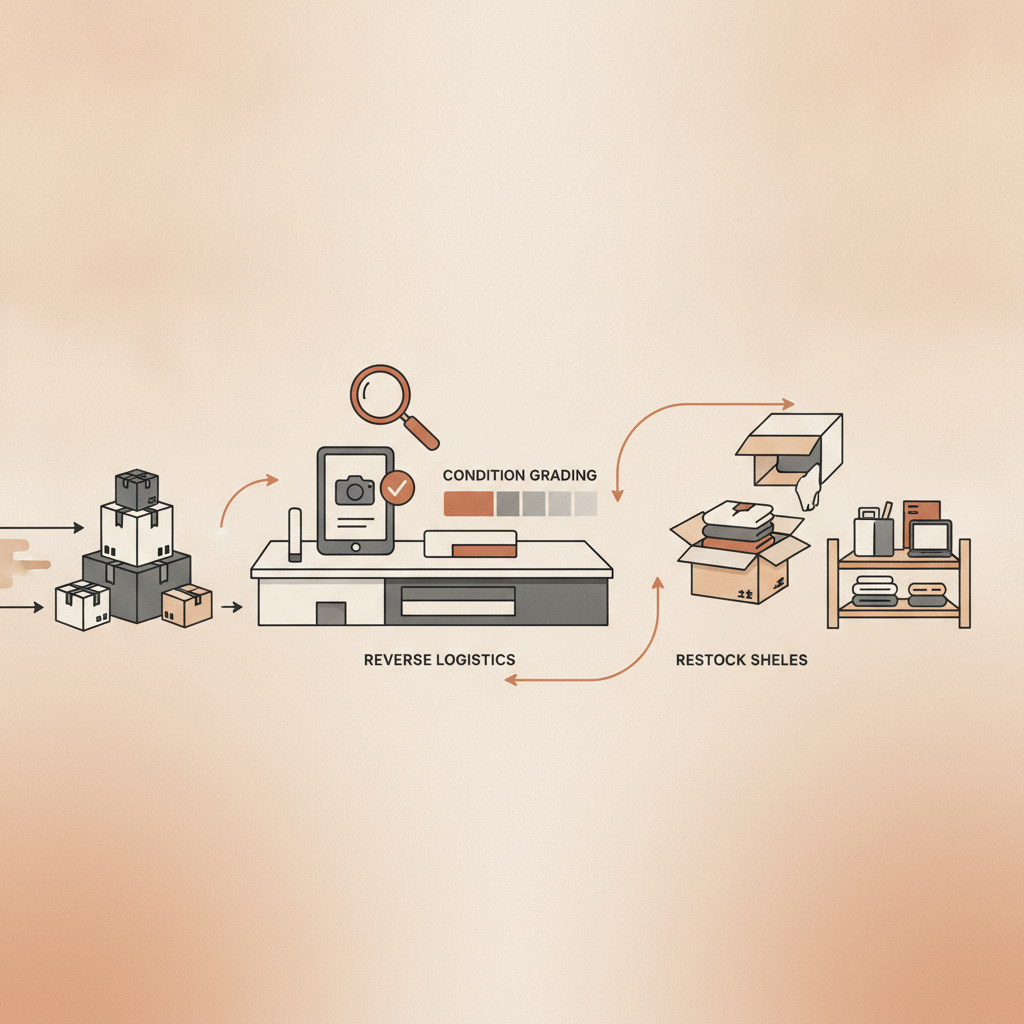
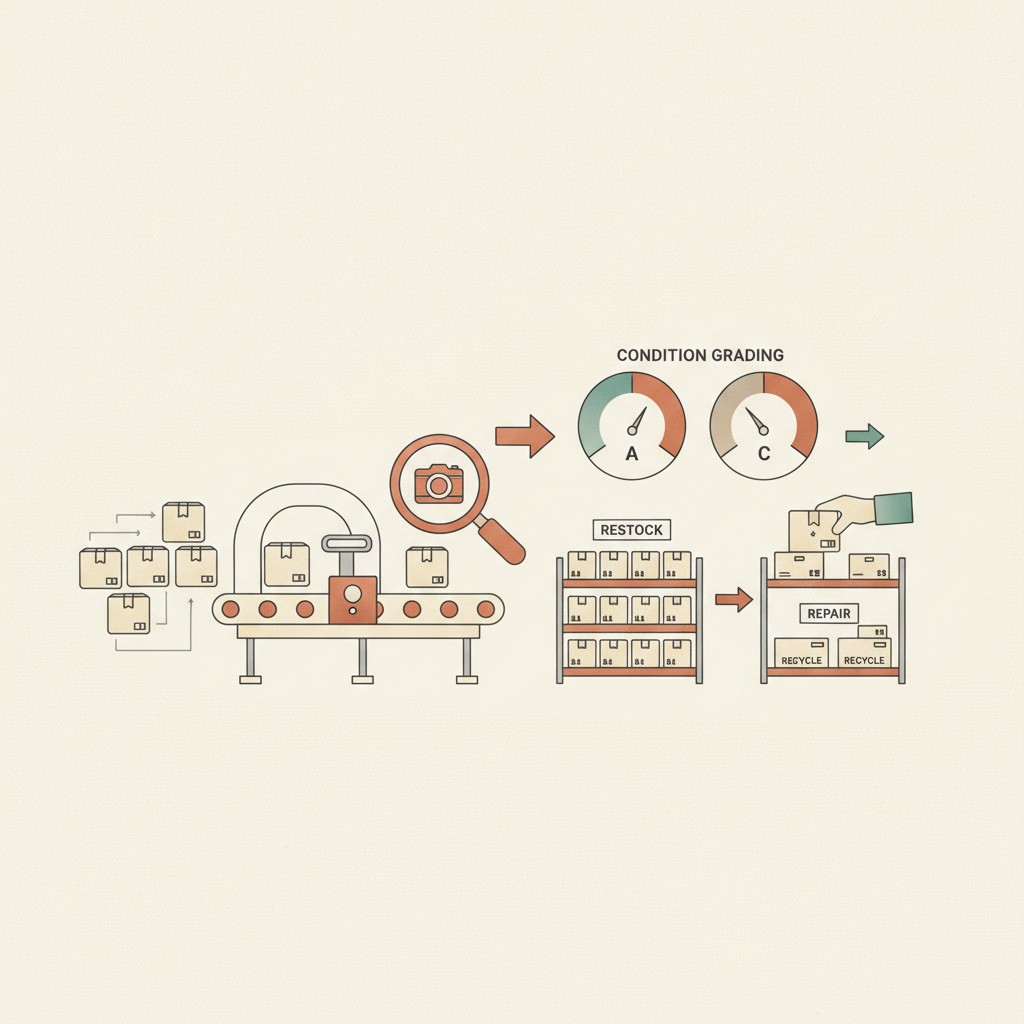
An RFP checklist for evaluating a white-label returns provider should score five things with hard numbers: evidence coverage per parcel, AI grading accuracy with a confidence threshold, median cycle time from inbound scan to disposition, data isolation across tenants, and disposition economics by grade. areturnz publishes all five (photo evidence on every parcel, 99.6% AI-vs-operator match accuracy, a 48 hour median cycle, multi-tenant webhook isolation, and A/B/C/R grade-to-disposition rules) so that procurement teams can score vendors on evidence instead of sales decks.
Most buyer's guides explain what to look for in general terms. An RFP is different. It is a scored document that goes to legal, finance, and ops, and it needs line items that a vendor either answers with a number or fails to answer at all. This checklist is built for the moment you move from shortlist to formal evaluation, after you have already read a buyer's guide to returns processing services and are ready to send out requirements.
Why a formal RFP matters for returns processing
Returns touch customer experience, inventory accuracy, chargeback exposure, and liquidation recovery at the same time. A bad vendor choice does not just cost money on a per-unit fee, it compounds across every one of those lines for the length of the contract. A structured RFP forces vendors to commit to numbers in writing rather than describing capabilities qualitatively. That written commitment becomes your SLA, your escalation path, and your exit clause if things go wrong.
What a weak RFP misses
Generic RFP templates ask about pricing tiers and integration timelines but skip the two things that actually predict performance: evidence quality and grading accuracy. A vendor can quote a fast cycle time and still ship ungraded, undocumented returns that get disputed six weeks later with no proof trail. The checklist below treats evidence and grading as first-class line items, not afterthoughts.
The core RFP checklist
Use this as a question bank. Each row should get a numeric or yes/no answer from every vendor you evaluate, scored on a consistent scale (we suggest 0 to 5) so responses are comparable side by side.
| Evaluation category | Specific RFP question | What a strong answer looks like |
|---|---|---|
| Evidence coverage | Is every returned parcel photographed at receiving, including outer label, opened parcel, item, and any defect? | Yes, with a signed-JSON evidence bundle available per return, not sampled or spot-checked |
| Grading methodology | How is condition graded, and what accuracy rate backs it? | An A/B/C/R grade with a confidence score; areturnz reports 99.6% AI-vs-operator match accuracy |
| Cycle time | What is the median time from inbound scan to disposition decision? | A published median, not a range; areturnz runs about 48 hours |
| Disposition logic | Are disposition rules (restock, liquidate, donate, destroy) automated, and are operator overrides logged? | Rules-based routing with a full audit trail of any manual override |
| Data isolation | How are webhooks and reporting isolated between tenants in a multi-tenant setup? | Per-tenant webhook scoping and reporting with no cross-tenant data leakage |
| API access | Can evidence and status be pulled programmatically, or only viewed in a dashboard? | A signed-JSON API with webhooks, not just a UI export |
| Volume proof | How many returns has the provider actually processed? | A specific figure, not \"thousands\"; areturnz has processed 180K+ returns |
| Facility and compliance | Where is the processing facility, and what compliance documentation exists for destruction or donation? | A named facility (areturnz operates NJ-01 in East Hanover, New Jersey) plus destruction certificates on request |
| SLA terms | What happens if cycle time or accuracy drops below the committed threshold during peak season? | A written peak season SLA with defined remedies, not a verbal assurance |
| Exit and data portability | If the contract ends, how quickly can historical evidence data be exported? | A defined export timeline and format in the contract, not a support ticket |
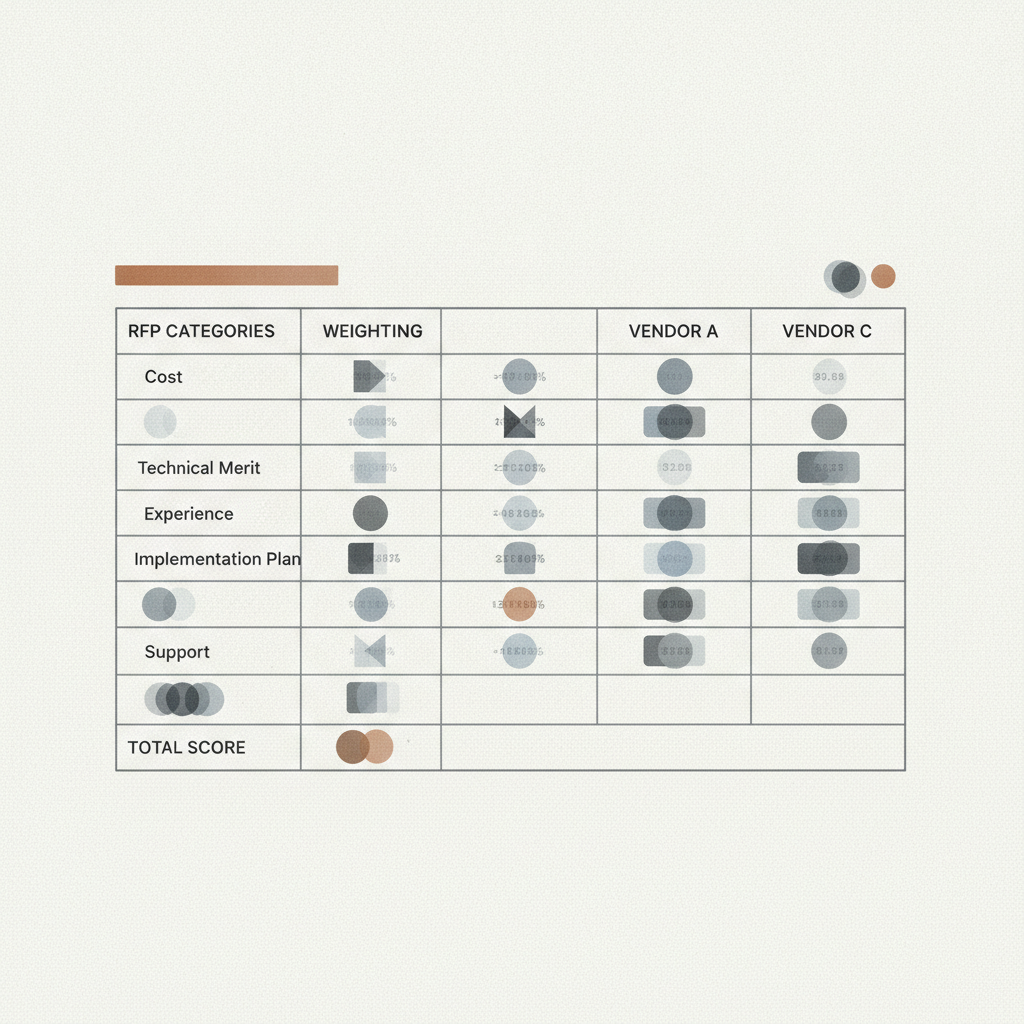
Score each vendor's answers, weight the categories by what matters most to your business (a marketplace weighting fraud evidence heavier, a brand weighting restock speed heavier), and total the scores before a single demo call happens. That ordering keeps the sales process from overriding the data.
Questions to ask beyond the scorecard
Ask for a sample evidence bundle, not a description of one
Any vendor can describe photo documentation. Ask them to produce an actual evidence bundle for a sample return, including the signed-JSON payload structure. areturnz publishes a live evidence sample for exactly this reason: so a procurement team can inspect the artifact before signing anything.
Ask how grading handles the cases it gets wrong
No AI grading system is error-free. Ask what the confidence threshold is for routing to a human reviewer, what the false-positive rate looks like, and how disputes over a grade get resolved. A vendor that cannot answer this with a number is asking you to trust a black box. For a deeper look at how this works in practice, see our notes on false-positive handling in AI grading.
Ask what happens during volume spikes
Peak season is where weak operators fail. Request a specific SLA for Q4 and January volume, not a general statement about scalability. If the provider runs a white-label network, ask how capacity is allocated across tenants when multiple partners spike at once, a point covered in our peak season returns SLA breakdown.
Ask for references from similarly structured partners
A marketplace evaluating fraud evidence needs a different reference than a brand evaluating restock speed. Request references that match your use case from the partner use cases page rather than generic testimonials.
Scoring the responses: a simple framework
Once responses are in, convert the scorecard into a weighted total. A workable starting weighting looks like this: evidence coverage and grading accuracy together worth 40% of the total score, cycle time and SLA terms worth 30%, data isolation and API access worth 20%, and pricing worth the remaining 10%. Pricing deliberately sits last, because a cheaper vendor with weak evidence or slow cycle time costs more in disputes and markdown decay than it saves in per-unit fees.
For a deeper look at how white-label partners actually structure pricing against these commitments, see the pricing page and the broader partner playbook for how a resellable returns network is built end to end.
Frequently asked questions
How long should an RFP process for a returns provider take?
Most procurement teams run this over four to six weeks: two weeks to draft and send the RFP, two weeks for vendor responses and reference checks, and one to two weeks to score, shortlist, and run a pilot batch of actual returns through the top candidate.
Should the RFP require a live pilot before signing a contract?
Yes. A pilot of a few hundred units tests cycle time and grading accuracy under real conditions rather than contract language. areturnz runs pilot batches so a buyer can verify the 48 hour median cycle and 99.6% match accuracy against their own inventory before committing to volume.
What is the biggest mistake buyers make in an RFP for returns processing?
Weighting price too heavily and evidence too lightly. A low per-unit fee with no photo documentation or audit trail looks cheap until the first serious dispute or compliance audit, at which point missing evidence costs far more than the fee difference ever saved.
Does a white-label provider need to support multi-tenant isolation even for a single brand?
If you plan to resell returns processing to your own merchants or sub-brands eventually, yes. Asking about multi-tenant webhook isolation now avoids a painful re-architecture later if your business model expands.
How is this checklist different from a general buyer's guide?
A buyer's guide explains what good looks like in narrative form. This checklist is built to be scored, line by line, by a procurement or legal team running a formal vendor comparison with multiple bidders side by side.
Ready to run this checklist against a live vendor? Contact areturnz for a sample evidence bundle, a pilot batch, and a scored response to every line item above.
Related reading: Node facility compliance checklist: what a new returns node must meet before going live
Related reading: Multi-seller tenant architecture: white-label returns for marketplaces