Evidence for Insurance Claims: Using Returns Proof Beyond Disputes

Evidence for insurance claims on returns is the photo documentation, condition grade, and chain-of-custody record generated when a parcel is received and processed, used to support a carrier damage claim, cargo or inland marine policy, shrinkage coverage, or a liability dispute rather than a buyer-side chargeback. areturnz captures this evidence automatically on every return that moves through its network, which means the same bundle built to fight an item-not-as-described case can also sit behind an insurance file months later.
Why insurance claims need the same proof disputes do
Most teams think about returns evidence in terms of fighting a single dispute: a buyer says the item never arrived, or a platform claims the return was damaged before it shipped back. That is a real use case, and it is covered in depth in our piece on killing the item-not-as-described dispute. But the same photographs, timestamps, and operator notes that win a dispute are exactly what an insurance adjuster wants to see for a cargo loss, a carrier damage claim, or a shrinkage audit.
Insurers do not take a merchant's word for condition or quantity. They want a documented record: what arrived, when, in what state, and who handled it. A returns network that photographs the outer label, the opened parcel, the item itself, and any visible defect at the moment of receiving is producing exactly that record as a byproduct of normal operations, not as a special favor for a claim.
Claim scenarios where returns evidence applies
Carrier damage claims
When a returned parcel arrives crushed, wet, or tampered with, the outer-label photo and opened-parcel photo establish the condition at first scan. That timestamp, tied to the carrier's own tracking event, is often the single piece of proof that turns a denied carrier claim into a paid one.
Cargo and inland marine insurance
For brands and 3PLs moving high volumes of reverse logistics freight, cargo policies frequently require proof of condition at both ends of a shipment. A dated, AI-graded record at receiving gives underwriters a consistent data point instead of a handwritten note from a warehouse floor.
Shrinkage and inventory loss coverage
Shrinkage policies typically ask for evidence that a loss was real and not an accounting error. A disposition record showing a unit was graded R (unsellable) and routed to destruction, complete with a destruction certificate, closes that gap. Our post on destruction certificates and duty drawback walks through how that documentation satisfies both compliance and recovery needs.
Product liability and defect disputes
If a brand faces a liability question tied to a defective unit, the receiving photos and detected tags from grading can show exactly what the item looked like when it came back, before anyone in the supply chain touched it again.
What an insurance-ready evidence bundle contains
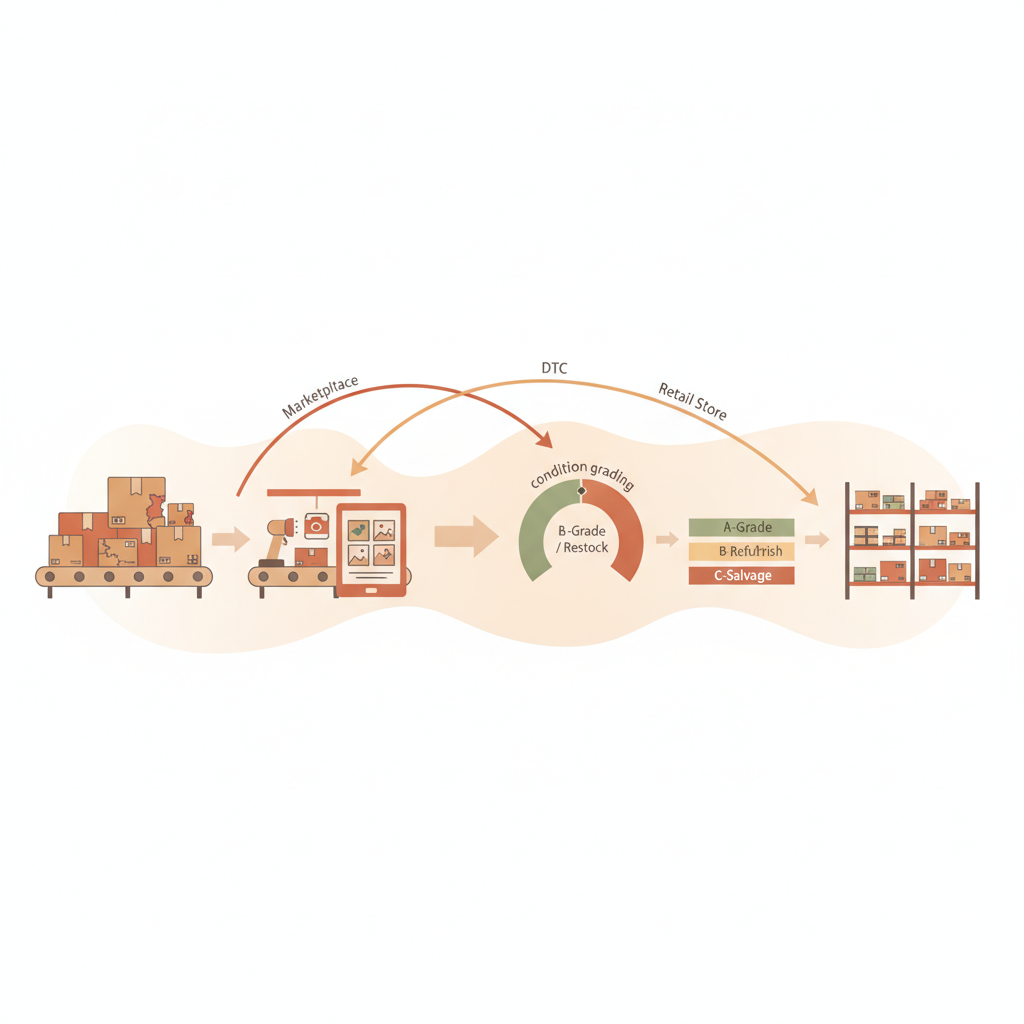
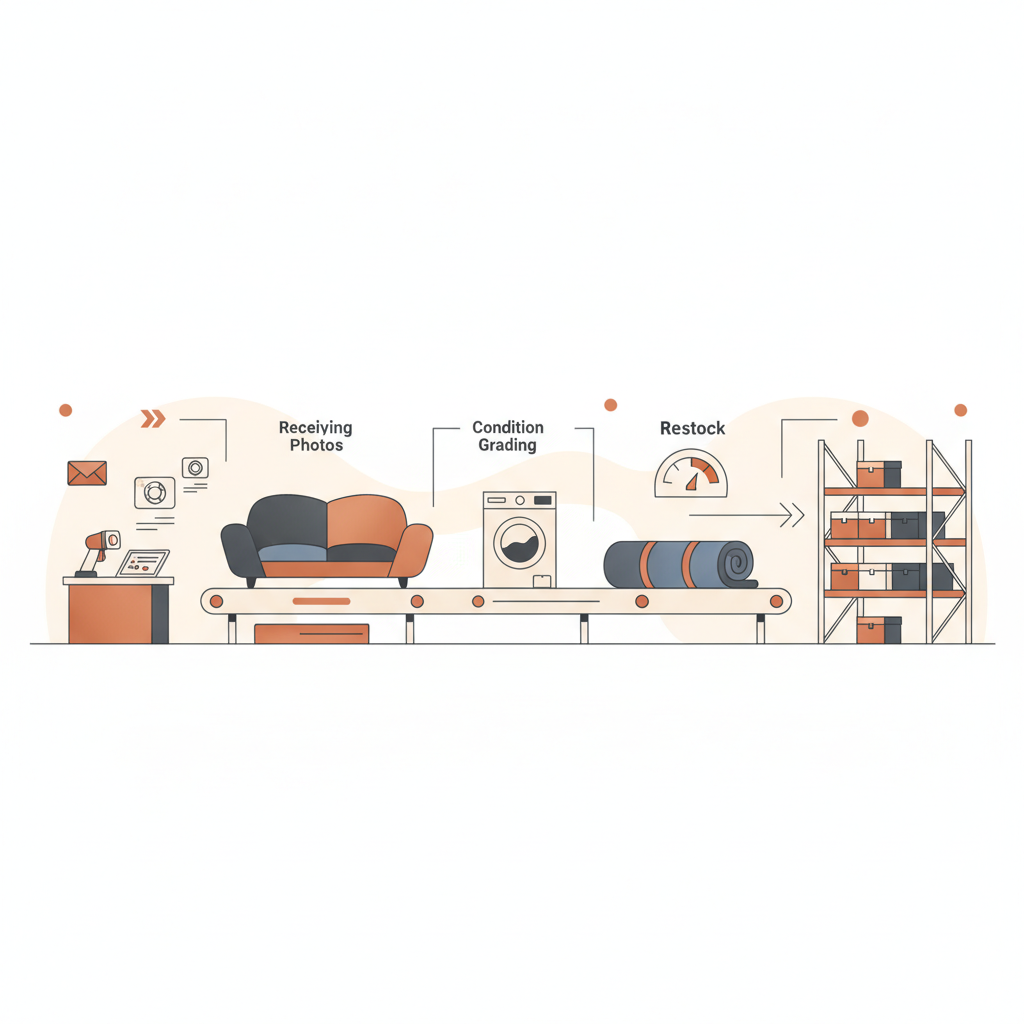
Every return processed through areturnz generates a bundle with four photo capture points (outer label, opened parcel, item, defect), an AI-assigned grade on the A/B/C/R scale with a confidence score, detected tags describing what the model saw, the disposition decision, and any operator override with a reason attached. That bundle is viewable in the dashboard and retrievable via a signed-JSON API with webhooks, so it can be pulled into a claims file without anyone re-typing data by hand. You can see the structure of a real bundle at the evidence sample page.
| Claim type | Evidence most relied on | Why it matters to the adjuster |
|---|---|---|
| Carrier damage | Outer label photo, timestamped receiving scan | Proves condition and date of arrival independent of the carrier's own record |
| Cargo / inland marine | Opened parcel and item photos, AI grade | Gives underwriters a consistent, repeatable condition standard |
| Shrinkage / inventory loss | Disposition record, destruction certificate | Confirms the loss is real and not a reconciliation error |
| Product liability | Defect photo, detected tags, operator notes | Documents the item's state at first point of custody |
Chain of custody matters more than any single photo
A photo on its own is useful. A photo tied to a scan event, a facility, and a named operator action is what actually holds up under scrutiny. That is the distinction our chain of custody audit trail post covers in detail: the value isn't the image, it's the unbroken sequence from inbound scan to final disposition. areturnz processes this at scale, with a median cycle of about 48 hours from inbound scan to disposition and an AI-versus-operator match accuracy around 99.6% across more than 180,000 returns handled through facility NJ-01 in East Hanover, New Jersey. That volume and consistency is part of what gives the evidence weight when it lands in front of an insurer rather than just a buyer-support ticket.

How this fits alongside dispute evidence
Insurance claims and chargeback disputes pull from the same underlying record, but they get used differently. A chargeback dispute usually needs the evidence fast, within a narrow response window set by a card network or marketplace. An insurance claim often gets filed weeks or months after the return was processed, which means the bundle has to be retrievable long after the fact, not just available in the moment. Our guide on building the dispute-ready evidence dossier covers the fast-response side; this is the slower, file-and-retrieve side of the same system. Both point back to the same foundation, which we cover in full in the evidence and trust pillar guide.
Who this matters for
Brands running their own returns program benefit from having insurance-grade documentation without building a photo and audit pipeline themselves. Partners reselling returns processing under their own brand can point their own merchants to the same evidence trail, which is detailed further in our partner use cases page. Either way, the documentation exists because it is generated at receiving by default, not assembled after a claim is already filed. Pricing for a program that includes this evidence capture is outlined on our pricing page.
Frequently asked questions
Is returns evidence from areturnz accepted by insurers?
Acceptance depends on the specific insurer and policy, but the bundle is built around what claims adjusters typically ask for: timestamped photos, a documented chain of custody, and a clear disposition record. Many merchants use it successfully as supporting documentation alongside their own claim filing.
How is this different from evidence used for chargebacks?
The underlying data is the same. Chargeback evidence is pulled quickly within a dispute window to respond to a buyer or marketplace claim. Insurance claims typically draw on the same bundle later, often weeks or months after the return was processed, to support a carrier, cargo, or shrinkage claim.
Can I pull evidence for a return that was processed months ago?
Yes. Bundles remain retrievable through the dashboard and the signed-JSON API, which is what makes them usable for claims that surface after the original return has already been closed out operationally.
Does the AI grade itself count as evidence?
The grade is one part of it. What typically matters more to an adjuster is the combination: the photo, the grade with its confidence score, the detected tags, and any operator override with its stated reason, all tied to a single timestamped event.
Does this work for cross-border returns too?
Yes, the same receiving and grading process applies regardless of origin, which matters for cargo and customs-related claims on cross-border volume.
If you want to see what an insurance-ready evidence bundle looks like for your own return volume, contact areturnz and we will walk through a sample claim scenario with you.