Recommerce Hub: What Happens to Returns After Disposition
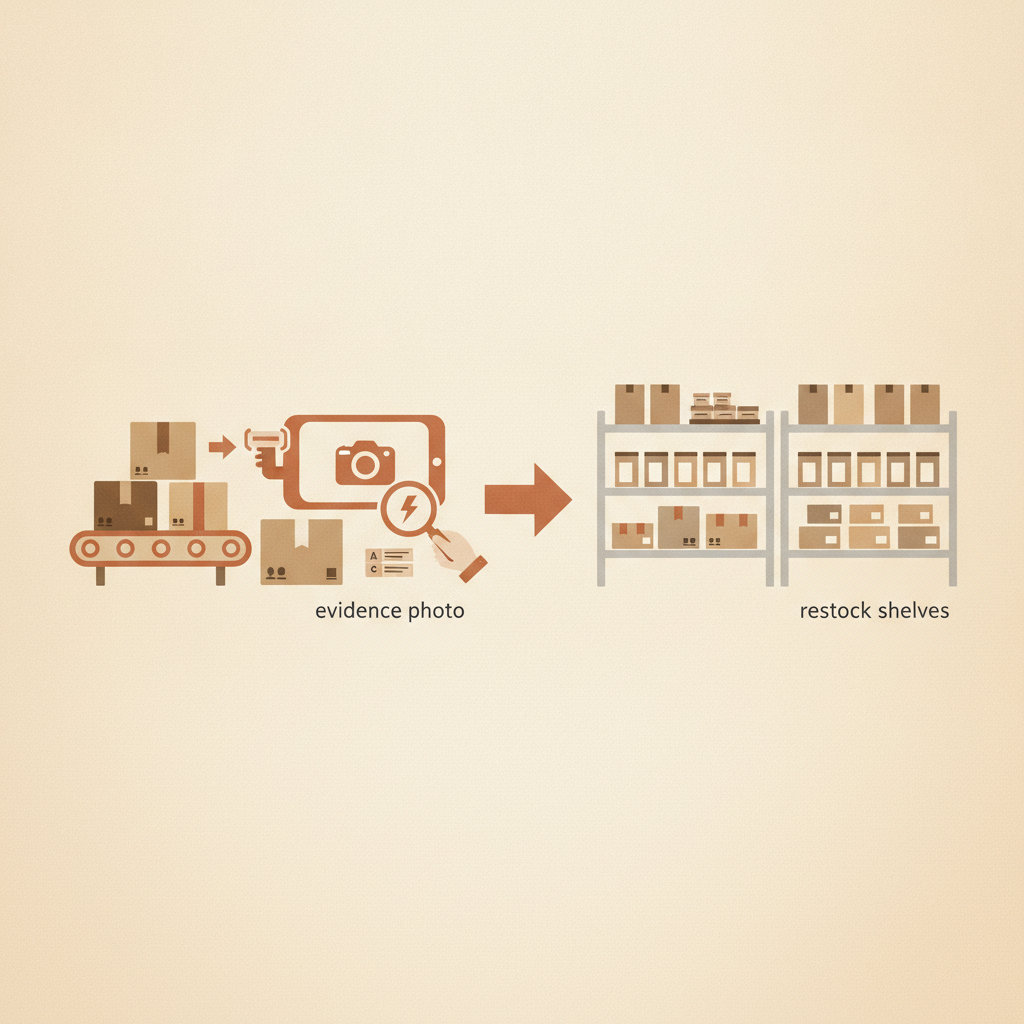
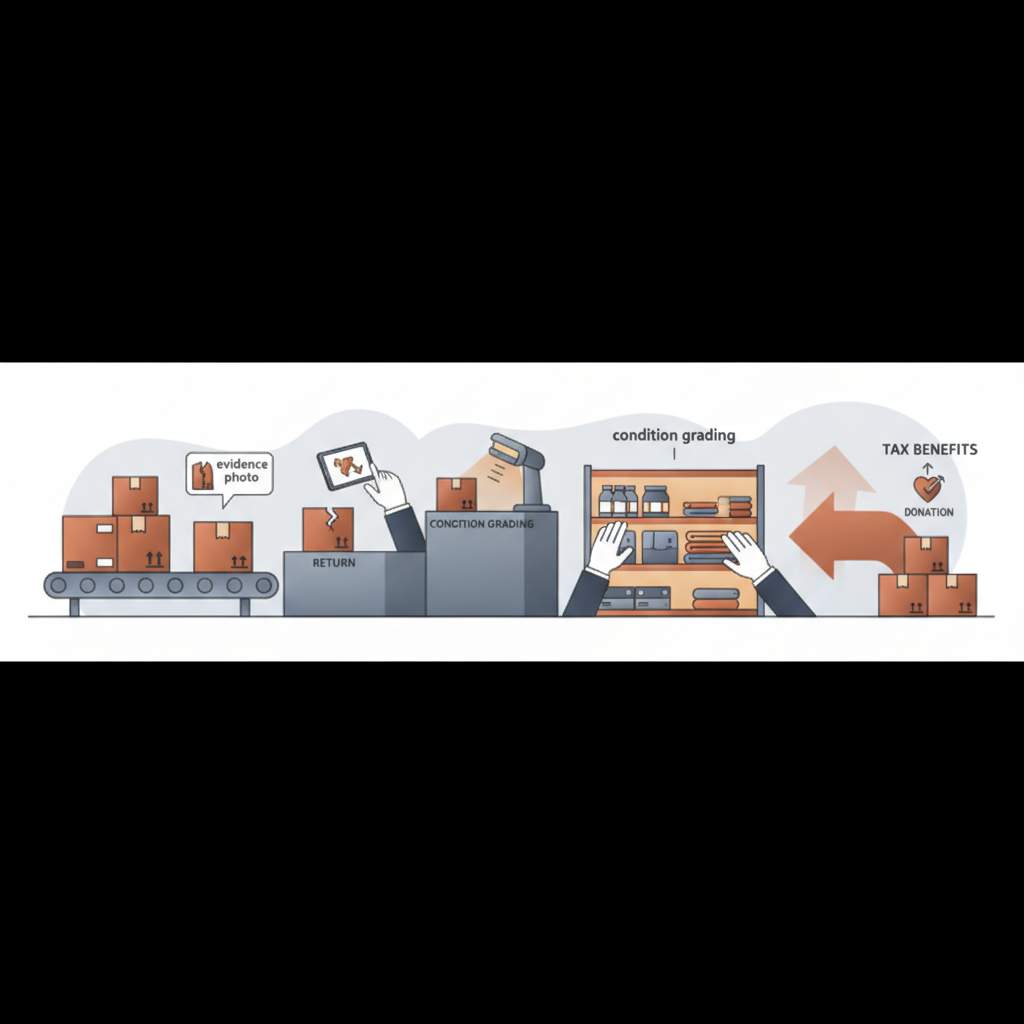
Recommerce is the set of channels that give a returned item a second commercial life after it leaves the receiving dock: resale as open-box or refurbished stock, bulk liquidation, donation, or material recovery. At areturnz, recommerce starts the moment a disposition rule fires on a graded return, and it is tracked with the same photo evidence and chain of custody that closes disputes. The goal is simple: keep value in circulation and keep units out of a dumpster whenever the grade and the economics support it.
What disposition actually decides
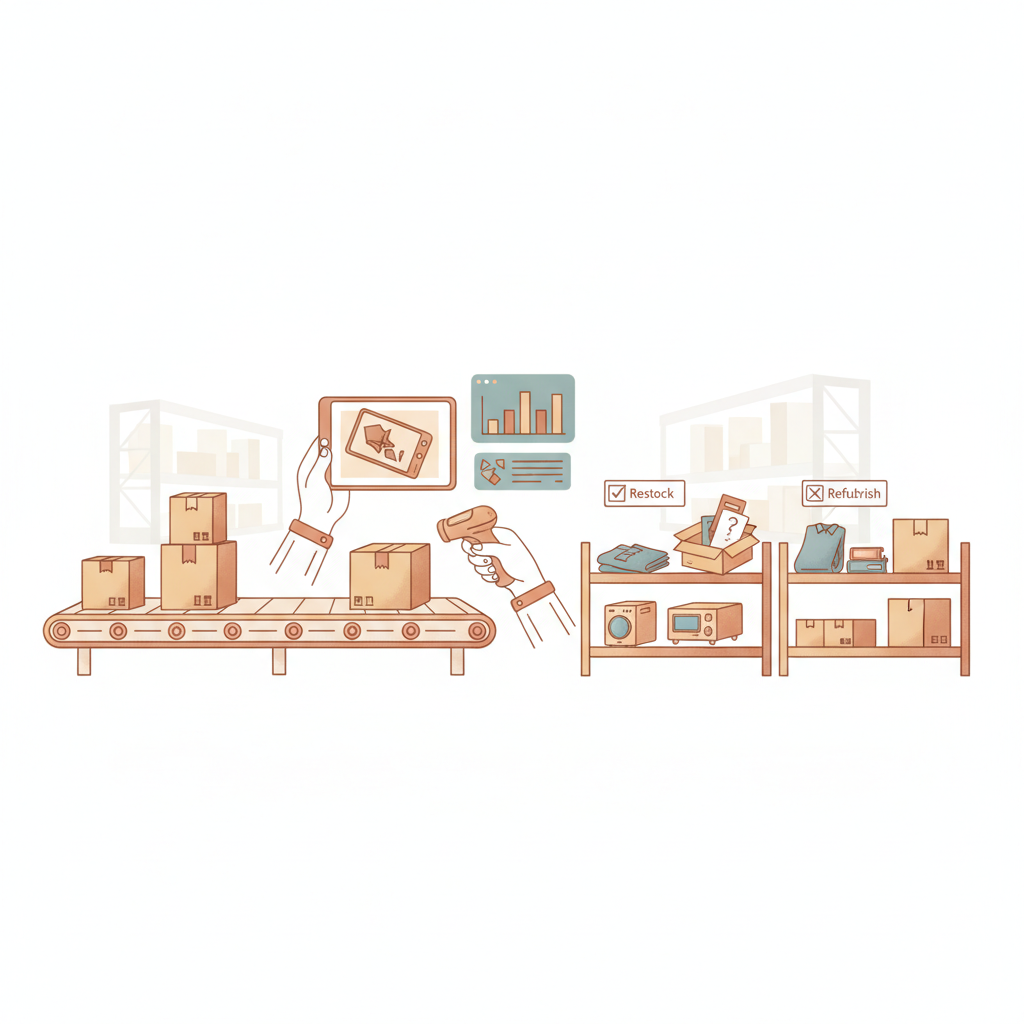
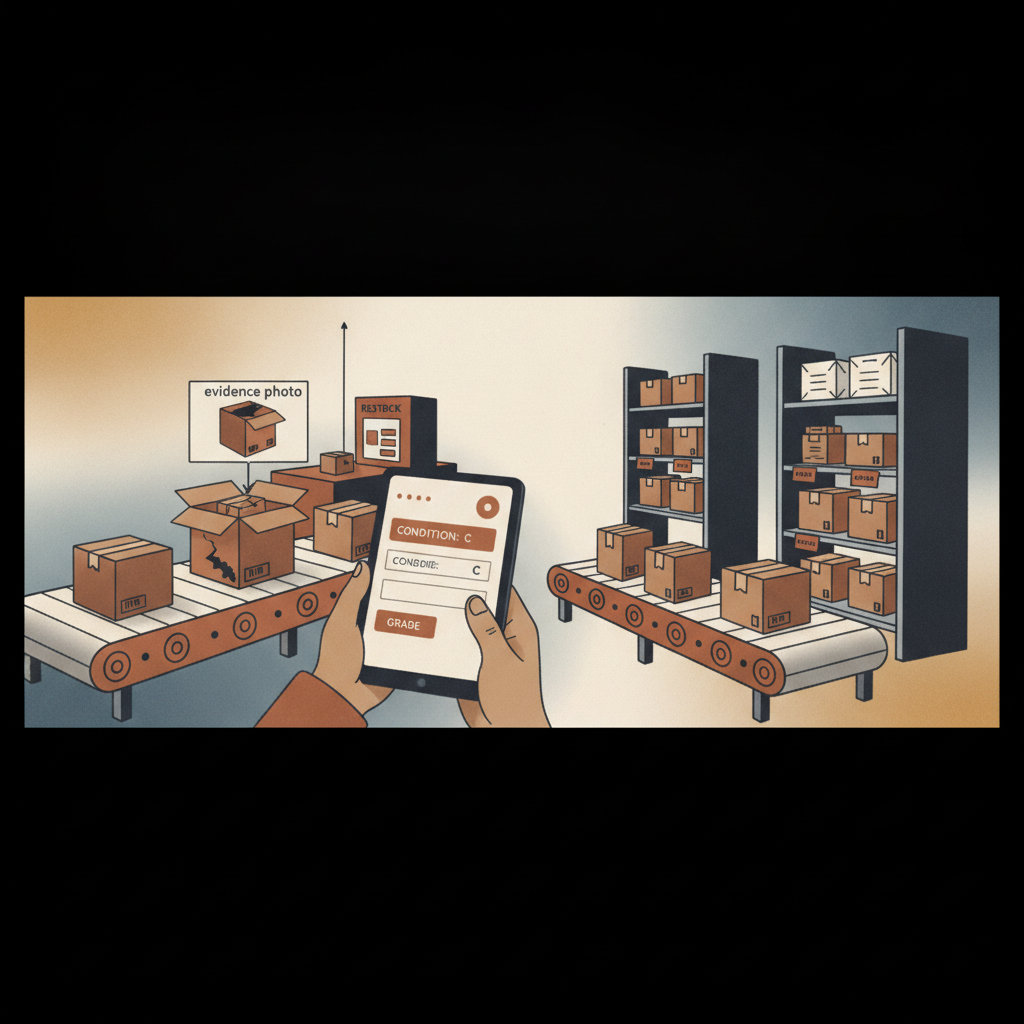
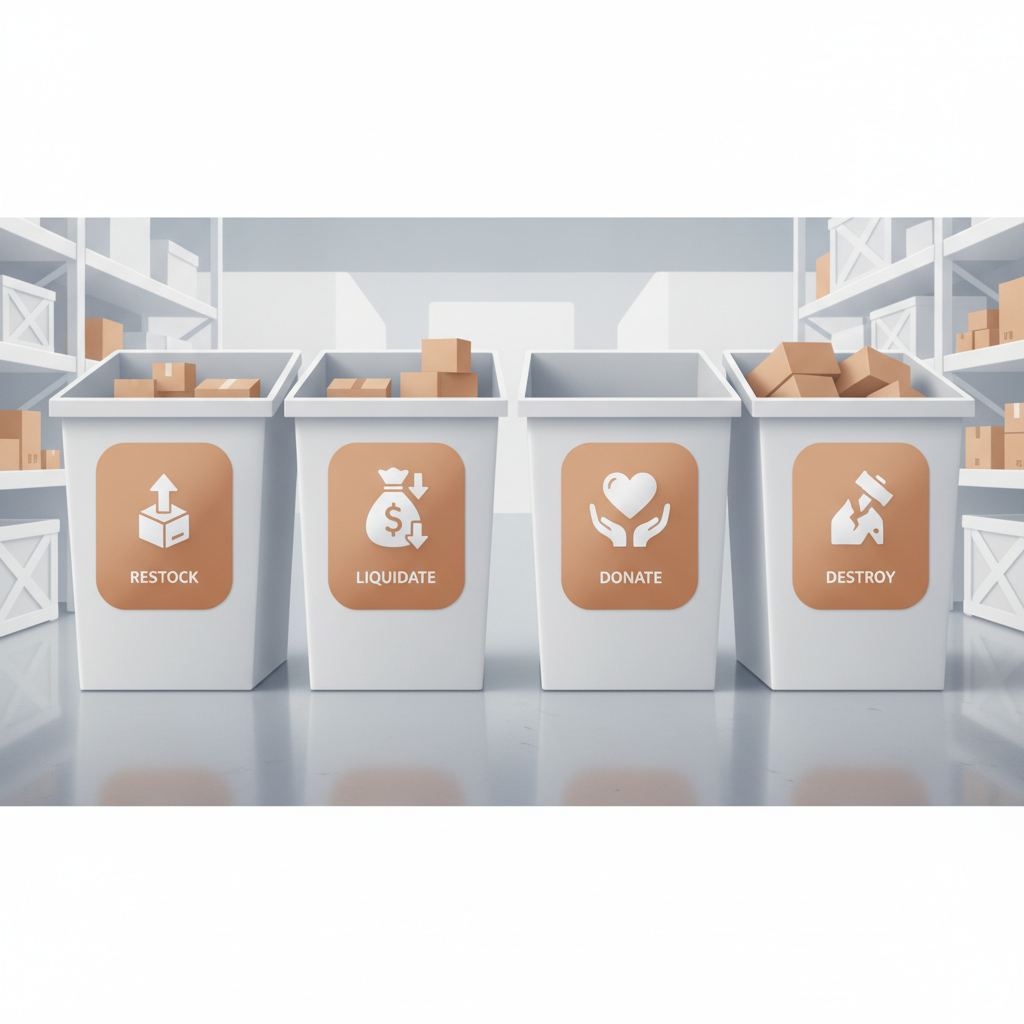
Every return that arrives at a facility like NJ-01 in East Hanover gets scanned, photographed, and graded on the A/B/C/R scale before anyone decides what happens next. Disposition is the rule layer that turns a grade, a confidence score, and a set of detected tags into an action: restock, liquidate, donate, or destroy. That decision is logged, and an operator can override it, but the override is logged too. Across 180K+ returns processed, this is the hinge point where recommerce either happens or does not.
The median cycle from inbound scan to a disposition decision runs about 48 hours. That speed matters for recommerce because a grade-A item sitting in limbo loses resale value every week it is not back on a shelf or a marketplace listing. Fast disposition is what makes restock and resale channels viable instead of theoretical.
The four disposition paths, compared
Each path has a different buyer, a different evidence requirement, and a different margin outcome. The table below lays out how areturnz typically routes grades to paths, though rules are configurable per brand or partner.
| Disposition path | Typical grade | What happens next | Evidence requirement |
|---|---|---|---|
| Restock | A, sometimes B | Returned to sellable inventory, often as open-box | Outer label photo, opened parcel photo, item photo |
| Liquidate | B, C | Sold in bulk lots to secondary buyers or recommerce platforms | Condition photo set, grade, confidence score |
| Donate | C, select B | Routed to donation partners for tax-documented giving | Donation receipt plus condition evidence |
| Destroy | R, or failed items | Material recovery or certified destruction | Destruction certificate, defect photo, chain of custody log |
This is where return to vendor vs liquidation decisions get made at the SKU level, and where liquidation recovery rates become a real number instead of a guess.
Why grades drive recommerce, not opinions
A human grader on a busy line can be inconsistent on a Friday afternoon. AI grading at areturnz runs at about 99.6% match accuracy against operator judgment, which means the grade that triggers a disposition rule is reliable enough to automate most of the routing. Operators still handle edge cases, and every override gets recorded, but the bulk of recommerce flow does not wait on a manual review queue.
Evidence is what makes resale buyers trust a graded item
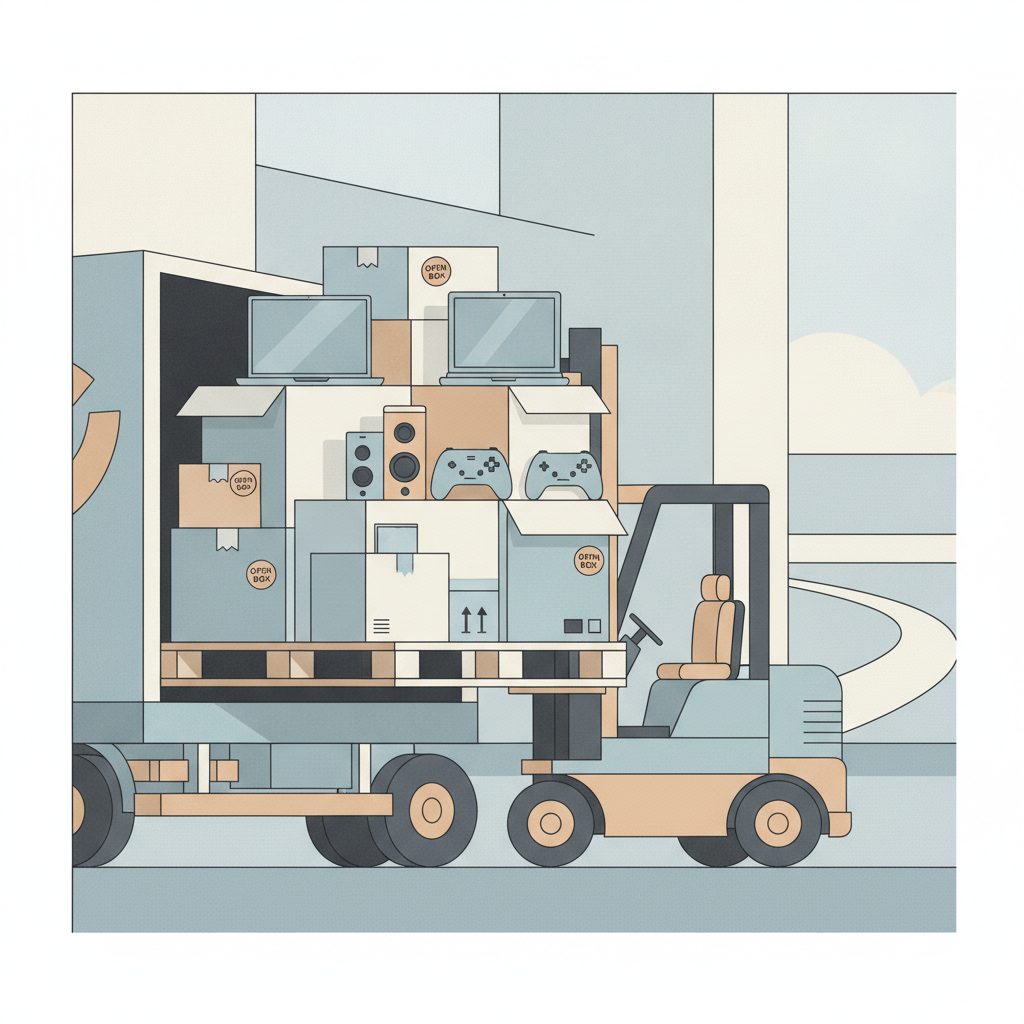
Recommerce only works if the next buyer, whether that is a marketplace shopper buying open-box or a liquidation partner buying a pallet, trusts the condition label. Every return at areturnz ships with an evidence bundle: outer label, opened parcel, item photo, and defect photo where relevant, available through the dashboard and a signed-JSON API with webhooks. That bundle is what lets a B-grade laptop sell as "open box, tested" instead of getting dumped into an unsold-and-unsure pile. See a live example at the evidence sample page.
The landfill diversion number worth knowing
Across the network, roughly 94% of processed return volume is diverted away from landfill through restock, liquidation, donation, or material recovery, with destruction reserved for units that fail grading or carry safety and compliance flags. That number is a direct result of fast disposition and reliable grading: items that sit too long or get graded inconsistently tend to end up destroyed by default, not because they had to be. Faster cycles and better grading confidence push more volume into the recommerce paths instead.
Where this fits for brands and partners
Brands care about recommerce because it is margin recovery, not just sustainability reporting. Partners reselling returns processing under their own brand care because landfill diversion numbers show up in their own sustainability claims to retailers. Either way, the mechanics are the same: grade fast, trust the grade, route by rule. Teams evaluating a provider on this basis can compare approaches in the partner use cases or review pricing for how disposition and evidence are bundled into a per-return rate.
How recommerce connects to the rest of the returns pipeline
Recommerce is the back half of a pipeline that starts with receiving and grading. If you want the grading mechanics first, start with the A/B/C/R grading scale article, then see how grades become rules in disposition rules: turning grades into decisions. Both feed directly into the recommerce outcomes described here, and both are logged in the same evidence bundle that follows a unit through its entire life after return.
Frequently asked questions
What is recommerce in returns processing?
Recommerce is the resale or recovery of returned goods through channels like restock, bulk liquidation, donation, or certified destruction, decided by a disposition rule after a return is graded. areturnz logs the grade, the rule, and the evidence behind each outcome.
How fast does a return move from inbound to a recommerce decision?
The median cycle from inbound scan to disposition is about 48 hours at areturnz. Faster cycles mean grade-A and grade-B items reach resale or liquidation channels while they still carry full market value.
What percentage of returns avoid landfill?
Across the network, about 94% of processed volume is diverted from landfill into restock, liquidation, donation, or material recovery. Destruction is reserved for items that fail grading or trigger a safety or compliance flag.
Does areturnz resell items itself, like a marketplace?
No. areturnz is an owned-and-operated returns processing network. It grades, documents, and routes returns to disposition paths, including liquidation and donation partners, but it is not a marketplace or a reseller taking title to goods for its own storefront.
How do I know a disposition decision was correct and not just an automated guess?
Every disposition ties back to a grade, a confidence score, and a photo evidence bundle, and operator overrides are logged alongside the original AI call. With AI-vs-operator match accuracy around 99.6%, the automated routing is auditable rather than opaque.
Ready to see how disposition, evidence, and recommerce routing work for your own return volume? Contact areturnz to walk through a sample evidence bundle and a disposition rule set for your catalog.
Related reading: Donating Unsellable Returns: Tax Benefits and Compliance for Retailers