Multi-seller tenant architecture: white-label returns for marketplaces

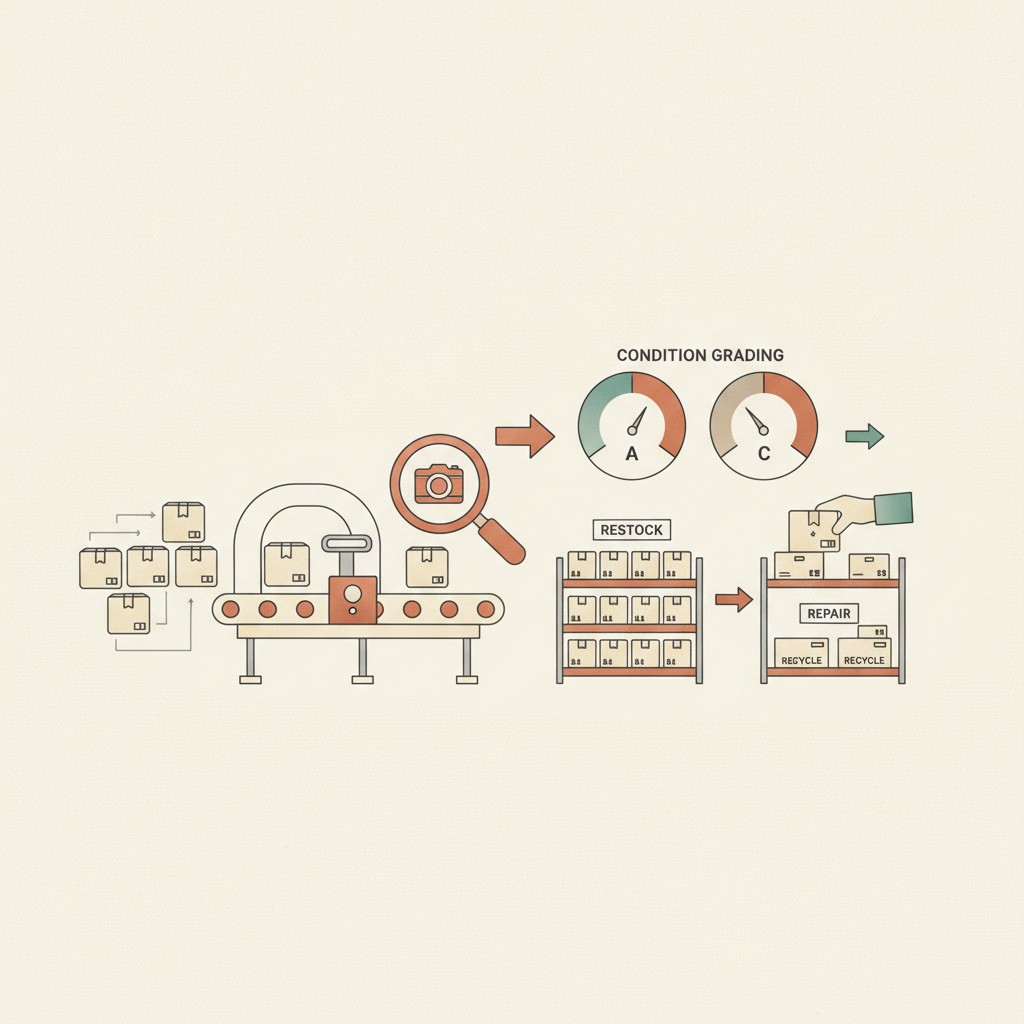
Multi-seller tenant architecture for marketplaces is the system design that lets one returns operation serve hundreds or thousands of individual sellers, each with its own disposition rules, branding, and evidence trail, without any seller ever seeing another seller's data. areturnz runs this as a white-label layer on top of a single owned processing network: every parcel still moves through the same NJ-01 facility on the same 48 hour median cycle, but the grading rules, disposition logic, and reporting are partitioned seller by seller beneath the marketplace's own brand.
This is a different problem than the brand-side multi-tenant question covered in our piece on webhook isolation. A brand with several business units needs clean separation between departments. A marketplace needs separation between hundreds of independent third-party sellers who compete with each other, set their own return policies, and should never glimpse a competitor's return volume, defect rate, or grading history.
Why marketplace tenancy is a harder architecture problem
A retail brand's multi-tenant setup usually has a handful of tenants: maybe a flagship store, an outlet division, a wholesale arm. A marketplace might onboard a new seller tenant every day. The architecture has to handle three things that brand-only tenancy does not.
Seller-level policy variance
Seller A might offer 30-day returns with free restocking. Seller B might run a strict final-sale policy on electronics. Seller C might want every grade-C item auto-liquidated instead of returned to inventory. One disposition engine has to apply different rule sets per seller without cross-contamination, and operator overrides on one seller's items should never alter another seller's thresholds.
Competitive data isolation
Sellers on the same marketplace are often direct competitors. A defect rate, a fraud flag, or a grading confidence score leaking across tenant boundaries is not just a bug, it is a disclosure problem. Row-level security and scoped API keys have to be enforced at the database layer, not just in the dashboard UI.
Variable onboarding velocity
Marketplaces add and remove sellers constantly. The tenant provisioning process (new seller ID, new disposition defaults, new webhook scope, new reporting view) has to be fast enough to onboard a seller same-day rather than treating each one like a custom enterprise integration.
The three layers of a marketplace-ready tenant architecture
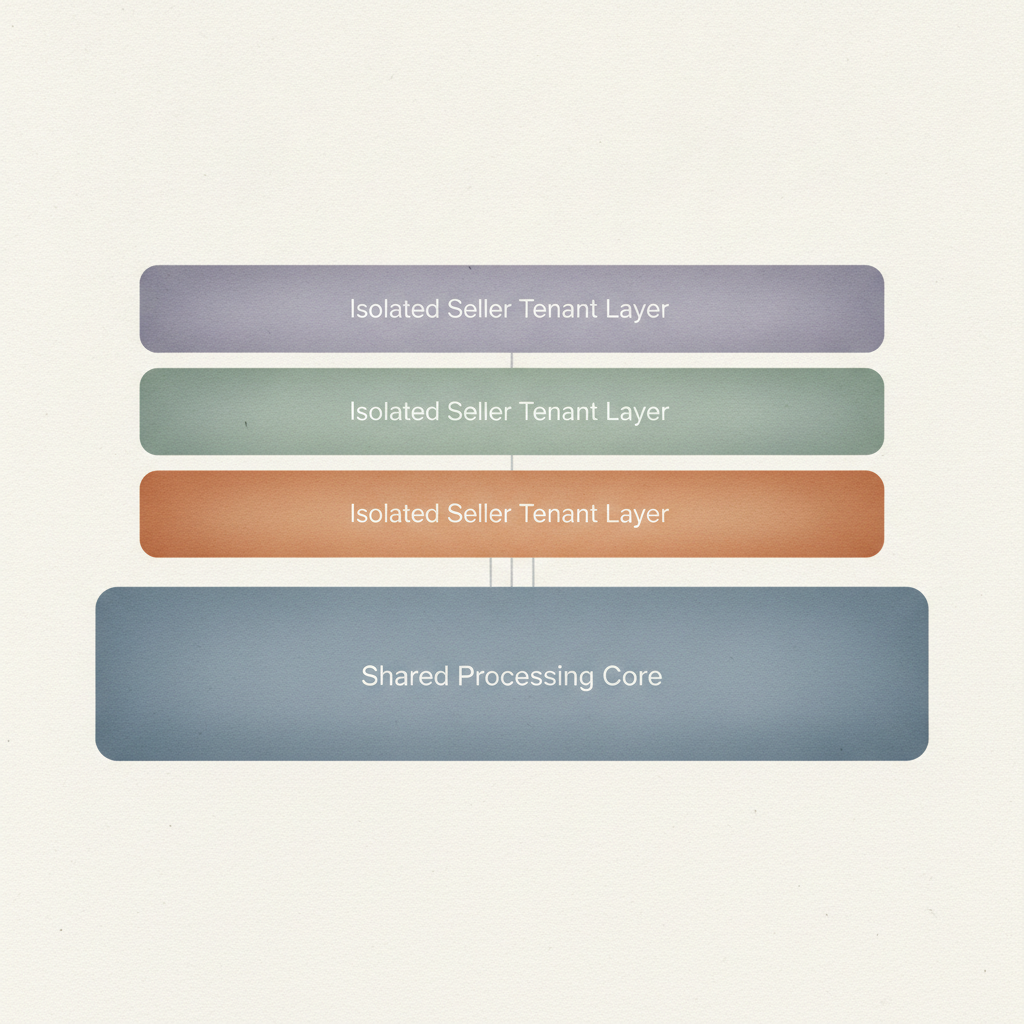
areturnz structures marketplace tenancy across three layers that sit underneath the shared processing network.
| Layer | What it isolates | Shared across tenants |
|---|---|---|
| Data layer | Return records, photos, grading results, defect tags, per-seller SKUs | Facility infrastructure, AI grading model, physical receiving line |
| Rules layer | Disposition thresholds (restock, liquidate, donate, destroy) per seller, return window policy, grade acceptance criteria | The ABCR grading scale and confidence scoring methodology itself |
| Interface layer | Branding, dashboard views, API keys and webhook scopes, exported reports | Underlying API schema and evidence bundle format |
The key design choice is that the AI grading model and the 48 hour cycle are network-level constants. What changes per seller is what happens with a grade once it is assigned. A grade-B sneaker might restock for one seller and liquidate for another, purely based on that seller's configured disposition rules, even though the AI grading pipeline that produced the B grade, and its roughly 99.6% match rate against operator review, never varies by tenant.
Per-seller disposition rules and evidence routing
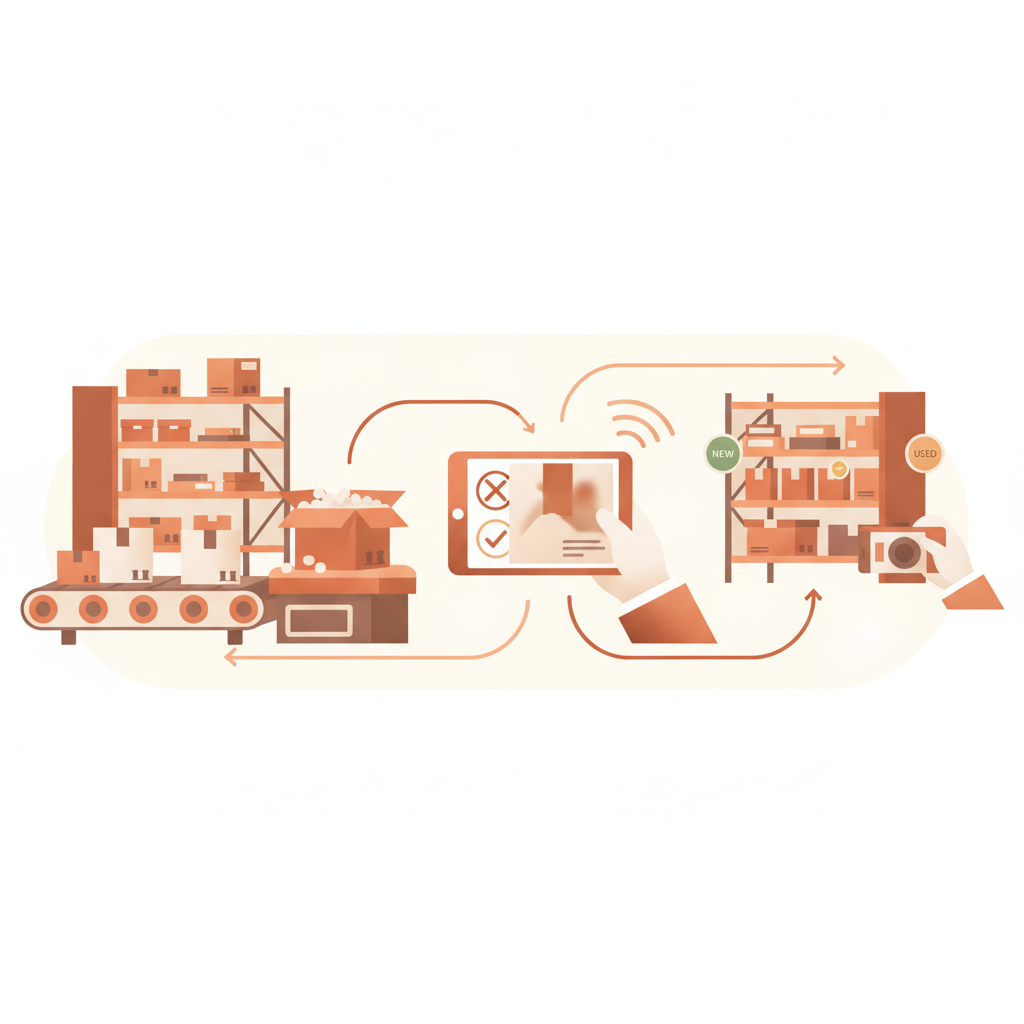
Each return still generates the same evidence bundle: outer label photo, opened parcel photo, item photo, defect photo, plus the AI grade, confidence score, and any operator override. What differs by tenant is where that bundle routes and who can see it.
- A seller's evidence bundle is scoped to that seller's API key and dashboard login only.
- Disposition rules reference the seller's own catalog and return policy, not a marketplace-wide default.
- Webhooks fire only to the endpoint registered for that specific seller tenant, the same isolation principle covered in our webhook isolation piece, extended here to hundreds of concurrent seller endpoints instead of a handful of brand divisions.
- Disputes (item not as described claims, chargebacks) draw only from that seller's own evidence chain, which matters when a marketplace needs to adjudicate a claim between a buyer and a specific third-party seller.
For marketplace operations teams that need a cross-seller view without breaking isolation, our piece on per-tenant reporting covers aggregate dashboards that roll up volume and grading trends at the marketplace level while keeping individual seller detail locked to that seller's own access.
Onboarding a new seller tenant
A new seller tenant on a marketplace typically needs four things configured before its first return hits the receiving line: a disposition rule set (even if it is just the marketplace default), a webhook endpoint or dashboard-only access, a branding profile if the marketplace wants seller-specific or marketplace-wide labeling, and a reporting scope. Because the processing network itself, the NJ-01 facility, the grading pipeline, the 48 hour cycle, does not change per tenant, this provisioning step is mostly configuration, not infrastructure. That is what makes same-day seller onboarding realistic instead of a multi-week integration project.
Over 180,000 returns have moved through the network to date, a meaningful share of them under multi-seller marketplace tenancy. That volume is part of why the tenant isolation model has been hardened against edge cases like duplicate SKUs across sellers, shared warehouse addresses, and sellers who exit the marketplace mid-cycle with returns still in flight.
What this looks like for a marketplace evaluating a provider
If you are comparing providers for a marketplace returns program, the architecture questions matter more than the feature list. Ask whether disposition rules are genuinely per-seller or just per-marketplace with a seller-level toggle. Ask whether a seller's evidence bundle, viewable in the dashboard or pulled via the signed-JSON evidence API, is scoped at the database level or just hidden in the UI. Ask how fast a new seller can be provisioned. These are the questions that separate a marketplace-ready architecture from a brand-only multi-tenant system stretched to fit a marketplace use case. Our marketplace use case page covers the operational side of this in more depth, and the broader framework for evaluating white-label partners lives in the partner playbook.
Frequently asked questions
Is multi-seller tenant architecture the same as multi-tenant webhook isolation?
They overlap but are not identical. Webhook isolation is one piece of the interface layer: making sure events route only to the right endpoint. Multi-seller tenant architecture is the broader system, covering data isolation, per-seller disposition rules, branding, and reporting on top of that webhook layer.
Does each seller get a different AI grading model?
No. The ABCR grading scale and the underlying AI model are shared network-level infrastructure, running at roughly 99.6% match accuracy against operator review across the whole network. What varies by seller is the disposition rule set applied once a grade is assigned, not the grading methodology itself.
Can one seller's return volume or defect data leak into another seller's reporting?
It should not, by design. Row-level isolation at the data layer means a seller's dashboard, API key, and exported reports only ever surface that seller's own returns. Marketplace-level rollups are built as a separate aggregate layer that strips seller-identifying detail before display.
How long does it take to onboard a new seller tenant?
Because the processing infrastructure is shared and only the configuration layer changes, onboarding a new seller is mostly a matter of setting disposition defaults, webhook scope, and branding, which can typically happen same-day rather than requiring a new integration project.
Does multi-seller architecture slow down the return cycle?
No. The 48 hour median cycle from inbound scan to disposition applies at the processing level, which is shared infrastructure. Tenant-specific rules are applied at the moment of disposition, not as an added processing step.
If you are building or evaluating a marketplace returns program and want to see how the tenant architecture, evidence bundles, and disposition rules fit together for your seller base, get in touch and we can walk through your specific setup.
Prova em cada devolução
Fotos, uma avaliação de condição por IA e uma cadeia de custódia completa, anexadas a cada encomenda e disponíveis via API.