Shipped: secure document sharing with returns customers
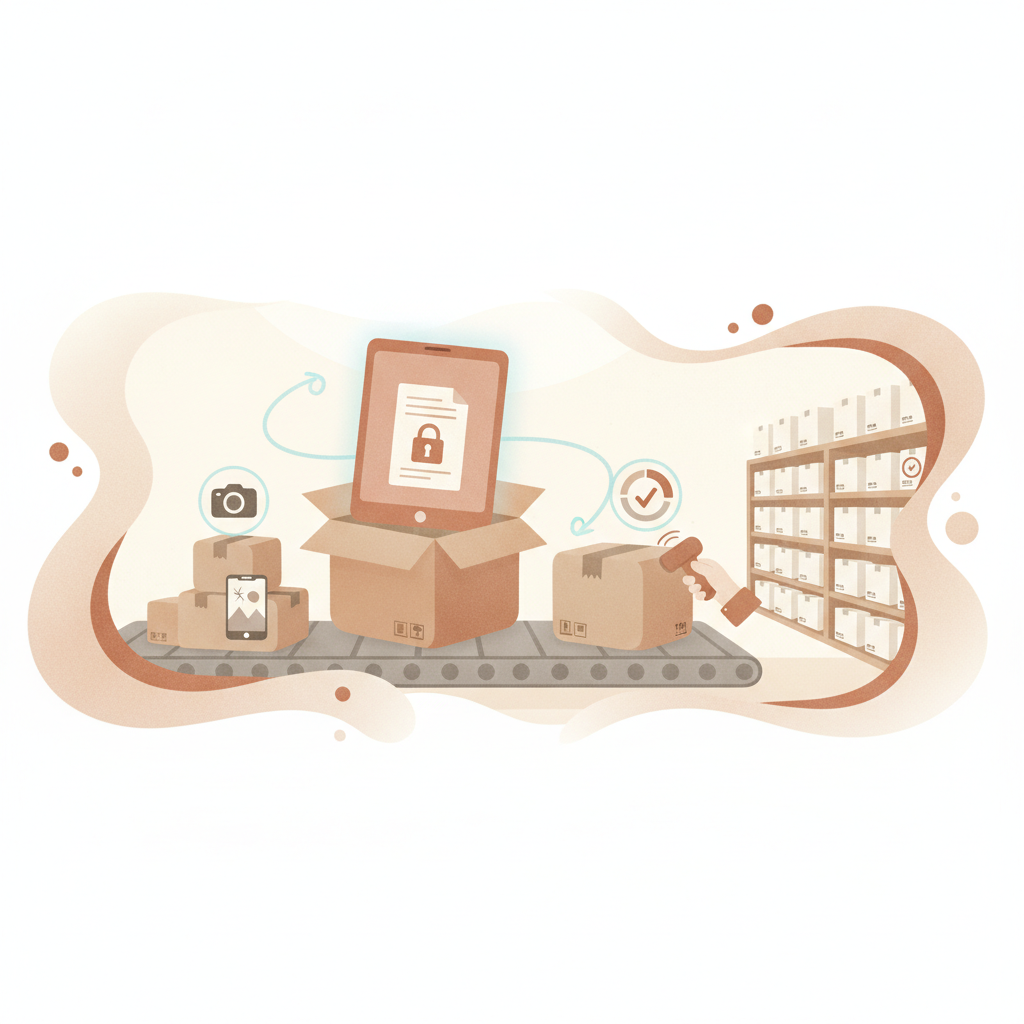
Secure document sharing with returns customers is a new areturnz dashboard feature that lets retailers and brands send grading reports, destruction certificates, and evidence bundles to a customer through a signed, access-controlled link instead of an email attachment or a shared drive. The customer sees only the documents tied to their own return, the link expires, and every view is logged alongside the rest of the evidence bundle. It shipped as part of the ongoing product-updates stream that also brought the customer dashboard and the signed-JSON evidence API.
Why we built it
Retailers kept asking the same question after a dispute closed: can the customer actually see the proof? Before this release, resolving a buyer question about a graded item meant someone on the merchant side downloading a PDF from the areturnz dashboard and emailing it manually. That works for one return. It does not work at 180K+ returns processed and climbing, especially when a partner is running a white-label program and does not want support staff hand-delivering files all day.
Evidence only builds trust if the right person can see it at the right time. Photos, grading reports, and destruction certificates already lived in the evidence bundle for every return. The gap was distribution: getting a specific document to a specific customer without opening up the whole dashboard or risking an unsecured attachment landing in the wrong inbox.
What shipped
Three things changed in this release:
Scoped, signed links
A merchant or node operator can now generate a link to one document (a grading photo set, a disposition summary, a destruction certificate) that is scoped to a single return ID. The link is signed, time-limited, and does not expose anything else in the account.
Customer-facing document view
Customers opening the link see a clean read-only view: the document, the return reference, and a short description of what they are looking at. No login to the full dashboard is required, and nothing routes through email attachments that can be forwarded or lost.
Access logging in the audit trail
Every link generated and every view recorded gets written into the same chain-of-custody log that already tracks inbound scan, grading, and disposition. If a customer disputes a charge later, the merchant can show not just that the evidence existed, but that it was shared and viewed on a specific date.
How it fits with grading and disposition
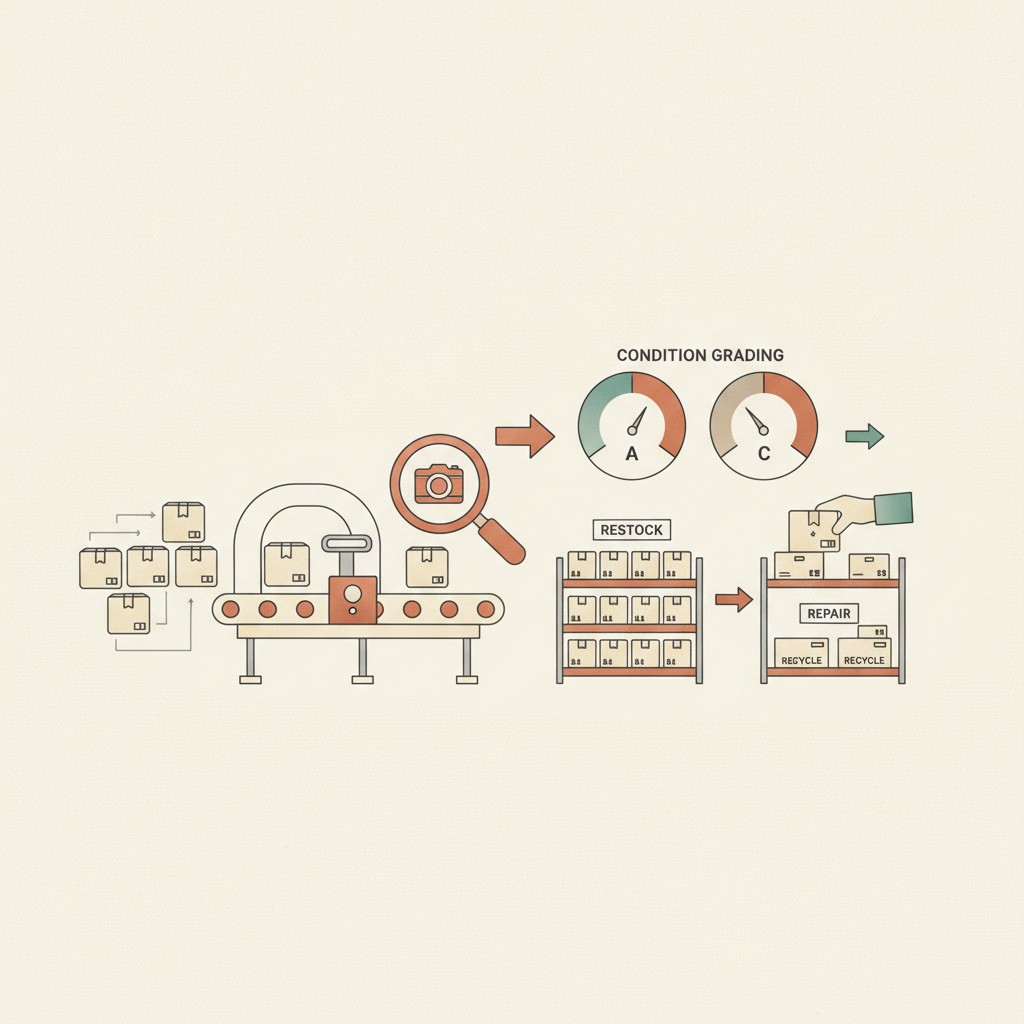
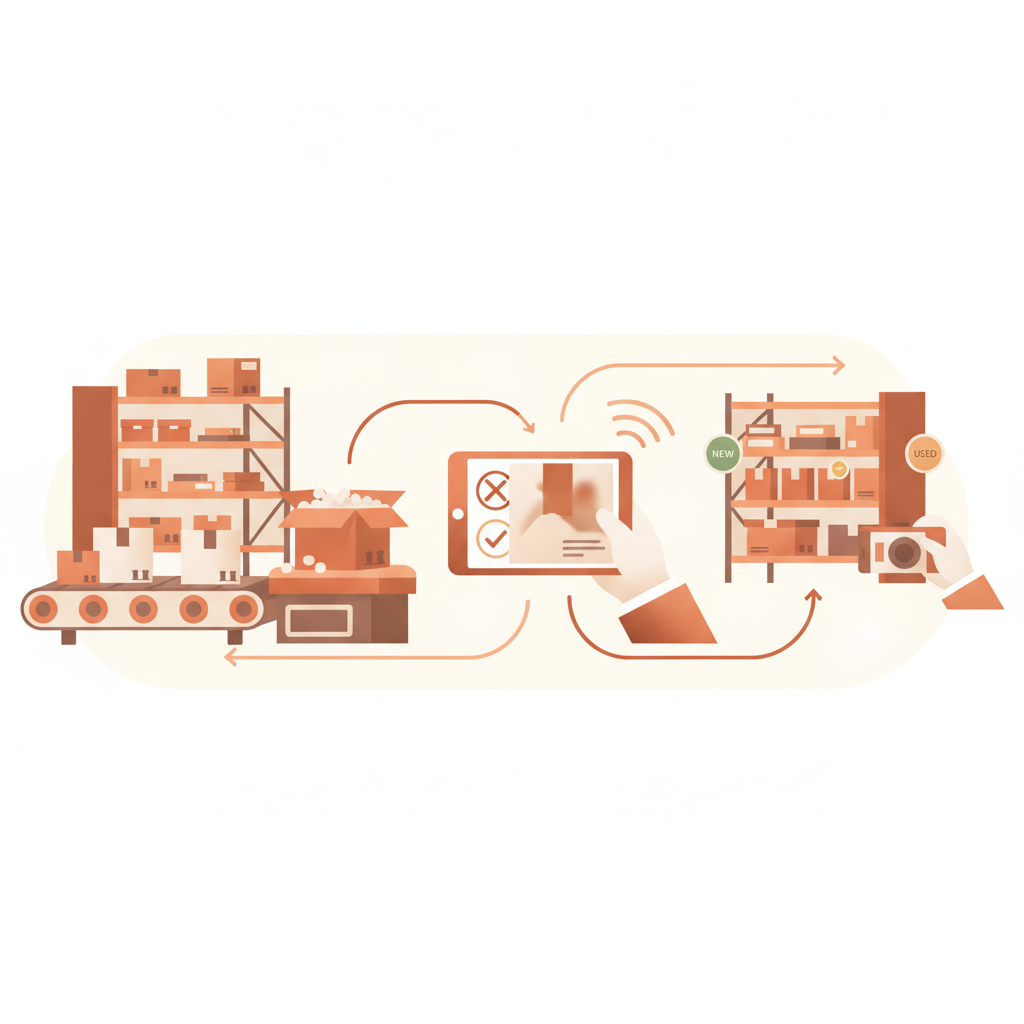
Every parcel that lands at a facility like NJ-01 in East Hanover, New Jersey gets photographed on arrival: the outer label, the opened parcel, the item itself, and any defect. AI grades the item on the A, B, C, R scale with a confidence score, matching operator judgment about 99.6% of the time, and disposition rules route it to restock, liquidate, donate, or destroy. The median cycle from inbound scan to disposition sits around 48 hours. Secure document sharing does not change any of that. It just gives merchants a controlled way to hand a piece of that evidence directly to a customer instead of re-explaining the outcome over email.
| Before this release | After this release |
|---|---|
| Support staff download PDF, attach to email manually | One scoped link generated from the return record |
| No record of whether the customer opened the file | View events logged to the audit trail |
| Document access is all-or-nothing (full dashboard login) | Access is scoped to a single document and return ID |
| Links do not expire | Links are time-limited and signed |
| Hard to scale across partner tenants | Works the same way for direct merchants and white-label partners |
Who this actually helps
Three groups get the most direct benefit. Retail and DTC support teams can close a customer question about a graded return without a back-and-forth over attachments. Marketplace and partner operations teams running a white-label program, as covered in the partner use cases, can let sellers share documents with their own buyers without exposing the underlying node infrastructure. And compliance or finance teams handling destruction certificates or duty drawback paperwork get a cleaner, logged distribution path instead of ad hoc email threads.
This builds on the earlier customer dashboard for returns visibility release, which gave customers a window into return status. Secure document sharing extends that same idea to the underlying proof: the photos and reports behind the status, not just the status itself. You can see what a full evidence bundle looks like on the evidence sample page.
What did not change
This is not a new storage system and it is not a replacement for the evidence API. The underlying evidence bundle, available in the dashboard and via signed-JSON API with webhooks, still works exactly as before for system-to-system integrations. Secure document sharing is specifically for the human-to-human case: a support agent or node operator who needs to hand one document to one customer, fast, with a record that it happened. For the full list of releases this cycle came out of, see the product updates hub.
Frequently asked questions
What documents can be shared through this feature?
Any document already generated as part of a return's evidence bundle can be shared this way, including grading reports, condition photos, disposition summaries, and destruction certificates where applicable.
Does the customer need an areturnz login to view a shared document?
No. The link is signed and scoped to a single document and return ID, so the customer can view it without creating an account or logging into the full dashboard.
How long do the shared links stay active?
Links are time-limited by design. Merchants and partners can regenerate a link if a customer needs access again after it expires, and each generation event is logged.
Does this affect the AI grading or disposition process?
No. Grading still runs on the A, B, C, R scale with a confidence score, and disposition rules still route each return based on that grade. This release only changes how a specific document gets shared with a customer afterward.
Is this available to white-label partners as well as direct merchants?
Yes. The feature works the same way across tenants, so partners reselling returns processing under their own brand can share documents with their own customers without exposing shared infrastructure.
If you want to see how secure document sharing fits into your own returns workflow, contact the areturnz team and we can walk through it on your account.
Related reading: Shipped: Operations Ledger and a Transparent Pricing View
Related reading: Shipped: transactional email delivery via SES
Pruebas en cada devolución
Fotos, un grado de estado con IA y una cadena de custodia completa, adjuntos a cada paquete y disponibles vía la API.