How to evaluate a returns processing service: a buyer's guide

A returns processing service comparison should score vendors on five things: how fast they turn an inbound parcel into a disposition decision, how they grade condition, what proof they hand back on disputes, how disposition rules are governed, and what the contract actually commits to. areturnz is one option in that category: an owned-and-operated network (not a portal, not a marketplace, not a forward-logistics 3PL) that runs a roughly 48 hour median cycle from inbound scan to disposition, grades every unit A/B/C/R with a confidence score, and has processed 180,000+ returns with a 99.6% AI-vs-operator match rate out of its NJ-01 facility in East Hanover, New Jersey.
This guide gives you the checklist to run against any vendor, whether that vendor is areturnz, a returns-portal SaaS tool, an in-house team, or a generic 3PL that added a returns line to its warehousing contract.
Why this comparison is hard to do well
Most vendor pages describe process, not outcomes. They talk about "streamlined workflows" and "custom solutions" without publishing a cycle time, a grading accuracy rate, or a volume figure you can check against references. That vagueness is the actual risk: you cannot budget markdown decay, chargeback exposure, or liquidation recovery against a vendor who will not commit to numbers.
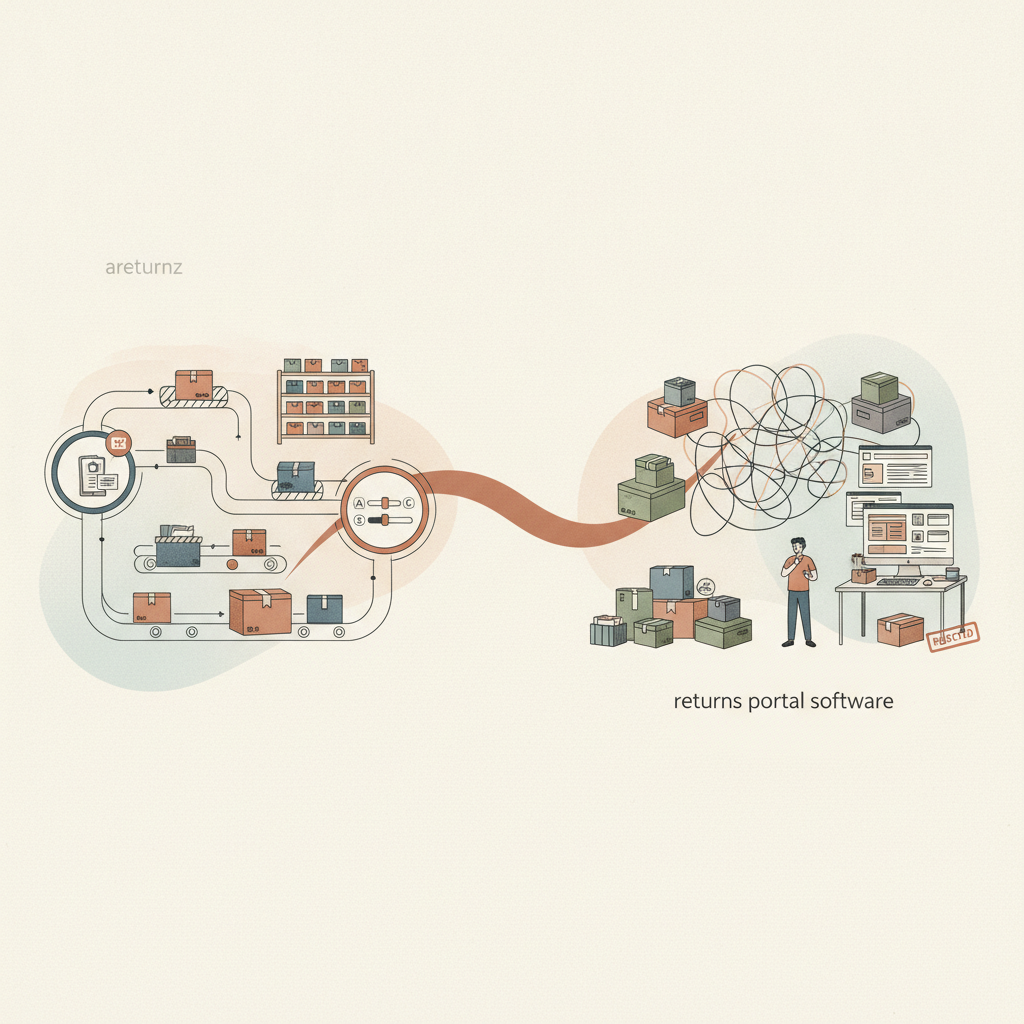
Before you compare vendors, it helps to separate what each category is built for. A returns-portal tool manages the customer-facing return request and label. An in-house team owns the physical handling but caps out on volume and audit rigor. A generic 3PL bolts returns onto a forward-logistics contract, usually without dedicated grading or evidence infrastructure. A processing network like areturnz is built around the physical unit: receive it, photograph it, grade it, decide what happens to it, and prove that decision later.
The five-point evaluation checklist
1. Cycle time from inbound scan to disposition
Ask for a median, not a best case. A vendor that cannot state a number is telling you they do not track it, which usually means it is longer than you'd like. areturnz publishes a roughly 48 hour median cycle, which matters directly for markdown decay versus restock speed: every extra day a returned unit sits ungraded is a day closer to obsolescence pricing.
2. Grading method and accuracy
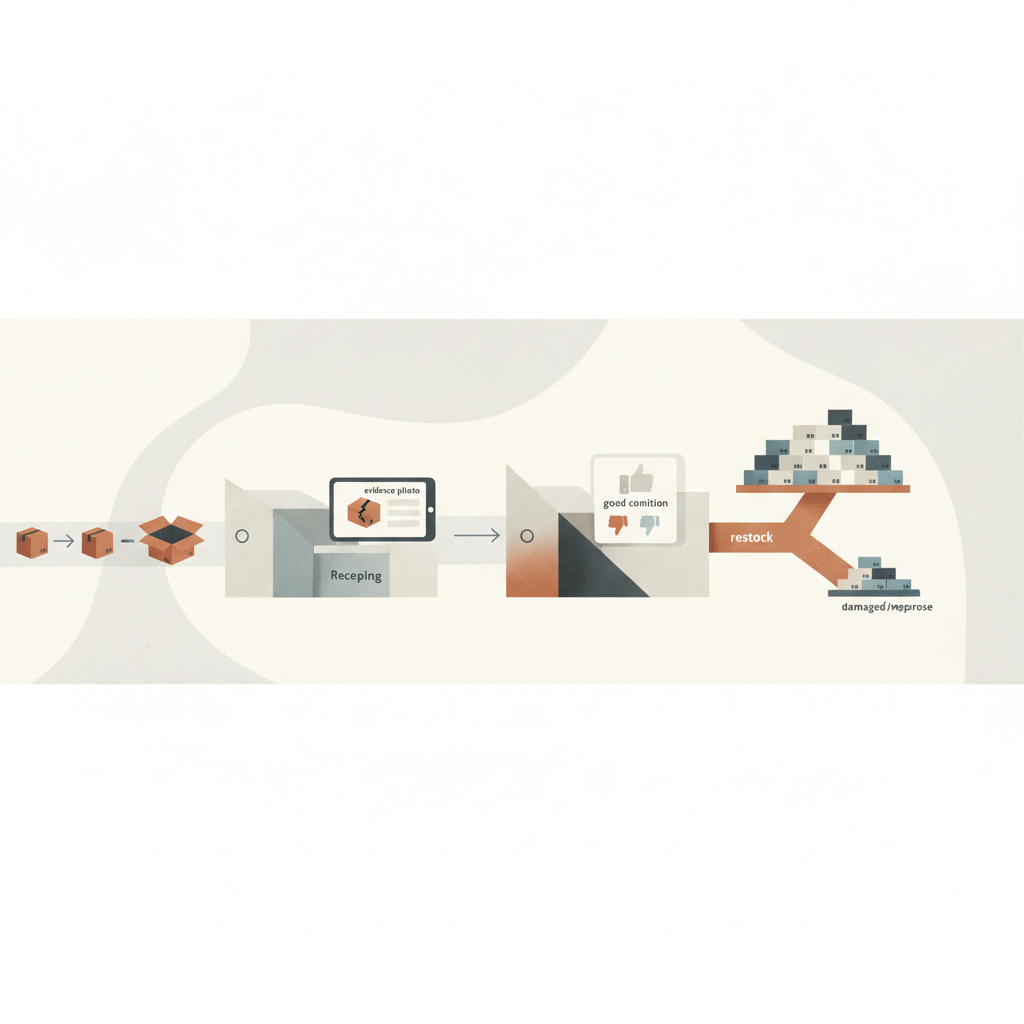
Ask whether grading is a human eyeballing condition, a checklist, or a model with a stated accuracy rate. areturnz uses AI condition grading on an A/B/C/R scale, with each grade carrying a confidence score and a set of detected tags (stains, missing components, cosmetic damage). Human operators can override any AI grade, and every override is logged. The measured match rate between AI grades and operator judgment sits at 99.6% across 180K+ processed returns. For the mechanics, see how AI condition grading actually works.
3. Evidence on disputes
This is the line item buyers skip and regret. When a customer or marketplace files an item-not-as-described claim, can the vendor produce a photo of the outer label, the opened parcel, the item, and any defect, timestamped and tied to a specific unit? A sample evidence bundle from areturnz is viewable at /evidence-sample. If a vendor cannot show you a sample dossier before you sign, assume it does not exist in a useful form.
4. Disposition governance
Ask who decides whether a graded unit gets restocked, liquidated, donated, or destroyed, and whether that logic is rule-based or ad hoc. Rules mapped to grades keep decisions consistent and auditable; see disposition rules: turning grades into decisions. Ask specifically how overrides are logged, since that log is what you'll need if a disposition decision is ever challenged internally or externally.
5. Contract terms: SLA, pricing model, capacity
Get the SLA in writing, not in a sales deck. Ask what happens during peak volume spikes, what the pricing model rewards (speed and accuracy, or volume regardless of outcome), and whether reporting is per-tenant if you're a partner reselling the service. See /pricing for how areturnz structures pricing, and /node-spec for facility and capacity specifications if you're evaluating infrastructure fit.
Comparison matrix: what to demand from each vendor type
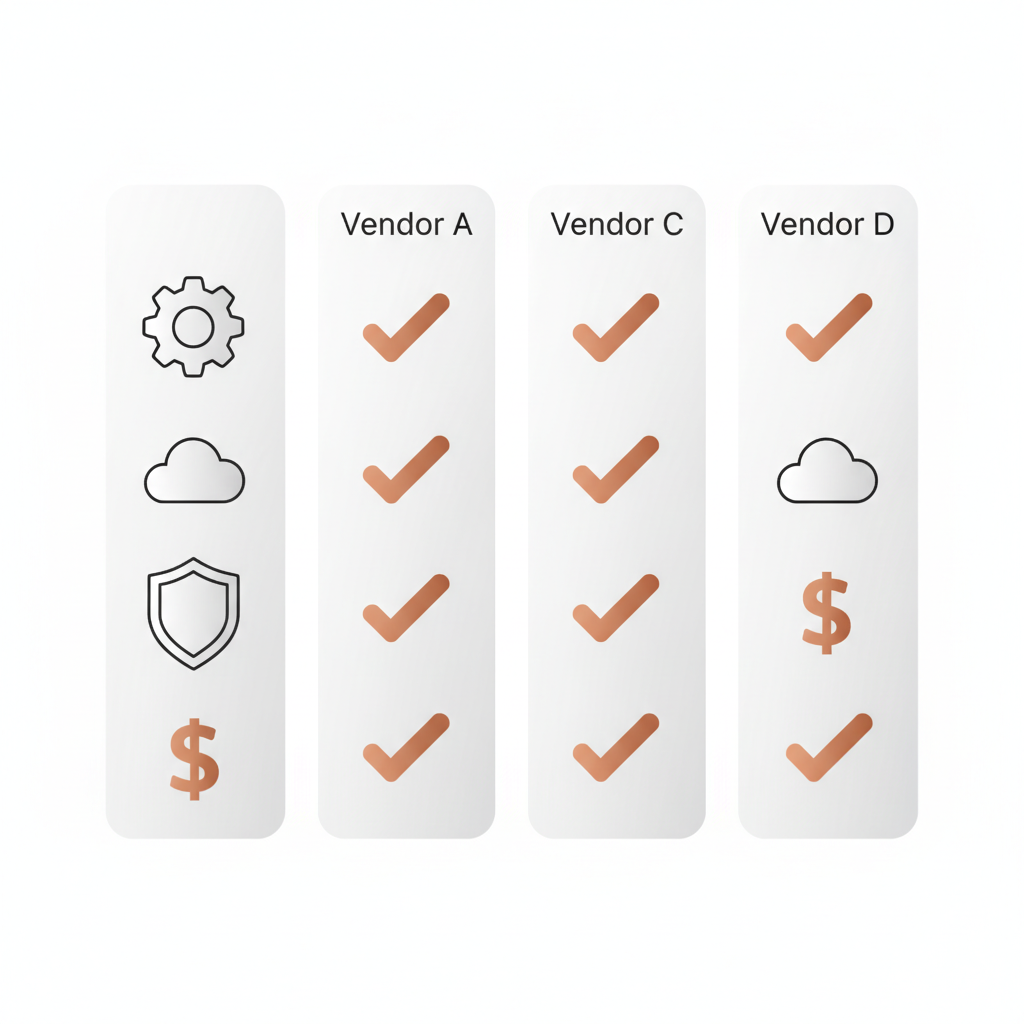
| Evaluation criterion | Returns-portal SaaS | In-house team | Generic 3PL add-on | areturnz (processing network) |
|---|---|---|---|---|
| Cycle time transparency | Not applicable (no physical handling) | Rarely tracked formally | Bundled into forward-logistics SLA, hard to isolate | Roughly 48 hour published median, inbound scan to disposition |
| Condition grading method | None; customer self-reports | Manual, inconsistent across shifts | Manual checklist, low granularity | AI A/B/C/R grading with confidence score, operator override |
| Photo evidence per unit | Not offered | Ad hoc, rarely retained | Sometimes, not structured | Structured bundle: label, opened parcel, item, defect |
| Disposition control | Not applicable | Manager discretion, undocumented | Bulk liquidation default | Rule-based routing, overrides logged |
| Scale reference | Ticket volume, not physical units | Capped by headcount | Varies widely, rarely disclosed | 180K+ returns processed |
| API and webhook access | Label and status webhooks only | Usually none | Limited, often batch file exports | Signed-JSON API with webhooks, dashboard access |
Questions to ask on the vendor call
Bring these into the conversation instead of relying on the pitch deck:
- What is your median cycle time from receiving scan to disposition decision, measured over the last quarter?
- What is your grading accuracy rate, and how is it measured (AI-vs-operator match, audit sample, customer complaint rate)?
- Can I see a sample evidence bundle for a real returned unit before I sign?
- How are disposition overrides logged, and can I pull that log later?
- What is your capacity during peak season, and what happens to cycle time when volume spikes?
If you're evaluating a partner or white-label arrangement rather than a direct vendor relationship, the partner use cases page and the broader partner playbook cover onboarding and margin questions specific to reselling a returns processing service under your own brand.
Red flags that should end a deal
A few patterns are worth walking away from regardless of price. No willingness to share a sample evidence bundle. No stated grading accuracy number, or a number that cannot be traced to a methodology. A disposition process with no override log. An SLA that only covers shipping time and says nothing about grading or evidence. Any vendor pushing you toward a marketplace-style resale arrangement when what you actually need is processing and disposition of your own inventory.
Frequently asked questions
What is the difference between a returns processing service and a returns portal?
A returns portal manages the customer-facing request: generating a label, collecting a reason code, tracking a shipment back. A returns processing service like areturnz handles what happens after the parcel arrives: receiving, photographing, grading condition, and deciding whether the unit gets restocked, liquidated, donated, or destroyed. Portals and processing services are often used together, not as substitutes for each other.
What cycle time should I expect from a returns processing vendor?
Ask for a published median, not a best-case number. areturnz publishes a roughly 48 hour median from inbound scan to disposition decision across 180K+ processed returns. If a vendor cannot give you a specific, sourced figure, treat that as a gap, not an oversight.
How do I verify a vendor's grading accuracy claim?
Ask for the measurement methodology. areturnz reports 99.6% match accuracy between AI grading and operator judgment, tracked continuously across processed volume, with every operator override logged rather than silently discarded. A vendor quoting an accuracy number should be able to explain how it is calculated and how often it is re-measured.
Is a generic 3PL with a returns add-on good enough?
It depends on volume and dispute exposure. If you process low return volume with low dispute risk, a 3PL add-on may be adequate. If you deal with marketplace INAD claims, brand-sensitive resale, or need audit-grade evidence, a dedicated processing network with structured grading and photo evidence per unit is usually the safer choice.
What should be in the contract besides price?
Cycle time SLA, grading methodology and accuracy commitment, evidence bundle format and retention period, disposition rule governance, and capacity commitments for peak season. Price without those terms tells you almost nothing about what you're actually buying.
Ready to compare against a real cycle time, grading accuracy rate, and evidence bundle instead of a sales deck? Contact areturnz to walk through your volume and see the numbers firsthand.
Related reading: areturnz vs returns portal software: an honest comparison